Introduction
The manufacturing supply chain is undergoing its most significant transformation since the Industrial Revolution. For decades, manufacturers operated with linear, siloed supply chains,raw materials moved from supplier to factory, then to warehouse, distributor, and finally retailer. Visibility ended at each handoff, disruptions cascaded unpredictably, and decisions relied on historical data that was already outdated by the time it hit a spreadsheet.
That model is breaking. In 2026, a different approach has become essential: Supply Chain 4.0. This isn't just an upgrade,it's a fundamental shift from a rigid, reactive logistics function to a digital, agile, and transparent value network powered by Industry 4.0 technologies like IoT, AI, and blockchain. Manufacturers who fail to adopt this model will struggle with inefficiency, higher costs, and vulnerability to disruptions. Those who embrace it will gain real-time visibility, predictive capabilities, and a competitive edge that's hard to match.
In this guide, you'll learn exactly what Supply Chain 4.0 means, which technologies are driving it, the tangible benefits for manufacturers, a step-by-step implementation roadmap, the challenges you'll face, and what the future holds. No fluff, no hype,just actionable insights you can use today.
What is Supply Chain 4.0?
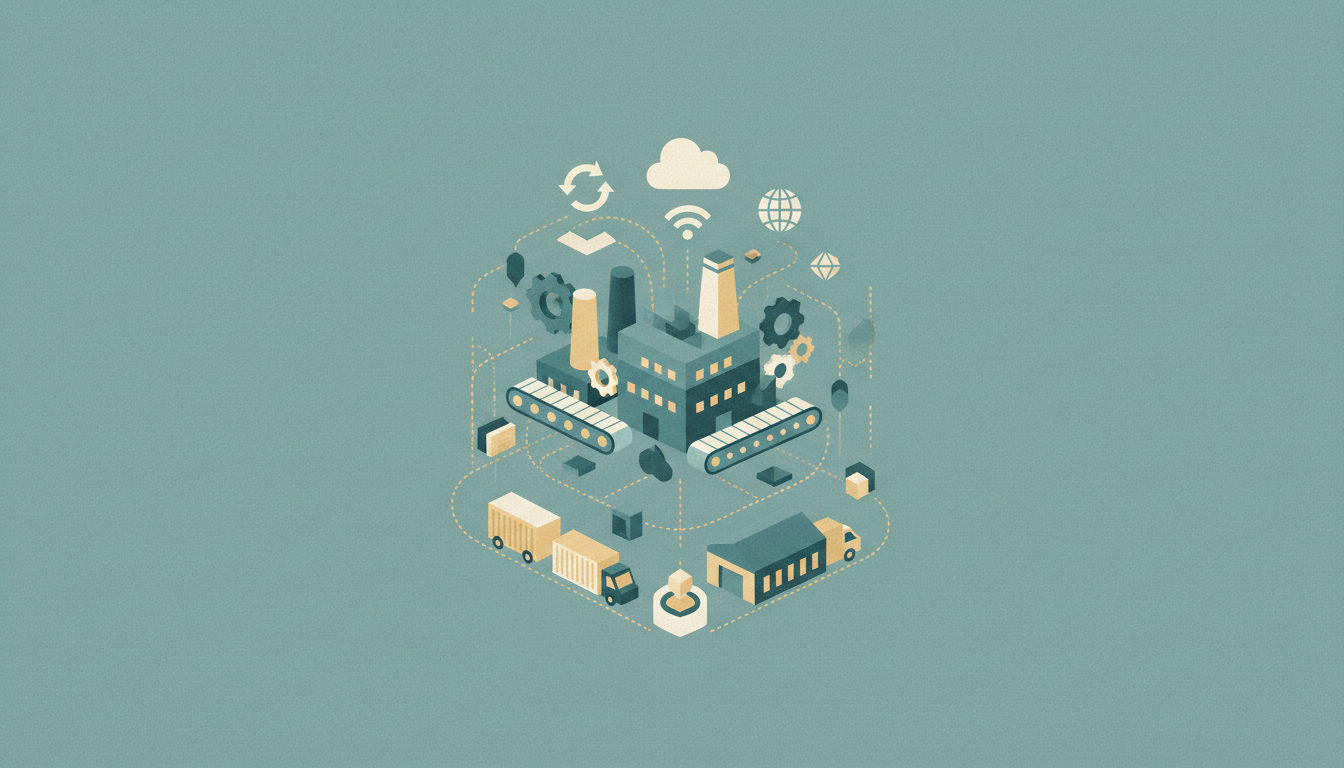
Supply Chain 4.0 is the application of Industry 4.0 technologies to create a digital, interconnected, and intelligent supply chain. Unlike traditional models that treat procurement, production, warehousing, and distribution as separate functions, Supply Chain 4.0 merges them into a unified digital supply network (DSN) . Data flows end-to-end in real time, decisions are data-driven and often automated, and every node is visible from supplier to customer.
Traditional vs. Digital Supply Networks
To appreciate the difference, compare a traditional linear supply chain with a digital network:
| Aspect | Traditional Supply Chain (Linear) | Digital Supply Network (4.0) |
|---|---|---|
| Structure | Sequential, siloed functions | Interconnected, collaborative ecosystem |
| Visibility | Limited to each silo, often delayed | End-to-end real-time visibility |
| Data flow | Periodic, batch-based | Continuous streaming via IoT sensors |
| Decision-making | Reactive, based on historical data | Predictive and prescriptive using AI/ML |
| Flexibility | Rigid, slow to adapt to changes | Agile, self-optimizing through automation |
| Communication | Manual handoffs (phone, email, fax) | Automated data sharing via APIs and cloud |
| Risk management | Poor, disruptions propagate silently | Proactive alerts and scenario simulation |
For example, a traditional manufacturer might only know about a supplier shortage when the shipment doesn't arrive. A digital network would detect that shortage days earlier through IoT sensors monitoring the supplier's inventory levels, and immediately trigger an alternative sourcing decision via AI.
The Role of Industry 4.0 Technologies
Supply Chain 4.0 is enabled by the same technologies that power smart factories. IoT devices,RFID tags, GPS trackers, smart shelves,collect granular data on location, condition, and stock levels. That data flows into a cloud platform where it's combined with external feeds (weather, traffic, market demand). Artificial Intelligence and Machine Learning analyze patterns to forecast demand, detect anomalies, and suggest optimal inventory levels. Blockchain provides an immutable ledger for traceability, ensuring every transaction is recorded and verifiable.
Together, these technologies create a system where the supply chain doesn't just react,it anticipates. A sensor reading a temperature spike in a refrigerated truck can alert the logistics manager to reroute the shipment before goods spoil. AI can automatically adjust production schedules based on real-time demand signals from retail partners. This is the essence of Supply Chain 4.0: real-time data, intelligent automation, and end-to-end integration.
Key Technologies Driving Supply Chain 4.0
Let's dive deeper into the core technologies that make Supply Chain 4.0 possible. Each plays a distinct role in creating a smarter, more responsive network.
Internet of Things (IoT)
IoT is the eyes and ears of a digital supply chain. Sensors attached to equipment, vehicles, pallets, and products generate a constant stream of data about location, condition, temperature, humidity, vibration, and more.
Real-world examples:
- RFID tags on pallets in a warehouse allow automated inventory counts without manual scanning. A manufacturer can know exactly how many units of a specific component are on hand,and where they are,in real time.
- GPS trackers on trucks give logistics managers live visibility of shipment locations, enabling accurate delivery ETAs and rerouting when necessary.
- Smart shelves in distribution centers detect when stock drops below a threshold and automatically trigger a replenishment order to the factory.
The key benefit is visibility. According to a 2024 study by MHI and Deloitte, 79% of supply chain leaders say real-time visibility is their top technology investment priority. IoT provides that visibility at a granular level, transforming a "black box" into a transparent network.
Artificial Intelligence & Machine Learning
Data from IoT is useless without analysis. That's where AI and ML step in,they turn raw data into actionable insights.
Key use cases in manufacturing supply chains:
- Demand forecasting: Machine learning models ingest historical sales, promotional calendars, economic indicators, and even social media sentiment to predict future demand with far greater accuracy than traditional statistical methods. A leading automotive supplier reduced forecast error by 35% after implementing AI-driven demand sensing.
- Anomaly detection: AI can spot unusual patterns,a sudden spike in rejection rates from a supplier, or an unexpected delay in a shipping lane,and trigger alerts before they become crises.
- Dynamic pricing: For manufacturers selling direct, AI can adjust prices based on real-time inventory levels and market demand, maximizing revenue while avoiding stockouts.
One practical example: A semiconductor manufacturer used ML to predict which machines in its supply chain (internal and external) were likely to fail, then preemptively scheduled maintenance. This predictive maintenance reduced downtime by 40% and saved millions in lost production.
Blockchain for Traceability
Blockchain's value in Supply Chain 4.0 lies in trust and transparency. Every transaction,from raw material purchase to finished good shipment,is recorded on an immutable, distributed ledger. No single party can alter the history, making it ideal for industries that require strict provenance, such as food, pharmaceuticals, or aerospace.
Practical implementation:
A medical device manufacturer uses blockchain to track each component's journey from multiple suppliers through assembly to the hospital. In case of a recall, they can instantly identify which specific batches of raw material went into which finished products, reducing recall scope and cost.
Blockchain also enables smart contracts,self-executing agreements that automate payments when conditions are met. For instance, a shipment's IoT sensors confirm delivery, triggering automatic payment to the logistics provider. This reduces administrative overhead and disputes.
While blockchain adoption is still maturing, it's becoming increasingly common in high-value or regulated manufacturing sectors. By 2026, Gartner predicts that 30% of large manufacturers will use blockchain for supply chain traceability.
(Note: Cloud computing and robotics also play supporting roles. Cloud platforms provide the scalable storage and compute power for IoT data and AI models. Robotics,in warehouses and for autonomous guided vehicles,automate physical tasks, freeing human workers for higher-value decision-making.)
Benefits of Implementing Supply Chain 4.0 in Manufacturing
Why invest in Supply Chain 4.0? The benefits go well beyond "going digital." Here are the concrete outcomes manufacturers experience:
-
Real-time visibility: End-to-end tracking of materials, work-in-progress, and finished goods. You know exactly what's happening at every stage,no more blind spots. For example, a tier-1 automotive supplier can see a sub-supplier's inventory levels and predict potential shortages weeks in advance.
-
Improved efficiency: Reduced lead times through optimized routing and automated workflows. One electronics manufacturer cut order-to-delivery cycle time by 30% by integrating IoT sensors with their order management system.
-
Cost reduction: Lower operational costs come from reduced expedited shipping, minimized waste, better inventory turnover, and fewer manual processes. McKinsey estimates that full digital supply chain transformation can reduce operational costs by 20-30%.
-
Enhanced agility: During the pandemic, manufacturers with digital supply chains were able to pivot faster,rerouting around port closures, switching suppliers, and adjusting product mixes based on real-time demand data. They experienced 3x fewer revenue losses than those with traditional chains.
-
Better customer experience: Customers demand accurate ETAs and transparency. With real-time tracking, manufacturers can provide precise delivery windows and proactively communicate delays, building trust. A study by Capgemini found that 89% of consumers are willing to pay more for products with full supply chain transparency.
Quick win example: A mid-sized food manufacturer implemented simple IoT temperature sensors on refrigerated trucks. They immediately reduced spoilage by 15% and saved $200,000 annually, paying back the investment in under six months. That's the power of starting with a focused problem.
How to Implement Supply Chain 4.0: A Step-by-Step Approach
Implementing Supply Chain 4.0 isn't an overnight switch. It requires careful planning, a clear roadmap, and phased execution. Here's a practical step-by-step approach based on what successful manufacturers have done.
Step 1: Assess Your Supply Chain Maturity
Before buying any technology, understand where you currently stand. Use a supply chain maturity model,such as the Gartner Supply Chain Maturity Model,to rate your capabilities across dimensions like process, technology, organization, and performance measurement.
Typical levels:
1. Reactive – Manual processes, limited visibility, firefighting mode.
2. Efficient – Some automation, basic ERP integration, but still siloed.
3. Connected – Integrated systems, some IoT, but analytics are descriptive.
4. Predictive – AI-driven forecasting, proactive risk management, real-time visibility.
5. Autonomous – Self-correcting systems, full digital twin, minimal human intervention.
Identify your biggest pain points. Is it inventory inaccuracy? Supplier delays? Inefficient routing? Pick one high-impact area to start.
Step 2: Define Goals and KPIs
You can't improve what you don't measure. Define clear goals and key performance indicators that align with business outcomes. Common supply chain 4.0 KPIs include:
- On-time delivery rate (target: >95%)
- Inventory turnover (increase by 15-20%)
- Order-to-delivery cycle time (reduce by 25%)
- Perfect order rate (percentage of orders delivered complete, on time, damage-free)
- Supply chain cost as a percentage of revenue (reduce by 2-3% annually)
Make sure every KPI is measurable with data you can collect,or can start collecting.
Step 3: Select Appropriate Technologies
Based on your maturity assessment and goals, choose technologies that address your pain points. A simple 3PL warehouse might benefit most from IoT sensors and a warehouse management system. A global manufacturer might need a control tower platform with AI demand forecasting.
Don't be seduced by the latest shiny tool. Focus on technologies that deliver clear ROI. For most manufacturers, the quickest wins come from IoT for visibility and predictive analytics for planning.
Step 4: Pilot with a Specific Product Line or Facility
Never attempt a full-scale implementation from the start. Pick a single plant, a product family, or a specific supplier network. Run a pilot for 3-6 months, measure results against your baseline KPIs, and refine the approach.
Real-world example: A white goods manufacturer piloted IoT sensors and a digital twin for one production line. Within four months, they reduced unplanned downtime by 25% and justified scaling to all lines. They used the pilot data to build a business case for broader investment.
Step 5: Scale Gradually While Managing Change
The most challenging part is scaling. As you expand, you'll face integration complexity, data governance issues, and workforce resistance. Overcome this by:
- Change management: Train employees, not just on the tools but on the new decision-making culture. Appoint champions in each department.
- Phased rollout: Add one location or process at a time, ensuring stable integration.
- Partner with experts: If internal skills are lacking, consider partnering with a system integrator or technology vendor who specializes in supply chain digitalization.
Remember: Supply Chain 4.0 is a journey, not a destination. Continuous improvement is built into the model.
Challenges and Considerations
No transformation is without obstacles. Awareness of the common challenges will help you prepare and avoid costly missteps.
-
Data security and privacy: With more connected devices and data sharing, the attack surface expands. A breach in one supplier's system can cascade to yours. Invest in robust cybersecurity, encryption, and access controls. Also be mindful of data privacy regulations (GDPR, CCPA) when sharing information across borders.
-
High initial investment and integration complexity: IoT sensors, cloud platforms, AI infrastructure, and blockchain networks require upfront capital. ROI may take 12-24 months. Integration with legacy ERP and MES systems is often the hardest part,legacy systems are typically not designed for real-time data flows.
-
Skills gap: The biggest barrier we hear from manufacturers is finding talent who understand both supply chain operations and digital technologies. You need data scientists, IoT engineers, and AI specialists who can also speak the language of logistics. Overcoming the skills gap requires a multi-pronged approach:
- Upskill existing employees through targeted training programs. Many community colleges now offer certificates in digital supply chain.
- Hire key roles,a head of digital supply chain with experience in both domains can be a game-changer.
-
Partner with universities or technology firms for joint projects or co-op programs.
-
Cultural resistance to change: People fear that automation will replace their jobs, or they're comfortable with existing processes. Address this by clearly communicating how technology will augment their work, not eliminate it. Involve frontline staff in pilot design,they often have the best insights.
Frequently Asked Questions About Supply Chain 4.0
Q1: What is the difference between Supply Chain 4.0 and a traditional supply chain?
Supply Chain 4.0 uses real-time data from IoT sensors, AI analytics, and cloud platforms to create a transparent, predictive, and agile network. Traditional supply chains rely on manual processes, historical data, and siloed communication, making them slow and disruption-prone.
Q2: How long does it typically take to implement Supply Chain 4.0 in a manufacturing company?
Implementation varies widely. A focused pilot can show results in 3-6 months. Scaling across an entire organization usually takes 12-24 months, depending on the size, existing digital maturity, and budget. Some companies see benefits from partial implementations (e.g., IoT tracking on shipments) within weeks.
Q3: Does Supply Chain 4.0 require a complete overhaul of existing systems?
Not necessarily. Many technologies can be added incrementally. For example, you can start by adding IoT sensors to existing warehouse management systems via API integrations. A full digital twin or autonomous supply chain may require more significant changes, but the path can be modular.
Future of Supply Chain 4.0 in Manufacturing
The technology is still evolving. By 2030, Supply Chain 4.0 will likely become the baseline expectation, not a competitive differentiator. Here's what's on the horizon:
-
Autonomous supply chains: AI will go beyond prediction to decision-making. Imagine a supply chain that self-corrects,when a supplier fails, the system automatically reroutes through an alternative source, recalculates production schedules, and updates customer ETAs without human intervention. Early examples exist in companies like Amazon and its sorting centers.
-
Sustainability through digital twins: Manufacturers are creating digital replicas of their entire supply chain to run "what-if" simulations,for example, simulating the carbon footprint of different logistics routes or energy sources. This enables them to optimize for both cost and environmental impact, meeting regulatory requirements and customer expectations.
-
Collaborative networks: Instead of each company having its own digital supply chain, entire ecosystems will share data in real time. Think of a multi-tier consortium of suppliers, manufacturers, and distributors exchanging IoT data on a shared blockchain. Pilot projects like the "Automotive Supply Chain Collaboration" consortium show reductions in inventory by 20%.
-
5G and edge computing: Faster, lower-latency wireless (5G) combined with computing done close to data sources (edge) will enable real-time decisions at the factory floor or warehouse aisle. Autonomous forklifts can coordinate with each other without a central cloud, making operations more resilient.
These trends suggest that Supply Chain 4.0 is not a one-time project,it's a continuous evolution toward increasingly intelligent, sustainable, and connected systems.
Conclusion
Supply Chain 4.0 transforms manufacturing from a linear cost center to a digital, agile value driver. By leveraging IoT, AI, blockchain, and other Industry 4.0 technologies, manufacturers gain real-time visibility, lower costs, improve efficiency, and respond faster to disruptions. The journey starts with a honest assessment of your maturity, selecting a high-impact pilot, and scaling with careful change management.
Key takeaway: The transition is not easy, but the cost of inaction is higher. Start small, prove value, and build from there. Your competitors are already moving.
Ready to begin your digital supply chain journey? Explore our manufacturing guides and tools at manufacturenone.com. We've curated step-by-step roadmaps, technology selection frameworks, and case studies to help you implement Supply Chain 4.0 with confidence.
Written with LLaMaRush ❤️