What Is a Material Handling System?
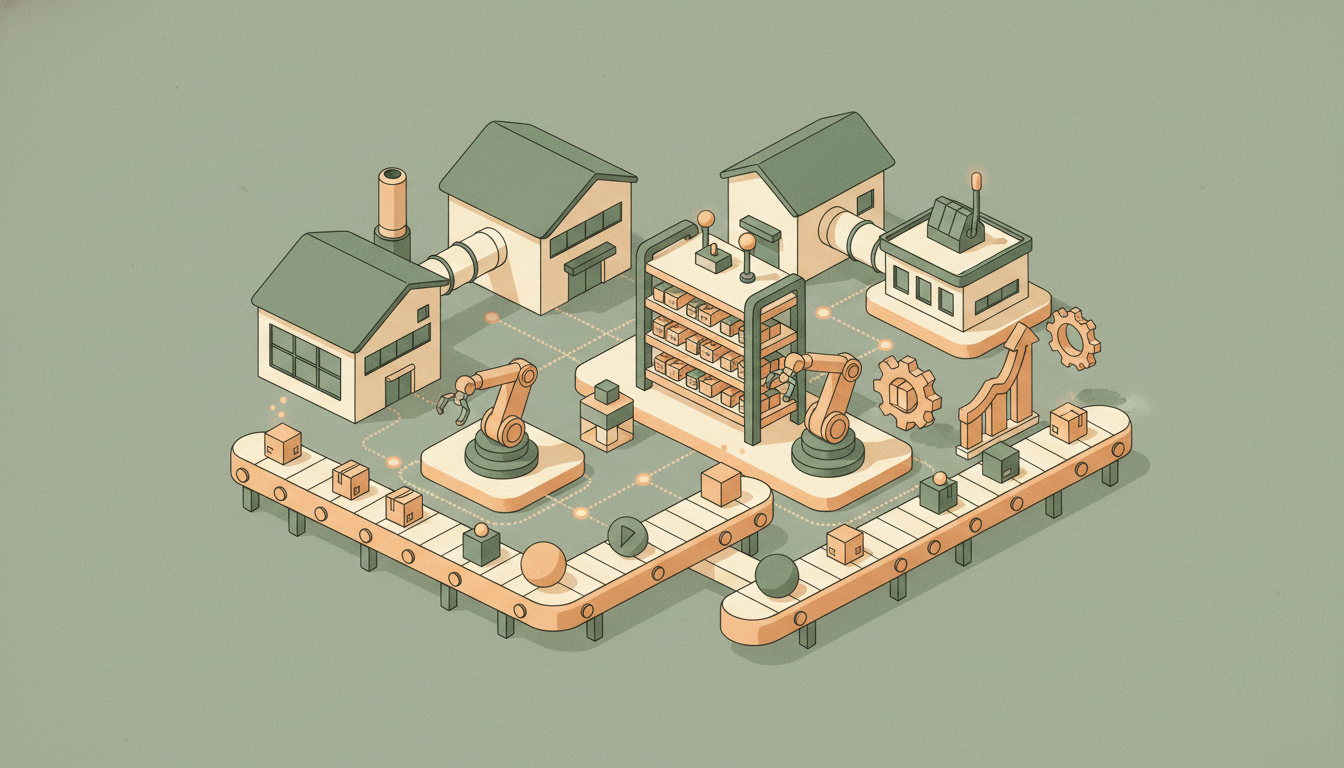
Every item on a factory floor moves,from raw material receiving to workstations, between processes, and finally to shipping. How efficiently that movement happens directly affects your bottom line. A material handling system is the integrated set of equipment, processes, and controls that moves, stores, controls, and protects materials throughout the manufacturing lifecycle. It’s the circulatory system of your operation.
In a well-designed system, materials flow like water through a pipe,no delays, no backtracking, no damage. In a poor one, operators spend half their shift walking to fetch parts, forklifts queue at intersections, and work-in-process piles up expensive inventory. Studies show that inefficient material movement can silently drain up to 30% of manufacturing labor costs. That’s not a small leak,it’s a hemorrhage.
This guide will walk you through the core components, types, design principles, and selection criteria for material handling systems. After reading, you’ll know how to evaluate your current setup, choose the right equipment, and implement changes that reduce waste, improve safety, and boost throughput.
Key Functions of Material Handling Systems
Material handling systems perform four essential functions: moving, storing, controlling, and protecting materials. These functions must integrate seamlessly with your production flow. For example, a conveyor system that moves parts too fast downstream can create a backup; one that’s too slow starves the next machine. The goal is to synchronize material flow with production rate.
When done right, material handling directly impacts Overall Equipment Effectiveness (OEE). If a machine is idle waiting for parts, its availability drops. If parts are damaged during transport, quality suffers. If an operator spends ten minutes per hour searching for materials, performance slumps. A smart handling system minimizes these losses.
Key Components of Material Handling Systems
No single piece of equipment fits every scenario. The right mix depends on your product, volume, facility layout, and automation level. Below are the primary categories.
Conveyors
Conveyors are workhorses for moving items along a fixed path. They come in several types:
- Belt conveyors: Best for flat, stable items (boxes, bags, loose parts). Low cost, easy to maintain.
- Roller conveyors: Gravity or powered rollers for rigid products with flat bottoms. Common in packaging and assembly.
- Chain conveyors: Handle heavy loads like pallets or drums. Durable but noisy.
- Overhead conveyors: Free up floor space for hanging parts, paint lines, or assembly.
Selection criteria include load weight, speed requirements, environment (clean, dusty, wet), and product shape. For high-mix, low-volume production, modular conveyors allow quick reconfiguration.
Beyond conveyors, other equipment includes cranes (overhead bridge, gantry, jib) for very heavy or oversized items, trucks (forklifts, pallet jacks, order pickers) for flexible movement, and automated guided vehicles (AGVs) and autonomous mobile robots (AMRs) that follow paths or navigate freely.
Storage Systems
Efficient storage isn’t just about stacking boxes. It’s about having the right part at the right time with minimal travel. Common systems:
- Selective pallet racking: Most common, direct access to every pallet.
- Drive-in/drive-through racking: High density for same-SKU pallets.
- Cantilever racking: For long items like pipes or lumber.
- Automated storage and retrieval systems (AS/RS): Computer-controlled, high-density storage that brings items to an operator or robot. Ideal for high-throughput operations with limited labor.
Control Systems
The brains of the operation include:
- Warehouse Management System (WMS): Tracks inventory locations, orders, and labor. Integrates with ERP.
- Warehouse Control System (WCS): Directs real-time movement of equipment,conveyors, sorters, AS/RS.
- Sensors and barcode scanners: Provide visibility. Without accurate data, even the best equipment fails.
The table below summarizes the main equipment categories and their typical use cases.
| Equipment Type | Best For | Typical Capacity | Automation Level |
|---|---|---|---|
| Belt Conveyor | Small to medium boxes, loose parts | Up to 100 kg/m | Manual to semi-auto |
| Roller Conveyor | Rigid flat-bottom items | Up to 50 kg/item | Manual or powered |
| Overhead Conveyor | Hanging parts, paint lines | Up to 1000 kg/load | Semi to full auto |
| Forklift | Flexible pallet movement | 1–5 tons | Manual |
| AGV/AMR | Repetitive routes, light loads | Up to 1500 kg | Fully automated |
| AS/RS | High-density storage, small parts | Up to 50 kg/bin | Fully automated |
Types of Material Handling Systems
Choosing the right system type is a strategic decision. Systems fall along an automation spectrum with distinct trade-offs.
Automated Material Handling Systems
High-throughput operations often turn to automated material handling systems. These include robotic pick-and-place cells, AGVs that transport materials between zones, and AS/RS that store and retrieve bins on demand. For example, an automotive assembly plant might use an overhead conveyor to move car bodies through paint stations, then AGVs to deliver engines to the final line.
Automation shines when volumes are high, product mix is low, and labor costs are significant. It reduces errors, improves consistency, and can run 24/7. However, the upfront investment is substantial. A typical ROI of 20–30% reduction in operational costs is achievable within 2–3 years, but only if the system is designed for your actual workflow,not forced into it.
Manual material handling remains viable for low-volume, high-mix operations. Think small job shops or custom fabrication. Workers use hand carts, pallet jacks, and forklifts. Flexibility is high, but labor cost per unit can be steep, and ergonomic risks are real.
Semi-automated systems hit a sweet spot. For instance, a conveyor line with manual loading and unloading at certain stations. This balances cost and flexibility, often working well in mid-volume manufacturing.
Beyond automation level, consider fixed vs. flexible systems. Fixed systems (conveyors, tracks) are efficient for dedicated lines but hard to reconfigure. Flexible systems (AGVs, modular conveyors) adapt to layout changes and product variations.
Also think about batch vs. continuous flow. Batch systems move materials in groups (e.g., pallets of parts to a plating bath). Continuous flow systems move single items or small loads steadily (e.g., a beverage filling line). Matching your system to your production rhythm is key.
Benefits of Material Handling Systems in Manufacturing
Investing in a well-designed system pays off across multiple dimensions.
Cost Savings from Automation
The most tangible benefit is reduced operational costs. A case study from a mid-sized electronics manufacturer showed that switching from manual forklift deliveries to AGVs cut labor costs by 35% and reduced product damage by 60%. The system paid for itself in 18 months.
Beyond labor, automated systems lower error rates. Inventory accuracy often jumps from 90% to 99%+ when barcode scanning and WMS are integrated. That means fewer stockouts, less expediting, and lower safety stock levels.
Safety improves dramatically. Forklift accidents, back injuries from heavy lifting, and trips over loose materials all decrease. Ergonomic stations and automated lifting reduce worker fatigue and turnover.
Throughput increases because materials spend less time waiting. One automotive parts supplier reported a 25% throughput increase after installing a conveyor system that connected receiving, production, and shipping without intermediate storage.
The table below summarizes the key benefits and typical impact ranges.
| Benefit | Typical Impact | Measurement |
|---|---|---|
| Labor cost reduction | 15–35% | Cost per unit or per hour |
| Inventory accuracy | 90–99.5% | Cycle count variance |
| Throughput increase | 15–30% | Units per hour or day |
| Workplace injuries | 20–50% reduction | OSHA recordable rates |
| Product damage | 50–80% reduction | Return or scrap rates |
How to Design an Efficient Material Handling System
Designing a system from scratch or upgrading an existing one requires a structured approach. Jumping straight to equipment selection is a common mistake. Instead, start with understanding your flow.
Step 1: Map the Current State
Use value stream mapping (VSM) to document every move and queue. Walk the floor. Note where materials sit, how long they wait, and how far they travel. Common wastes include:
- Walking (operators traveling to fetch parts)
- Waiting (work-in-process queues)
- Excessive handling (multiple touches before a part reaches its final destination)
- Transportation (material moving in zig-zags across the facility)
One manufacturer discovered that their subassembly parts traveled 1,200 feet through three different storage areas before reaching the main line. Consolidating storage cut that distance to 200 feet and freed up two operators.
Step 2: Analyze Demand and Flow Patterns
What products do you make? In what volumes? With what variability? A system designed for steady-state, high-volume production will fail under high-mix, low-volume conditions. Use data,historical order patterns, seasonality, growth forecasts,to determine peak vs. average demand.
Step 3: Select Equipment and Layout
Based on your flow analysis, choose equipment that minimizes travel and handling. A U-shaped layout with conveyors feeding workstations from the outside often works well. Integrate your material handling system design with production scheduling,your WMS should communicate with your ERP to prioritize moves based on order deadlines.
Step 4: Simulate and Validate
Before cutting steel, run a simulation. Today’s software can model material flow, identify bottlenecks, and test scenarios. It’s cheaper to find issues in a simulation than during installation.
Selection Criteria for Material Handling Systems
When evaluating vendors or comparing solutions, focus on these key metrics.
Key Metrics for Comparison
- Throughput (units/hour): Can the system handle your peak demand? Don’t average peak and low periods,design for the highest 20% of production.
- Uptime reliability: Ask for Mean Time Between Failures (MTBF) and Mean Time To Repair (MTTR). A conveyor with high throughput but frequent jams hurts overall productivity.
- Footprint: How much floor space does the system require? Overhead conveyors and mezzanine storage can reclaim space.
- Total Cost of Ownership (TCO): Include purchase price, installation, energy consumption, maintenance, and spare parts over, say, 10 years. A cheaper system that consumes more power and breaks down often may cost more in the long run.
The following table compares common equipment based on these criteria.
| Criterion | Manual (Forklifts) | Conveyor | AGV | AS/RS |
|---|---|---|---|---|
| Throughput | Moderate (operator-dependent) | High (continuous) | Moderate (speed limited) | Very high (automated) |
| Uptime | 95-98% (requires operator) | 99%+ (with preventive maintenance) | 90-95% (battery charging) | 99%+ |
| Floor space | High (aisles for trucks) | Low (overhead or tight footprint) | Moderate (charging stations) | Very high vertical density |
| TCO (per unit moved) | Medium–high | Low | Medium | Low–medium |
Scalability matters too. Can you add more conveyors, extend the track, or increase robot capacity without major disruption? Choose systems that allow modular expansion.
Implementation Best Practices
Even the best-designed system fails if implementation is rushed or poorly managed.
Phased Rollout to Minimize Disruption
Don’t flip a switch and hope for the best. Introduce new equipment in phases. For example, first implement the conveyor between receiving and the main line, then expand to subassembly areas. Keep the old manual process as a backup until the new system proves stable.
Training and Change Management
Operators and maintenance staff need hands-on training,not just a manual. Shadow them during initial runs. Identify “super users” who can train others. Address fears of job loss by emphasizing how automation frees them for higher-value tasks.
Post-Implementation Review
Conduct a post-installation audit to compare actual vs. projected benefits. Are throughput targets met? Is uptime on schedule? Use the data to fine-tune. Often, small tweaks in software settings (e.g., conveyor speed, AGV dispatching rules) yield significant gains. Schedule regular reviews every quarter for the first year.
Future Trends in Material Handling Systems
The field is evolving rapidly. Here are three trends shaping the next generation.
AI-Powered Optimization
Machine learning algorithms now predict demand, optimize routing, and even anticipate maintenance needs. For example, an AI system can analyze real-time sensor data from conveyors and adjust speed to avoid jams based on product mix. Predictive analytics reduces downtime and smoothes flow.
Digital twins,virtual replicas of your physical system,allow you to test changes without interrupting production. One food processor used a digital twin to experiment with different conveyor speeds, cutting energy use by 18% without affecting throughput.
Collaborative Robots (Cobots) and AMRs
Cobots work alongside humans without safety cages, handling repetitive tasks like palletizing or machine tending. Autonomous mobile robots (AMRs) navigate dynamically using cameras and lidar, unlike AGVs that follow fixed wires or magnets. They adapt to layout changes instantly.
Sustainable Systems
Energy-efficient motors, solar-powered AGVs, and systems that reduce packaging waste are gaining traction. Manufacturers are also designing systems that support circular economy goals,for instance, conveyors that easily separate recyclable materials.
Frequently Asked Questions
1. What is the difference between material handling and logistics?
Material handling focuses on movement, storage, and control within a single facility or manufacturing site. Logistics covers the broader supply chain, including transportation between facilities, warehousing, and distribution.
2. How do I calculate the ROI of an automated material handling system?
Compute net annual savings from labor, reduced damage, and improved throughput, then divide by initial investment. Include maintenance and energy costs. A payback period under 3 years is generally considered strong.
3. Can I retrofit an existing conveyor system with automation?
Yes. Many older systems can be upgraded with new motors, sensors, and controls. Retrofit costs are often 40–60% of a full replacement, and downtime is less.
4. What are the most common mistakes in material handling system design?
Underestimating peak demand, ignoring product variability, and failing to involve operators in the design process. Also, selecting equipment before fully understanding material flow.
5. How often should I review my material handling system?
Annually at minimum. But if you’re adding new products, changing volumes, or re-laying out, review earlier. Continuous improvement,via data from your WMS,should happen monthly.
Selecting the right material handling system,aligned with your production flow, product characteristics, and growth plans,is critical to achieving lean, efficient manufacturing. Whether you’re upgrading a single line or building a new factory, start with the flow, involve your team, and invest in systems that scale.
For more deep dives into manufacturing automation, equipment selection, and lean practices, explore our other guides at ManufactureNow.com.
Written with LLaMaRush ❤️