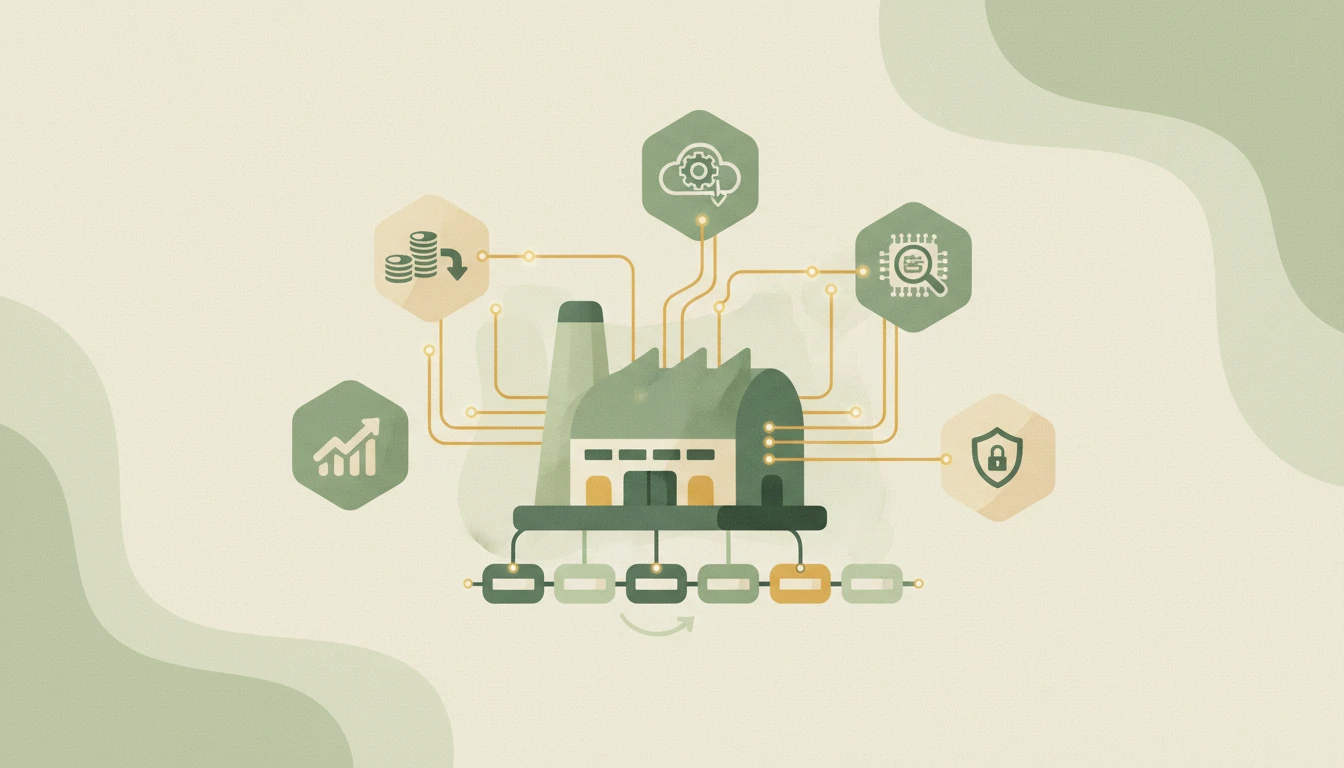
Imagine a factory where machines self-optimize in real-time, slashing downtime by 30% and predicting failures before they happen. This isn’t science fiction,it’s the tangible reality being forged by the powerful convergence of Industrial IoT and edge computing. For years, traditional factory monitoring has been hamstrung by crippling latency, overwhelming data overload, and reactive decision-making. Data from sensors would travel to a distant cloud server for analysis, creating a lag that made true real-time control impossible. This delay hindered operational agility, masked inefficiencies, and left potential productivity gains on the table.
By the end of this guide, you will understand not just the concepts, but the key IoT edge computing smart factories trend. You’ll see real-world applications, grasp the measurable benefits, and have a clear roadmap of practical steps to leverage these technologies. This is about transforming your factory floor from a collection of machines into a responsive, intelligent, and self-healing ecosystem.
The Foundation: IoT and Edge Computing Explained
To harness the future, we must first understand the core technologies at play. The journey to a smart factory begins with data, and that’s where the story of IoT and edge computing intertwines.
What is Industrial IoT?
At its heart, Industrial IoT (IIoT) is the network of physical devices embedded with sensors, software, and other technologies within a manufacturing environment. These “things”,which could be a CNC machine, a conveyor belt motor, a robotic arm, or even a storage tank,connect to the internet to collect and exchange data.
The process is straightforward but powerful:
1. Sensing: IoT sensors attached to equipment monitor critical parameters: temperature, vibration, pressure, flow rate, electrical current, and more.
2. Connectivity: This raw data is transmitted via wired or wireless protocols (like Wi-Fi, Bluetooth, LoRaWAN, or 5G) to a central point.
3. Data Collection: The aggregated data provides a digital pulse of your entire operation, offering visibility into processes that were previously opaque.
In a smart manufacturing context, IIoT moves beyond simple monitoring. It enables a feedback loop where data informs action. For example, a sensor detecting a slight deviation in a welding robot’s arm vibration can trigger an alert, not just log an event. This transforms maintenance from a scheduled, calendar-based chore to a need-based, data-driven science.
Edge Computing vs. Cloud: Key Differences
While the cloud is fantastic for storage, large-scale analytics, and long-term trend analysis, it has inherent limitations for the split-second demands of a factory floor. This is where edge computing becomes indispensable.
Think of it this way: The cloud is the corporate headquarters, excellent for strategic planning. The edge is the on-site foreman, making immediate, critical decisions on the production line.
| Aspect | Cloud Computing | Edge Computing |
|---|---|---|
| Latency | High (100s of ms to seconds). Data travels to a remote data center and back. | Extremely low (<10 ms). Processing happens physically close to the data source. |
| Bandwidth | High consumption. All raw data is sent over the network, which can be costly and congested. | Highly efficient. Only valuable, processed insights or alerts are sent, reducing network load. |
| Security | Centralized risk. A breach in the cloud can expose vast datasets. Data in transit is vulnerable. | Distributed architecture. Sensitive data can be processed and acted upon locally, never leaving the factory. Reduces attack surface. |
| Reliability | Dependent on stable internet connectivity. Network outage halts data flow and insights. | Operates independently. Functions even during network disruptions, ensuring continuous operation. |
| Primary Role | Long-term analytics, big data processing, storage, and enterprise-level reporting. | Real-time control, instant analytics, immediate decision-making, and pre-processing data for the cloud. |
Why is Edge Crucial for Factories? Latency is the enemy of precision. In applications like robotic coordination, laser cutting, or real-time quality inspection, a delay of even 100 milliseconds can mean a defective product or a collision. Edge computing eliminates this lag by processing data right where it’s generated.
The Integration Drive
Industrial IoT and edge computing are not competing technologies; they are symbiotic partners. IoT provides the sensory nervous system of the factory, while edge computing provides its local brainstem and reflexes.
This integration is essential for achieving true real-time monitoring and automation. An IoT sensor on a hydraulic press can generate terabytes of vibration data. Sending it all to the cloud is impractical and slow. Instead, an edge device (like an industrial PC or gateway) analyzes that data stream locally. It uses pre-programmed logic or AI models to identify normal patterns. Only when it detects an anomalous pattern indicative of an impending failure does it send a concise alert to the cloud and maintenance team, while potentially triggering an automatic safety protocol on the press itself.
This synergy enables the evolution from traditional, reactive factories to smart manufacturing hubs that are predictive, adaptive, and autonomous.
How IoT and Edge Are Transforming Smart Factories: Trends
The fusion of IoT and edge is moving beyond pilot projects into core operational strategy. Here are the five dominant trends that will define smart factories.
AI and Machine Learning at the Edge
The most significant trend is the migration of AI analytics from the cloud to edge devices. Instead of sending data to the cloud for an AI model to analyze, the AI model itself is deployed directly onto the edge hardware.
This enables:
* Instant Decision-Making: A camera on an assembly line can inspect hundreds of components per minute. An edge-AI model can identify a microscopic crack in real-time and instantly command a robotic arm to reject the part, with zero network delay.
* Proactive Anomaly Detection: AI can learn the unique "healthy" sound signature of a motor. By continuously analyzing audio data at the edge, it can detect subtle changes that forewarn of bearing wear weeks before a human ear or scheduled check would notice.
* Adaptive Processes: Edge AI can dynamically adjust machine parameters. For instance, in injection molding, it can fine-tune temperature and pressure in real-time based on material batch variations, ensuring consistent product quality.
5G's Impact on Factory Connectivity
While Wi-Fi and wired networks suffice for many applications, 5G IoT is a game-changer for flexibility and scale. 5G offers ultra-reliable low-latency communication (URLLC), which is critical for mission-critical controls.
Its impact includes:
* Massive Device Deployment: 5G can support up to 1 million devices per square kilometer, enabling the dense sensor networks required for comprehensive digital twins.
* Wireless Agility: High-speed, reliable wireless connectivity allows for the easy reconfiguration of production lines and the use of autonomous mobile robots (AMRs) that need seamless communication as they move.
* Network Slicing: Factories can create a virtual, private "slice" of the public 5G network dedicated to their operations, guaranteeing performance and security for critical applications.
Predictive Maintenance in Action
Predictive maintenance is evolving from a cost-saving measure to a core competency, powered by edge computing. The old model of run-to-failure or time-based maintenance is being replaced by condition-based and predictive strategies.
How it works: Vibration, thermal, and acoustic IoT sensors collect data from critical assets like turbines, pumps, and gearboxes. Edge devices process this data in real-time, comparing it against baseline models. For example, a spectral analysis of vibration data at the edge can identify the specific frequency signature of a misaligned coupling or an imbalanced fan blade. The system doesn’t just say "something’s wrong"; it diagnoses "the fan on exhaust unit 3B has a 0.2mm imbalance on the southeast blade, with an estimated 85% probability of failure within 14 days." This allows maintenance to be scheduled at the optimal time, with the right parts and skills, preventing unplanned downtime.
Real-World Applications and Case Studies
Theory is one thing, but practical results are what drive adoption. Here’s how leading industries are implementing these systems today.
Automotive Industry Innovation
A leading European automotive manufacturer faced challenges with paint shop quality control. Minute variations in temperature, humidity, and spray nozzle alignment could lead to defects like orange peel or uneven coating, often only caught at final inspection,a costly point for rework.
The Solution: They deployed a network of high-resolution thermal and visual cameras alongside environmental sensors throughout the paint booth. Edge computing devices were installed to process this video and sensor feed in real-time.
The Outcome: Edge-based AI analytics models now inspect every vehicle body. They detect microscopic anomalies in paint flow and finish instantly. The system provides immediate feedback to adjust robotic sprayers and environmental controls. This integration of IoT sensors and edge computing improved first-pass yield by 18% and reduced paint material waste by an estimated 12%, translating to millions in annual savings.
Food Safety Monitoring
In food and beverage, compliance and waste reduction are paramount. A large dairy processor needed to ensure the integrity of its cold chain for perishable goods like milk and yogurt, from pasteurization to distribution.
The Solution: They implemented IoT-edge systems on their fleet of refrigerated trucks and in storage facilities. IoT sensors continuously monitored temperature and humidity. Low-power edge devices in each truck not only logged this data but also ran local logic.
The Application: If the temperature deviated outside the safe range, the edge device would first try a corrective action (e.g., adjusting the cooler). Simultaneously, it would send an immediate encrypted alert to the fleet manager’s dashboard and the driver’s tablet. This real-time monitoring ensured immediate response, protecting public health. Furthermore, by analyzing edge data trends, the company optimized cooler performance, reducing energy consumption by 8% and cutting spoilage-related waste by over 20%.
Key Benefits and Measurable Outcomes
Investing in IoT-edge integration is a strategic decision with clear, quantifiable returns. The benefits extend across the entire operation.
Operational Efficiency Metrics
The primary driver is often efficiency. By enabling real-time visibility and control, factories can achieve remarkable gains:
- Downtime Reduction: Unplanned downtime can cost manufacturers tens of thousands of dollars per hour. Predictive maintenance at the edge can reduce such downtime by up to 25-30%. For a factory operating 24/7, this is a direct and massive boost to capacity.
- Output Increase: Optimizing machine performance in real-time and reducing micro-stoppages (small, unlogged delays) can increase overall equipment effectiveness (OEE) by 5-15%. This translates directly to higher throughput without adding new machines.
- Cost Savings: Reduced energy consumption (through optimized machine cycles), lower material waste (via real-time quality control), and extended asset lifespan all contribute to a stronger bottom line. A McKinsey report suggests smart factory initiatives can lower operating costs by 10-25%.
Safety and Regulatory Advantages
Beyond economics, IoT-edge systems create a safer, more compliant workplace.
- Proactive Hazard Prevention: Sensors can monitor for toxic gas leaks, extreme heat, or unauthorized entry into hazardous zones. Edge processing can trigger instant alarms, ventilation systems, or machine shutdowns, preventing accidents.
- Automated Compliance Logging: In highly regulated industries (pharma, food, aerospace), maintaining auditable records is mandatory. IoT-edge systems automatically and immutably log every critical parameter,temperature, pressure, operator actions,creating a flawless digital paper trail and eliminating manual, error-prone logs.
- Enhanced Worker Safety: Wearable IoT devices for workers (smart helmets, vests) can monitor vital signs, detect falls, or ensure they maintain safe distances from machinery, with edge systems providing immediate localized alerts.
Implementation Challenges and Solutions
The path to a smart factory isn't without obstacles. Recognizing and planning for these challenges is key to a successful rollout.
Overcoming Budget Constraints
The perceived high initial investment is the most common barrier, especially for small and medium-sized enterprises (SMEs).
Actionable Solutions:
* Phased Implementation: Don’t attempt a plant-wide overhaul. Start with a single, high-value pain point,a critical machine with frequent downtime or a quality inspection station with high defect rates. Implement an IoT-edge solution there, prove the ROI statistics, and use that success to secure funding for expansion.
* Leverage Hybrid Models: You don’t need to process everything at the edge. Use a cloud-edge hybrid model. Send summarized data and alerts to the cloud for long-term strategic analysis and corporate reporting, while keeping real-time control loops on the edge. This balances performance with cost.
* Explore As-a-Service Offerings: Many providers now offer IIoT and edge analytics platforms on a subscription basis (Edge-as-a-Service), reducing upfront capital expenditure.
Securing IoT-Edge Networks
Every new connected device is a potential entry point for cyber threats. Securing this expanded attack surface is non-negotiable.
Essential Security Measures:
1. Device Hardening: Change all default passwords on sensors and edge devices. Disable any unused ports or services.
2. Network Segmentation: Isolate IoT and edge networks from the primary corporate IT network using firewalls. This contains any potential breach.
3. End-to-End Encryption: Ensure data is encrypted both at rest (on the edge device) and in transit (to the cloud or other systems).
4. Strict Access Controls: Implement role-based access control (RBAC). A floor operator shouldn’t have the same system access as a network administrator.
5. Regular Updates and Audits: Establish a firm policy for patching and updating edge device firmware. Conduct regular security audits and vulnerability assessments.
Looking Ahead: Future Predictions for Smart Manufacturing
The trends are stepping stones to an even more integrated and intelligent future.
AI and Robotics Synergy
We will see a deeper fusion where AI robotics are governed by advanced AI running directly on edge controllers. Robots will move from being pre-programmed to being adaptive and collaborative. An edge-AI enabled robot could visually identify a disordered pile of parts, plan its own optimal grasping strategy in milliseconds, and adjust its force in real-time based on tactile feedback,all without cloud round-trips. This enables true flexible manufacturing for high-mix, low-volume production.
Sustainability Initiatives
Sustainable manufacturing will be a major driver. IoT-edge systems will become the central nervous system for the green factory. They will dynamically optimize energy consumption,powering down idle machines, balancing HVAC loads, and integrating with renewable energy sources. By providing granular data on resource use (energy, water, raw materials), these systems will be crucial for measuring and reducing the carbon footprint of manufacturing, turning regulatory compliance and consumer demand into operational advantage.
By 2030, we can expect widespread standardization of IoT-edge protocols, making integration easier. The technologies will also become more accessible, driving SME adoption. The smart factory will become less of a competitive advantage and more of a baseline requirement for survival and growth.
Frequently Asked Questions (FAQs)
FAQ 1: What is the main difference between IoT and edge computing?
Think of IoT as the data-gathering layer,the network of sensors and devices that collect information from the physical world. Edge computing is the data-processing layer that sits close to those devices. IoT provides the "what" (the data), while edge computing provides the "so what" (the immediate insight and action) locally and in real-time.
FAQ 2: How does edge computing improve real-time monitoring in factories?
It eliminates network latency by processing data right where it's created. Instead of waiting for data to travel to the cloud and back (which can take seconds), analysis happens in milliseconds at the machine. This allows for instant detection of defects, immediate adjustment of machine parameters, and truly real-time control of processes, which is impossible with cloud-only architectures.
FAQ 3: What are the cost implications of implementing IoT-edge systems?
There are upfront costs for sensors, edge hardware, software, and integration. However, the implementation costs are increasingly offset by rapid ROI through cost savings from reduced downtime, lower energy bills, less waste, and improved productivity. A phased approach starting with a high-ROI use case is the most financially sensible path.
FAQ 4: Can small factories benefit from these technologies?
Absolutely. The rise of modular, scalable, and as-a-Service offerings has lowered the entry barrier. A small factory can start with a single critical machine, implementing predictive maintenance to prevent one costly breakdown. The benefits of integrating IoT and edge computing,like higher quality and efficiency,are universal, not exclusive to large enterprises.
FAQ 5: What security measures are essential for IoT-edge integration?
Key security measures include: implementing network segmentation to isolate OT (Operational Technology) from IT networks, using strong encryption for data in transit and at rest, enforcing strict access controls and multi-factor authentication, regularly updating and patching all edge device firmware, and conducting continuous security monitoring and audits.
The integration of IoT and edge computing is no longer a fringe experiment; it is the central nervous system of the modern smart factory. The trends,AI at the edge, 5G connectivity, and sophisticated predictive analytics,are clear signals that the future belongs to factories that can see, think, and act in real-time. This convergence is revolutionizing monitoring, enabling unprecedented cost savings, productivity boosts, and building a foundation for future-ready operations. Staying competitive means moving from observation to orchestration, and that journey begins by embracing these technologies today.
Ready to transform your factory? Explore more practical guides and case studies on ManufactureNow or contact our community of experts to discuss a personalized roadmap for implementing these powerful technologies in your operation.
Written with LLaMaRush ❤️