Introduction
Unplanned downtime costs manufacturers billions annually. A single hour of production stoppage in an automotive plant can exceed $1 million in lost revenue. For critical industries like oil and gas or pharmaceutical manufacturing, the consequences extend beyond financial loss to include safety risks and supply chain disruptions. Predictive maintenance powered by IIoT (Industrial Internet of Things) can cut these losses by up to 50% according to studies from Deloitte and McKinsey. Yet many manufacturers who invest in IIoT platforms fail to realize this potential because they select the wrong platform or overlook essential features.
The problem is that the market is flooded with IIoT platforms all claiming to solve predictive maintenance. Some excel at data collection but offer weak analytics. Others have powerful AI but struggle to connect with existing machinery. And a few are so complex that maintenance teams abandon them within months. Choosing incorrectly means wasted implementation costs, frustrated engineers, and continued downtime.
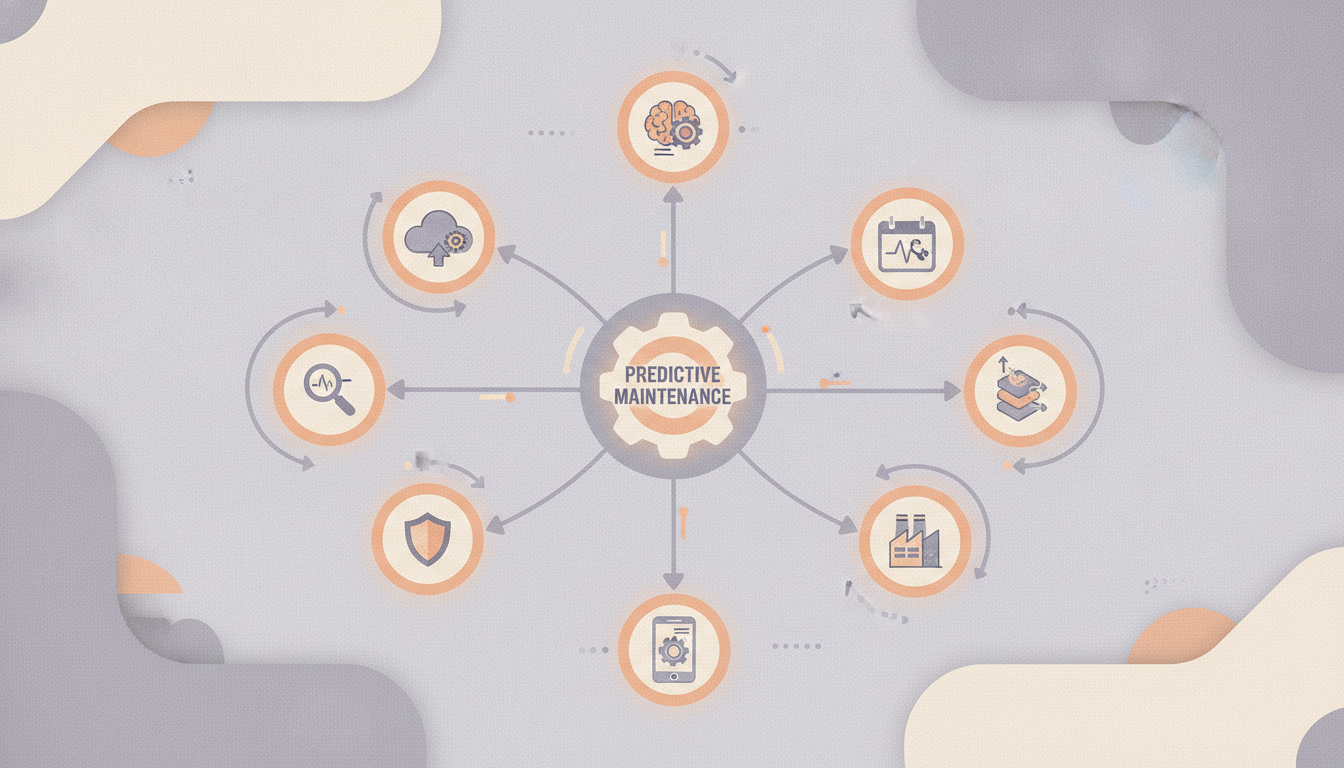
In this comprehensive guide we will break down the top 10 IIoT platform features essential for effective predictive maintenance. You will learn exactly what to look for when evaluating platforms from real-time data acquisition to security and compliance. Each feature is explained with real-world scenarios practical tips and specific criteria to help you make an informed decision. By the end you will have a clear checklist to assess any IIoT platform and find the one that truly reduces downtime and maintenance costs.
1. Real-Time Data Acquisition and Sensor Fusion
Predictive maintenance starts with data. Without reliable real-time data from your equipment no amount of sophisticated analytics will deliver accurate predictions. The foundation of any IIoT platform is its ability to capture high-quality sensor data and fuse it from multiple sources to create a complete picture of asset health.
Comprehensive Sensor Support
A strong IIoT platform must support a wide range of IIoT sensors including vibration temperature pressure current flow and acoustic sensors. Different failure modes require different data types. For example bearing wear is best detected through high-frequency vibration analysis while overheating is captured by thermal sensors. The platform should also interface with existing sensors already installed on your machinery rather than requiring a complete sensor replacement.
Equally important is edge preprocessing. Raw sensor data particularly vibration data can be extremely bandwidth-intensive. A platform that supports edge computing can perform initial filtering and feature extraction locally. For instance instead of sending thousands of raw vibration samples per second to the cloud the edge processor can calculate RMS values crest factor and FFT peaks and transmit only these summarized metrics. This reduces cloud storage costs and network load while still preserving critical information for analysis.
Protocol compatibility is another critical aspect. Your factory floor likely uses a mix of industrial protocols like MQTT OPC-UA Modbus and Profinet. The IIoT platform must support these natively without requiring expensive custom gateways. Check if the platform has pre-built connectors for common PLC brands like Siemens Rockwell and Mitsubishi. A platform that requires manual protocol translation for every device will delay your implementation and increase costs.
Data Quality and Frequency
Predictive maintenance algorithms are only as good as the data they receive. For rotating machinery like motors pumps and compressors high sampling rates are essential. Slow-moving equipment might only need 1 Hz sampling from temperature sensors but high-speed turbines require vibration sampling at rates up to 20 kHz to capture transient anomalies like blade rubs or bearing spalling.
The IIoT platform must handle high-frequency data without data loss. Look for platforms that offer configurable sampling rates and time-series databases optimized for industrial data. Some platforms use compression algorithms to reduce storage while preserving data integrity. Others provide data buffering at the edge to prevent loss during network interruptions.
Sensor fusion takes data acquisition to the next level by combining inputs from multiple sensors to improve diagnostic accuracy. For example a single vibration reading might indicate imbalance but combining it with temperature and current data confirms the issue and rules out false alarms. Platforms that support sensor fusion enable more reliable predictions and reduce unnecessary maintenance actions.
Quick win: Identify three critical machines in your facility that experience frequent failures. Check if your current or candidate IIoT platform supports vibration temperature and current sensors simultaneously for these machines. If not prioritize platforms that do.
2. Advanced Predictive Analytics and Machine Learning
Collecting data is worthless if you cannot extract actionable insights from it. The true value of an IIoT platform for predictive maintenance lies in its analytics capabilities particularly machine learning algorithms that detect patterns humans cannot see.
Pre-Trained vs Custom Models
Not all manufacturers have data science teams. The ideal IIoT platform offers a balance between pre-trained models for common assets and custom model training for specialized equipment.
Pre-trained models are a quick win. They come with built-in failure prediction algorithms for standard assets like centrifugal pumps compressors motors and fans. These models have been trained on millions of operational hours across multiple industries and can immediately start providing RUL (Remaining Useful Life) estimation and anomaly detection. For instance a platform might detect that a motor bearing has 85% remaining life based on vibration pattern analysis and historical failure data from similar motors.
However your factory might have unique or custom equipment that does not fit standard models. A good platform allows you to train models using your own historical maintenance data. You can label past failures and normal operating conditions and the platform automatically learns the specific patterns that precede failures in your environment. This custom training significantly improves prediction accuracy over generic models.
Automated model retraining is a feature often overlooked. Equipment behavior changes over time due to wear seasonal variations or operating load changes. The platform should continuously update its models with new data to maintain accuracy. Look for platforms that use active learning where the model flags uncertain predictions for human review then incorporates that feedback into retraining.
Interpretability
Maintenance teams need to trust the predictions to take action. If a platform says "failure likely in 72 hours" without explanation technicians may ignore the alert. Explainable AI is not a luxury but a necessity for industrial environments.
The best platforms provide clear reasons behind predictions. Instead of a black box output they show which sensor readings triggered the alarm and the specific failure mode detected. For example "Vibration levels exceeded threshold on bearing #2 FFT analysis shows sideband frequencies indicating inner race defect. Recommend replacement within 100 operating hours." This level of detail builds confidence and enables proactive planning.
Anomaly detection algorithms are another essential capability. While failure prediction focuses on known failure patterns anomaly detection catches the unexpected unusual behavior that could indicate a new type of failure. The platform should automatically learn what "normal" looks like for each asset and flag deviations that do not match any known patterns. This is particularly valuable for new equipment or processes where failure history is unavailable.
Practical tip: When evaluating analytics platforms ask for a demo with your own data. Upload a week's worth of sensor data from a problematic machine and see if the platform detects any anomalies or predicts failures. This trial run reveals the real capability beyond vendor marketing claims.
3. Scalability and Edge-to-Cloud Architecture
Manufacturing operations are dynamic. You might start with a pilot on 10 machines but successful implementation will quickly expand to hundreds or thousands of assets across multiple plants. Your IIoT platform must grow with you without performance degradation or exploding costs.
Edge Processing Benefits
Edge computing is not just a buzzword,it is a practical necessity for industrial environments. When milliseconds matter you cannot wait for data to travel to the cloud and back. Edge processing enables local real-time decisions even when internet connectivity is intermittent or absent.
For example consider a high-speed packaging line where a bearing failure could cause a catastrophic jam within seconds. An edge processor analyzing vibration data on-site can trigger an immediate emergency stop without waiting for cloud analysis. This latency reduction from seconds to milliseconds can prevent damage worth hundreds of thousands of dollars.
Edge processing also reduces cloud costs significantly. Instead of sending terabytes of raw data daily only summarized metrics and anomalies travel to the cloud. This cuts bandwidth expenses and cloud storage fees while still enabling long-term analytics at the enterprise level.
Cloud Aggregation
While edge computing handles real-time needs cloud aggregation provides a bird's-eye view across your entire operation. A cloud IIoT platform collects data from multiple plants and equipment types enabling enterprise-wide optimization.
Imagine you have similar compressors at three different facilities. The cloud platform can compare performance across all three identifying that one plant consistently experiences higher vibration levels. This insight triggers investigation into that plant's installation practices or operating procedures revealing improvement opportunities that benefit the entire organization.
Hybrid deployment options offer the best of both worlds. Look for platforms that allow you to process data at the edge local servers or the cloud depending on your needs. Some manufacturers prefer on-premises storage for sensitive data while using cloud analytics for less critical monitoring. A flexible architecture adapts to your security requirements and operational constraints.
Key consideration: When evaluating scalability ask vendors how they handle data from 1000+ assets. Review case studies of similar sized deployments. Platforms that overload at scale will cause data loss and unreliable predictions.
4. Seamless Integration with Existing Systems
No IIoT platform operates in isolation. Your factory already uses enterprise software for maintenance management procurement and production control. The platform must integrate seamlessly with these systems to create a unified workflow.
Automation Triggers
The true power of predictive maintenance is automated action. When the platform predicts a failure it should not just send an email,it should trigger corrective actions. Integration with CMMS (Computerized Maintenance Management System) is critical.
For instance the platform detects vibration anomalies in a pump predicting failure within 48 hours. It automatically creates a work order in your CMMS with details like "Replace bearing #2 on pump P-103 predicted failure in 48 hours. Recommended parts: bearing SKF 6205-2RS." The work order is assigned to the appropriate technician and appears on their schedule automatically.
This automation eliminates manual data transfer and reduces the time from detection to action. Without integration a maintenance manager would need to check the IIoT dashboard manually see the alert then separately log into CMMS to create the work order. This manual process introduces delays and human error.
Data Unification
IIoT data is most powerful when combined with other operational data. The platform should unify sensor readings with maintenance logs production schedules and quality metrics.
For example combining vibration data with maintenance history reveals that a particular machine fails more frequently after 500 hours of operation. This insight enables you to schedule preemptive maintenance before the failure threshold even if sensor readings appear normal. Similarly correlating production data with equipment performance shows that running at higher throughput accelerates bearing wear enabling you to balance production targets with asset longevity.
ERP integration is equally important. When the platform detects a pending failure it can check spare parts inventory in your ERP and automatically order components if stock is low. This proactive supply chain integration prevents the frustrating scenario where you know a failure is coming but cannot execute maintenance because parts are unavailable.
Pre-built connectors simplify integration significantly. Instead of custom API development look for platforms with connectors for popular systems like SAP Oracle Maximo and Siemens SCADA. These pre-built integrations reduce implementation time from months to weeks.
Warning: Avoid platforms that require extensive custom coding for every integration point. Maintenance teams rarely have dedicated developers and custom integrations become fragile when systems are updated.
5. Intuitive Dashboards and Visualization
Data is only useful if people can understand it quickly and act on it. An IIoT dashboard cluttered with confusing charts will be ignored by the very people who need its insights.
Role-Based Interfaces
Different people in your organization need different information. An operator on the shop floor needs simple color-coded status indicators: green for good yellow for warning red for critical. They do not need detailed FFT plots or RUL percentages. A maintenance engineer on the other hand needs deep technical data for diagnosis: trend graphs bearing frequencies and historical comparisons.
The best platforms offer role-based dashboards that automatically display relevant information for each user. When an operator logs in they see a plant layout with machine health status at a glance. When a reliability engineer logs in they see vibration spectrums and ML model confidence scores. This personalization reduces information overload and speeds decision-making.
Alert Visualization
Alerts must be immediately understandable. Use color-coded severity levels to convey urgency: green for normal yellow for caution orange for warning and red for critical. This intuitive system enables rapid triage even by personnel who are not deeply familiar with the equipment.
Geospatial maps add another dimension particularly for large facilities with equipment spread across multiple buildings or floors. A plant map showing asset locations with color-coded health indicators helps maintenance teams prioritize travel routes and respond to critical alerts first.
Mobile access is non-negotiable for field technicians. They cannot be tied to a control room workstation. The platform should offer mobile dashboards optimized for small screens showing real-time asset health and alert notifications. Mobile access should include the ability to acknowledge alerts view equipment details and access maintenance procedures directly from the field.
Historical trend analysis enables deep investigation. When a technician notices unusual behavior they should be able to drill into historical data with a few clicks. Sliding through time series data comparing current readings to the same period last year or to baseline performance helps distinguish genuine degradation from normal variations.
Quick win: Evaluate the dashboard by asking a real maintenance technician to test it. If they cannot find critical information within 30 seconds the platform needs improvement.
6. Security Compliance and Reliability
Industrial data is sensitive and production systems are critical. A security breach or platform outage can bring manufacturing to a halt. IIoT security must be built into the platform from the ground up not added as an afterthought.
Data Privacy
Your equipment performance data is intellectual property. It reveals production rates quality issues and machine design parameters that competitors could exploit. The platform must ensure data residency allowing you to choose where data is stored geographically. Some manufacturers require on-premises storage while others are comfortable with cloud storage provided it is within their country.
Encryption at rest and in transit is mandatory. All sensor data as it travels from devices to edge to cloud must be encrypted using industry-standard protocols like TLS 1.3. Data stored on servers must be encrypted with AES-256. Without encryption sensor data traversing your factory network could be intercepted by malicious actors.
Secure device authentication prevents unauthorized devices from connecting to your IIoT platform. Each sensor should have a unique digital certificate that is verified before data transmission begins. This eliminates the risk of rogue devices injecting false data that could trigger unnecessary maintenance actions or mask genuine failures.
Uptime Guarantees
A cloud IIoT platform is useless when it is down. Look for vendors that offer Service Level Agreements (SLAs) with guaranteed uptime of 99.9% or higher. The SLA should include financial penalties for failures below the promised level.
High availability architecture with redundant servers and automatic failover ensures that even if one server fails the platform continues operating. Disaster recovery plans should specify recovery time objectives (RTO) of less than one hour meaning operations resume within 60 minutes of a catastrophic failure.
Role-based access control (RBAC) ensures that only authorized personnel can view sensitive data or modify platform settings. For example maintenance technicians might have read-only access to dashboards while reliability engineers can adjust alert thresholds. Plant managers can view all data but cannot change configurations. This granular control prevents accidental misconfiguration that could disrupt operations.
Compliance with industry standards demonstrates a vendor's commitment to security. Look for certifications like IEC 62443 specifically designed for industrial control system security and ISO 27001 for information security management. These certifications show that the platform has undergone rigorous third-party audits.
Critical question: When evaluating vendors ask for their security incident response plan. How quickly do they respond to vulnerabilities? Have they experienced breaches in the past and how were they handled? Transparency on security matters is a good sign.
7. Alerts and Notification Systems
Alerts are the primary communication channel between your IIoT platform and your maintenance team. However poorly designed alert systems cause alert fatigue where technicians ignore critical warnings because they receive too many false positives.
Intelligent Alerting
Machine learning can dramatically reduce false alarms. Modern IIoT platforms learn what constitutes a real anomaly versus normal operating variations. For example a temporary vibration spike during a machine start-up might be normal but the same spike during steady-state operation indicates a problem.
The platform should use contextual alerting that considers operating conditions. If the machine is running at 120% of rated capacity temporary high temperature is expected and not a cause for alarm. But if the same temperature occurs at normal load that is a true alert. Manual threshold setting is too simplistic for real-world industrial conditions.
Alert grouping prevents notification overload. Instead of sending ten individual alerts for a single cascading failure the platform should recognize that a pump failure is causing downstream pressure drops and generate one consolidated alert: "Pump failure detected causing pressure drops on lines 3 4 and 5. Root cause identified."
Actionable Alerts
An alert that says "Machine 5 unusual vibration" is worthless. An actionable alert says "Machine 5 vibration increased 30% over baseline. FFT indicates bearing inner race defect. Immediate inspection required. Location: Building A Row 2. Replacement bearing part # SKF 6208 on shelf B3."
Recommended actions should be built into each alert. Include links to maintenance procedures or videos stored in your knowledge base. This reduces decision-making time for technicians who might not have deep expertise on every machine.
Multi-channel notifications ensure alerts reach the right people through their preferred medium. Critical alerts should trigger SMS and phone calls while informational alerts can go to email or a dashboard badge. The platform should support escalation policies where if an alert is not acknowledged within 30 minutes it escalates to a supervisor then to a manager.
Integration with existing notification tools like Slack Microsoft Teams or PagerDuty allows alerts to appear in tools your team already uses. This reduces the need to check yet another dashboard and improves response times.
Pro tip: Run a pilot with actual alert configurations before going live. Monitor alert volume for a week and adjust thresholds to reduce false positives. A good target is fewer than five actionable alerts per day per 100 machines.
8. Digital Twin and Simulation Capabilities
Digital twin technology creates a virtual replica of your physical equipment that updates in real-time with sensor data. While not all platforms offer this feature it significantly enhances predictive maintenance capabilities.
A digital twin allows you to simulate "what-if" scenarios without risking actual equipment. For example you can simulate how a machine would behave if it runs at 110% capacity for two hours. The simulation predicts temperature rises and vibration changes showing whether the machine would enter a danger zone. This enables proactive optimization of production schedules without trial-and-error.
Digital twins also improve root cause analysis. When a failure occurs you can replay the event in simulation mode identifying exactly which parameters triggered the failure. This deep insight helps you redesign maintenance strategies or modify operating procedures to prevent recurrence.
When evaluating platforms ask if they support digital twin creation using CAD models or simplified representations. Advanced platforms allow you to import existing CAD files and connect them to sensor data streams creating accurate virtual replicas of your equipment.
9. Vendor Support and Ecosystem
Platform selection is not just about software features,it is about choosing a partner who will support your predictive maintenance journey for years.
Evaluate the vendor's domain expertise in manufacturing. Do they understand industrial environments? Can their engineers discuss topics like bearing failure modes and pump cavitation? Vendors with general IIoT experience but limited manufacturing knowledge will struggle to help you configure platform features for your specific needs.
Training and onboarding are critical for adoption. Look for vendors that offer hands-on training for your maintenance and engineering teams. Comprehensive documentation including best practice guides and troubleshooting resources reduces your dependence on vendor support.
Community and partner ecosystem indicate long-term platform viability. Large ecosystems mean more pre-built integrations more third-party sensors are supported and more talent available for hire. Platforms with active user communities provide forums for sharing best practices and troubleshooting issues.
Service level agreements for support response times should match your operational needs. If you run 24/7 operations you need 24/7 vendor support with guaranteed response times for critical issues. Ask for average resolution times for previous support tickets to understand actual performance.
10. Total Cost of Ownership and Pricing Models
Predictive maintenance platforms can be expensive and costs extend far beyond the initial license fee. Understanding total cost of ownership (TCO) is essential for making a financially sound decision.
Pricing models vary widely. Some platforms charge per device per month while others charge based on data volume or number of users. Calculate costs for your expected deployment scale. A per-device model might be cheaper for 50 machines but become expensive at 5000 machines. Conversely data volume pricing might be economical for low-frequency sensors but prohibitive for high-frequency vibration sensors.
Hidden costs include:
- Edge hardware purchases
- Sensor installation and calibration
- Network infrastructure upgrades (industrial WiFi PoE switches)
- Cloud storage fees beyond included limits
- Premium support tiers
- Integration consulting with existing systems
ROI calculation should be part of your evaluation. Estimate software costs for three years and compare to projected savings from reduced downtime. If a platform costs $100000 annually but prevents $500000 in downtime it is a sound investment. Look for vendors who provide ROI calculators based on your specific equipment and failure rates.
Free trials and proof of concepts reduce financial risk. Most reputable vendors offer 30-60 day trials with limited devices. Use this trial to evaluate performance with your actual equipment and team before committing to long-term contracts.
Conclusion
Choosing the right IIoT platform for predictive maintenance is one of the most impactful decisions you can make for your manufacturing operation. The right platform can reduce unplanned downtime by up to 50% extend equipment life by 20-30% and lower maintenance costs significantly. The wrong platform wastes implementation dollars breeds team frustration and fails to deliver promised results.
The 10 features covered in this guide form a comprehensive evaluation framework:
- Real-Time Data Acquisition and Sensor Fusion – capture high-quality data from diverse sensors edge-preprocessed for bandwidth efficiency
- Advanced Predictive Analytics and ML – balance pre-trained models with custom training and ensure interpretability
- Scalability and Edge-to-Cloud Architecture – scale from pilot to enterprise with hybrid processing options
- Seamless Integration with Existing Systems – connect to CMMS ERP and SCADA for automated workflows
- Intuitive Dashboards and Visualization – provide role-specific interfaces with clear actionable information
- Security Compliance and Reliability – protect data with encryption RBAC and disaster recovery
- Alerts and Notification Systems – reduce false positives and make alerts actionable
- Digital Twin and Simulation – enable what-if analysis and deep root cause investigation
- Vendor Support and Ecosystem – partner with domain experts who provide ongoing training and support
- Total Cost of Ownership – understand all costs and calculate ROI before committing
Use this checklist when evaluating vendors. Create a scoring matrix for your top three contenders based on these features weighted by your specific priorities. Involve your maintenance engineers operators and IT team in the evaluation since they are the end-users who will make the platform succeed or fail.
Ready to transform your maintenance strategy? Contact our experts for a personalized IIoT platform recommendation tailored to your facility. We will analyze your current maintenance costs identify the features that matter most for your equipment and help you select a platform that delivers real measurable results. Fill out the form below and our team will reach out within one business day.
Frequently Asked Questions
Q1: How long does it take to implement a predictive maintenance IIoT platform?
Typical implementation takes 4-12 weeks depending on deployment scale. A pilot with 10-20 machines can be operational within 4 weeks. Full enterprise deployment across multiple plants may take 3-6 months including sensor installation platform configuration training and gradual rollout. Edge computing-based platforms often deploy faster since cloud setup is simpler.
Q2: Can IIoT platforms work with older equipment without built-in sensors?
Yes. Retrofitting is common and straightforward. Add-on sensors like wireless vibration and temperature sensors can be mounted on legacy equipment without wiring. These sensors use batteries lasting 2-5 years and communicate via industrial protocols. Many platforms specialize in retrofitting older machinery providing pre-configured sensor packages for common asset types.
Q3: What is the typical ROI for predictive maintenance using IIoT?
Manufacturers typically see 10-20x ROI over three years based on reduced downtime and maintenance costs. Average payback period is 6-12 months. A plastics manufacturer reduced unplanned downtime by 45% saving $1.2 million annually on a platform costing $120000 per year. ROI depends on your current downtime levels and equipment criticality.
Q4: How much training does the maintenance team need to use these platforms?
Most modern platforms require only 2-4 hours of training for operators and 8-16 hours for reliability engineers. Role-based interfaces mean most team members see only simplified dashboards. Platform vendors typically include initial training in the implementation package and provide ongoing webinars and documentation. No data science background is required.
Q5: What happens if internet connectivity is lost at the factory?
Modern platforms with edge computing continue operating normally. The edge processor stores data locally and continues real-time analytics and alerts. When connectivity returns data syncs to the cloud automatically. Platforms without edge capabilities lose functionality during outages making edge support essential for facilities with unreliable connectivity.
Written with LLaMaRush ❤️