Picture this: A Thursday afternoon at a mid-sized manufacturing plant outside Chicago. The main press line is humming, fulfilling a critical automotive component order. Suddenly, a deafining hiss echoes through the bay, followed by the groaning halt of a 500-ton hydraulic press. A blown cylinder seal has sprayed high-pressure fluid everywhere, shutting down the line. The result? Fourteen hours of unexpected downtime, $18,000 in immediate parts and labor, and over $50,000 in lost revenue from delayed shipments. This wasn't an anomaly; it was the culmination of reactive, outdated hydraulic system maintenance practices.
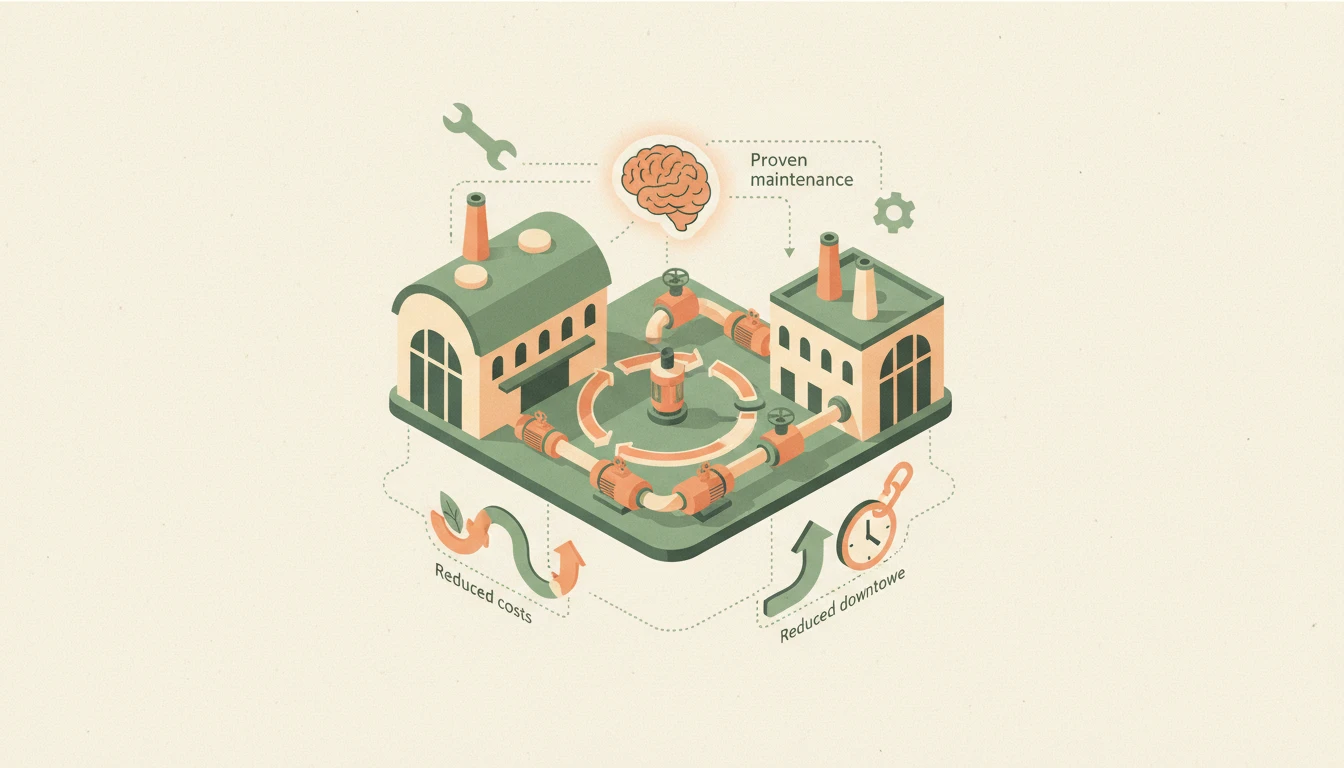
This scenario, and the costly inefficiencies it represents, was the reality for many mid-sized manufacturing plants until they shifted their mindset. The problem this case study solves is the chronic cycle of hydraulic breakdowns, exorbitant emergency repair costs, and production unpredictability caused by run-to-failure or overly simplistic calendar-based maintenance. By examining a real-world transformation, you will learn how one plant implemented a systematic, data-informed approach to hydraulic system maintenance, resulting in a 30% reduction in annual maintenance costs and a dramatic boost in overall equipment reliability. This isn't theory; it's a proven blueprint.
Plant Overview and Initial Hydraulic System Assessment
The subject of this hydraulic system maintenance case study is a 120,000-square-foot facility specializing in metal stamping and fabrication for the transportation industry. Operating two full shifts, five days a week, the plant’s manufacturing operations are heavily dependent on hydraulic power for forming, punching, and material handling. Prior to the overhaul, maintenance was purely reactive,technicians responded to failures, but there was no structured program to prevent them. The prevailing attitude was "if it isn't leaking badly or making noise, it's fine."
Key Hydraulic Equipment in Use
A thorough audit revealed a diverse ecosystem of hydraulic system components, each with its own maintenance needs and failure points. Creating a detailed asset register was the first critical step.
| Equipment Type | Brand/Model | Key Function | Operating Pressure (psi) | Reservoir Capacity (Gal) |
|---|---|---|---|---|
| Main Stamping Press | Hytec 500SC | Primary metal forming | 3,000 | 150 |
| CNC Hydraulic Punch Press | Finn-Power X5 | Precision hole punching | 2,500 | 80 |
| Material Handling Arms (x4) | Custom-built | Moving steel blanks | 2,000 | 30 (each) |
| Hydraulic Power Unit (HPU) | Bosch Rexroth | System power for press line | 3,000 | 200 |
| Directional Control Valves | Parker D1VW | Flow control for cylinders | 3,000 | N/A |
This detailed list was crucial. It moved maintenance from a vague concept ("check the hydraulics") to a specific, actionable inventory. Understanding that the aging Hytec press ran at a higher sustained pressure than other machines, for example, immediately flagged it as a higher-risk asset requiring more frequent fluid analysis.
Existing Maintenance Schedule and Gaps
The plant's previous initial maintenance assessment uncovered a schedule that was both insufficient and misapplied. The only documented tasks were quarterly fluid top-offs and an annual filter change, based solely on calendar time, not operating hours or condition. There were no daily visual inspections, no routine fluid testing, and no vibration or temperature monitoring. The shortcomings were glaring:
- Failure-Based, Not Prevention-Based: Technicians were glorified firefighters. A pump would cavitate and fail, causing downtime, and only then would it be rebuilt or replaced.
- No Data Collection: Beyond basic work orders for repairs, there was no historical data on Mean Time Between Failures (MTBF), component lifespan, or the root cause of recurring issues.
- Inefficient Resource Use: The maintenance team was constantly in emergency mode, leading to overtime costs and the neglect of smaller, proactive tasks that could prevent major failures.
- Fluid Neglect: Hydraulic fluid was treated as a lifetime fill. Contamination from particulates, water, and air ingress degraded system components silently from within, leading to premature pump wear and valve stiction.
The gaps were clear: a lack of frequency, a lack of specificity, and a complete absence of condition-based monitoring. The schedule was designed for convenience, not for the actual needs of the equipment.
Identifying Critical Hydraulic Maintenance Challenges
With the equipment cataloged and the old system's flaws laid bare, the next step was to quantify the problem. What were the most common failures, and what did they truly cost? This phase moved the conversation from anecdotes to hard data, building the financial case for change.
Most Frequent Hydraulic Issues and Their Impact
The plant compiled 18 months of work order history, revealing a pattern of recurring hydraulic system failures. Three issues dominated:
- External Seal and Hose Failure: Accounting for 45% of all hydraulic-related work orders. A leaking cylinder rod seal on the material handler, for instance, seemed minor but led to fluid loss, environmental safety hazards, and gradual loss of clamping force. Average repair time: 3.5 hours (including cleanup). Average cost: $450 in parts and labor, plus 0.5 hours of line stoppage.
- Pump Cavitation and Wear: Responsible for 30% of failures and the most costly in terms of downtime. The main HPU's vane pump would fail catastrophically every 12-18 months due to ingested air and contaminated fluid. This required a full pump rebuild or replacement, taking the entire press line offline for 10-16 hours. Average cost: $4,200-$6,500 per event.
- Valve Bank Contamination and Sticking: Making up 25% of issues, these caused erratic machine behavior,slow cycles, incomplete strokes, or inconsistent pressure. Diagnosing a sticky directional valve was time-consuming, often taking 2-4 hours of troubleshooting before a 1-hour replacement. Average cost: $800-$1,200 per valve bank incident.
The financial impact extended beyond parts and labor. The downtime costs were calculated at $3,800 per hour for the main production line (factoring in lost margin, labor overhead, and potential penalty clauses). A single pump failure could thus incur over $60,000 in total costs.
Analyzing Historical Failure Data
The plant began to tag every hydraulic work order with more detail: equipment ID, failed component, suspected root cause, total downtime, and parts used. This failure analysis revealed critical patterns:
- Peak Failure Times: 65% of major failures occurred in the first two hours of Monday morning or after a prolonged line stoppage (like a weekend). This pointed directly to issues with cold starts, moisture condensation, and potential fluid settling.
- Costliest Components: While pumps had the highest single-event cost, the cumulative cost of seal and hose replacements over a year was 40% higher, making them the primary target for preventive action.
- Root Causes: In over 70% of cases, the ultimate root cause traced back to fluid contamination (particulates, water) or improper maintenance practices (using incorrect seal materials, over-tightening fittings).
This data was transformative. It shifted the focus from simply fixing broken parts to addressing the systemic conditions that caused them to fail. The maintenance challenges were no longer mysteries; they were data points on a chart, waiting to be solved.
Step-by-Step Implementation of the New Maintenance Program
Armed with data, the plant moved from diagnosis to action. The goal was to replace the reactive cycle with a proactive, predictable hydraulic maintenance program. Implementation was phased to ensure staff buy-in and manageable adjustment periods.
Developing a Detailed Maintenance Checklist
The cornerstone of the new program was a tiered, actionable checklist. This moved maintenance from a vague responsibility to a series of clear, accountable tasks. The checklist was tailored to each major asset but followed a universal cadence.
Daily/Pre-Shift Checks (Operator & Technician):
* Visual Inspection: Check all cylinders, hoses, fittings, and the reservoir for visible leaks, cracks, or damage.
* Reservoir Level: Check fluid level in sight glass. Investigate any significant drop from the previous day.
* Auditory & Sensory Check: Listen for unusual pump noises (whining, cavitation) and feel pump housings and valves for excessive heat.
* System Pressure: Verify pressure gauges are reading within normal operating range at idle and under load.
Weekly Checks (Maintenance Technician):
* Filter Indicators: Check differential pressure gauges or visual indicators on suction and return line filters. Schedule change if indicated.
* Fluid Condition: Take a visual sample in a clear bottle. Look for cloudiness (water), darkening (oxidation), or visible particulates.
* Clamp and Fitting Security: Check and tighten loose hose clamps and tube fittings (to proper torque specs, not over-tightened).
* Cleanliness: Wipe down reservoirs, valve banks, and pumps to prevent contaminant ingress and make leaks easier to spot.
Monthly/Quarterly Tasks (Lead Technician):
* Fluid Analysis: Send a closed-sample of hydraulic fluid to a lab for full spectrographic analysis. Report tracks particle count, water content, viscosity, and additive levels.
* In-depth Component Inspection: Using infrared thermometers and ultrasonic listening devices, check for hotspots on pumps and motors and internal leaks in valves.
* Seal and Hose Integrity: Perform a detailed inspection of all dynamic seals and flexible hoses, looking for cracks, swelling, or abrasion. This is where hydraulic fluid contamination prevention is key, as contaminated fluid attacks seals.
Tools and Technologies Adopted
To support the new checklist and enable predictive capabilities, the plant invested in several key tools:
- Condition Monitoring Sensors: Wireless IoT sensors were installed on the main HPU and press to monitor reservoir temperature, fluid level, and pump vibration in real-time. Alerts were set for abnormal readings.
- Maintenance Management Software (CMMS): All checklists, work orders, and historical data were digitized. The software automated scheduling, tracked compliance, and housed the equipment manual and bill of materials for every machine.
- Specialized Diagnostic Tools:
- Ultrasonic Leak Detector: To find pressure leaks in noisy environments before they were visible or audible to the human ear.
- Infrared Camera: To identify overheating components like stuck valves or failing pump bearings during monthly inspections.
- Staff Training Initiatives: A critical, often overlooked component. Technicians received formal training on proper flushing procedures, seal installation techniques, and how to interpret fluid analysis reports. This empowered them to be analysts, not just parts-swappers.
This phase transformed the culture. Maintenance became a planned, data-driven activity central to operational success, not a peripheral cost center.
Measurable Results and Performance Improvements Achieved
After 12 months of full implementation, the results were quantified, providing an undeniable return on investment. The performance metrics told a compelling story of improved reliability and significant cost avoidance.
Quantitative Benefits: Data-Driven Outcomes
The before-and-after comparison validated the entire program. Key performance indicators (KPIs) were tracked religiously.
| Metric | Before Program (Baseline Year) | After 12 Months of New Program | % Improvement |
|---|---|---|---|
| Unplanned Hydraulic Downtime (Hours/Year) | 287 hours | 112 hours | 61% Reduction |
| Annual Hydraulic Maintenance Spend | $162,000 | $113,400 | 30% Reduction |
| Mean Time Between Failures (MTBF) - Main HPU | 14 months | 28+ months (and counting) | 100%+ Increase |
| Fluid Consumption (Gallons/Year) | 620 gallons | 380 gallons | 39% Reduction |
| Emergency/Priority Work Orders | 67% of all hydraulic WOs | 22% of all hydraulic WOs | 67% Reduction |
The financial narrative was clear. The cost reduction in emergency repairs and parts, combined with the massive decrease in downtime costs, paid for the initial investments in sensors, training, and software within the first eight months. The improved reliability meant production scheduling became predictable, enhancing customer trust and allowing the plant to take on more ambitious orders.
Long-Term Sustainability and Scalability
Success after one year was promising, but the true test was sustainability. The program demonstrated lasting power by:
- Continuous Refinement: Monthly review meetings used CMMS data to adjust task frequencies. For example, filter changes on a high-cyclic machine were moved from quarterly to bimonthly based on particle count data.
- Knowledge Retention: The digital repository of checklists, procedures, and failure histories in the CMMS prevented knowledge loss from staff turnover.
- Scalability: The model,audit, identify critical assets, implement tiered checklists, apply condition monitoring,was successfully rolled out to the plant's lubrication and compressed air systems. The blueprint proved adaptable.
- Cultural Shift: The maintenance team's role evolved. They now spend 70% of their time on planned, preventive tasks and 30% on minor repairs, a complete reversal from the previous ratio. This boosted morale and professional satisfaction.
The program wasn't a one-time project; it became the new operational standard, delivering compounding returns year over year.
Key Takeaways and Best Practices for Industry Adoption
The journey from chronic failure to controlled reliability offers universal lessons for any mid-sized manufacturing plant. Here are the distilled insights and actionable steps you can adapt.
Critical Maintenance Do's and Don'ts
Based on the plant's successes and occasional stumbles, follow these hydraulic maintenance best practices:
DO:
* Treat Fluid as a Critical Component: Implement regular, scheduled fluid analysis. It's the cheapest form of insurance. Filter it meticulously and change it based on condition, not just time.
* Empower Operators with Simple Checks: Train production staff to perform the daily visual and auditory inspections. They are the first line of defense.
* Standardize Procedures: Create and use detailed, equipment-specific checklists for every task. This ensures consistency and quality, regardless of which technician performs the work.
* Track Everything: If it isn't logged in your CMMS or logbook, it didn't happen. Data is your most powerful tool for making future decisions.
DON'T:
* Ignore Small Leaks: A small drip can indicate a failing seal that may become a catastrophic blowout under full pressure. Address leaks immediately.
* Over-Tighten Fittings: This is a common error that strips threads, deforms seals, and creates new leak paths. Always use a torque wrench.
* Mix Different Fluid Types or Brands: Incompatible additive packages can react, forming sludge and varnish. Stick to one specification and brand per system.
* Adopt a "Set-and-Forget" Mindset: A maintenance program is a living system. Regularly review its effectiveness and be prepared to adjust frequencies and methods based on your data.
Adapting the Program to Different Manufacturing Settings
The core principles of this case study are universally applicable. Here’s how to customize the approach:
- For Smaller Shops: Start simple. You don't need a full IoT suite. Begin with a rigorous daily visual checklist and commit to quarterly fluid analysis. The biggest gains come from basic consistency.
- For Larger or 24/7 Operations: Condition monitoring sensors and predictive analytics become essential. The cost of unplanned downtime is so high that the investment in advanced diagnostics is easily justified.
- For Different Equipment Types: The tiered checklist model (Daily/Weekly/Monthly) works for any complex system. The specific tasks will change,checking for cylinder drift in injection molding machines versus checking accumulator pre-charge in a press,but the structured approach does not.
- Budget Constraints: Prioritize. Focus your most rigorous preventive measures on the equipment whose failure would halt your entire production line. Apply the 80/20 rule to your asset list.
The implementation lessons are clear: start with a thorough assessment, build your plan on data, invest in people through training, and use technology to augment human skill, not replace it. These scalable solutions provide a path away from costly reactivity and toward predictable, profitable production.
The key takeaway is undeniable: Proactive, data-informed hydraulic maintenance is not an expense; it's a strategic investment essential for mid-sized manufacturers to cut costs, enhance reliability, and ensure continuous production. This real-world case study proves that a systematic approach transforms maintenance from a source of problems into a pillar of competitive advantage.
FAQ: Hydraulic System Maintenance
Q1: What's the single most important thing I can start doing tomorrow to improve my hydraulic system's health?
A: Implement a daily visual and auditory check by your operators. Have them look for leaks, check the reservoir level, and listen for unusual pump noises (whining, cavitation). Catching small issues like a weeping hose or a dropping fluid level before they become catastrophic failures is the highest-return, lowest-cost action you can take immediately.
Q2: How often should I really change my hydraulic fluid? Is the "annual change" rule valid?
A: No, changing fluid solely based on time is inefficient and can be wasteful. The correct method is condition-based. Take a fluid sample (at least quarterly for critical systems) and send it for analysis. The lab report will tell you if the fluid has lost its viscosity, become contaminated with water or particles, or depleted its additive package. Change the fluid only when the analysis indicates it's necessary. This practice typically extends fluid life and protects your components more effectively.
Q3: We're a small shop with a limited maintenance budget. Can a predictive maintenance program like this work for us?
A: Absolutely. Predictive maintenance exists on a spectrum. You don't need to start with expensive sensors. The foundation is preventive maintenance based on diligent checks and fluid analysis. For a small shop, the most impactful "predictive" tool is a consistent maintenance log. Tracking simple things like pump replacement dates, filter change intervals, and minor leak repairs will reveal patterns and predict future failures, allowing you to schedule repairs during planned downtime. Start with the basics: a detailed checklist, a commitment to fluid analysis, and disciplined record-keeping.
Written with LLaMaRush ❤️