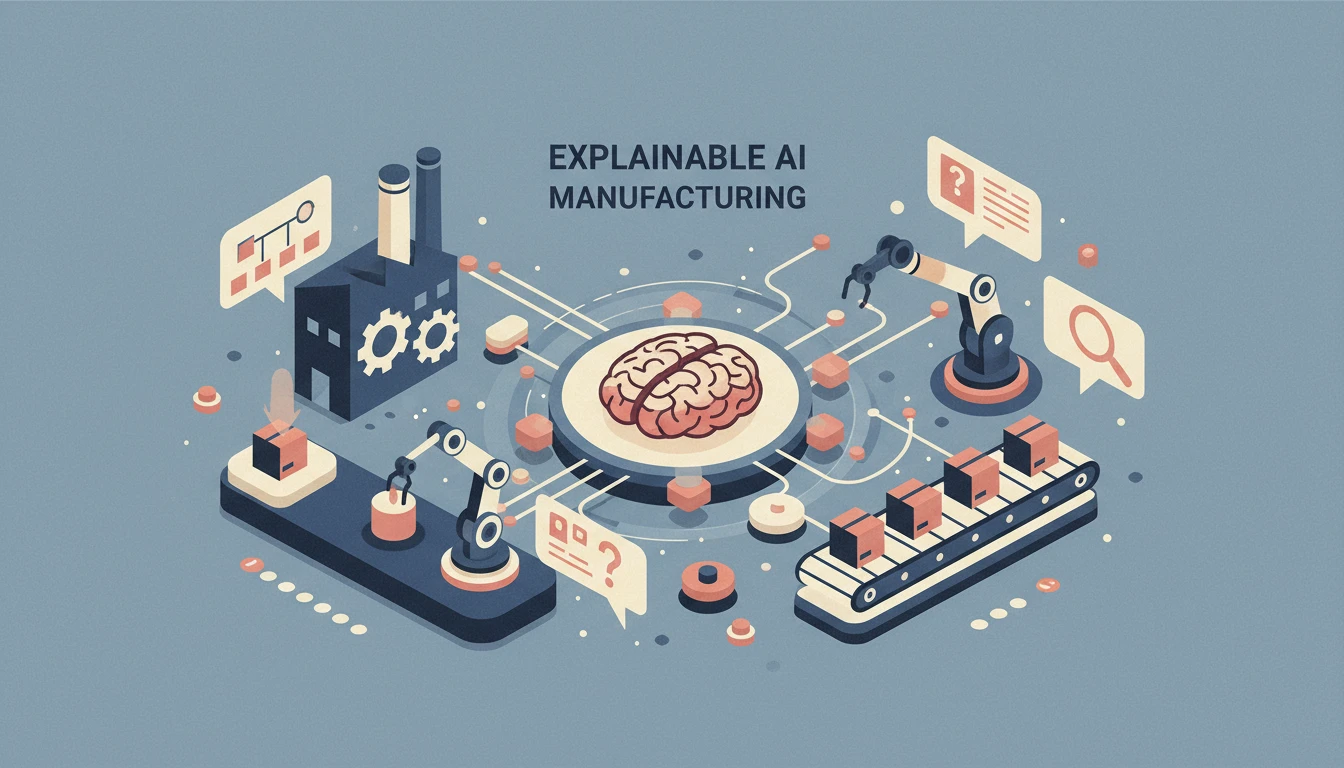
Imagine a robotic assembly line halting unexpectedly, a quality control system rejecting thousands of flawless units, or a predictive maintenance algorithm failing to foresee a critical machine breakdown. You ask the AI why, and it responds with silence,or worse, a cryptic confidence score. This is the "black box" problem, and in the high-stakes world of manufacturing, it’s a luxury no one can afford. As artificial intelligence reshapes the factory floor, the inability to understand AI decisions is creating mistrust, inefficiency, and compliance risks. It doesn’t have to be this way. This guide will show you how explainable AI (XAI) is dismantling these black boxes, transforming opaque algorithms into trusted partners. You’ll learn what XAI is, why it’s a game-changer for manufacturing transparency, and discover a practical, step-by-step path to implementing it in your own operations.
What Is Explainable AI and Why It Matters in Manufacturing
At its core, explainable AI (XAI) is the collection of methods and techniques that make the outputs of artificial intelligence models understandable to human experts. While traditional "black-box" AI like some deep learning models can provide incredibly accurate predictions, they do so without revealing their reasoning. XAI opens up the hood, allowing you to see the "why" behind every decision, prediction, and recommendation.
In manufacturing, where a single decision can affect product quality, supply chains, worker safety, and millions in revenue, this understanding isn’t just helpful,it’s critical. It bridges the gap between raw computational power and human expertise.
Core Concepts of Explainable AI
To navigate the world of XAI, it's essential to distinguish between three key terms: interpretability, explainability, and transparency.
-
Interpretability refers to the degree to which a human can understand the cause of a decision. A simple linear regression model is highly interpretable,you can see the exact weight of each input variable. In a factory setting, this might mean understanding exactly which sensor reading (e.g., temperature spike or vibration frequency) most strongly contributed to a "failure predicted" alert.
-
Explainability is the ability to provide post-hoc (after-the-fact) explanations for a model's behavior, even if the model itself is complex. Techniques like SHAP (SHapley Additive exPlanations) or LIME (Local Interpretable Model-agnostic Explanations) act as translators. For example, they can explain why a complex visual inspection AI flagged a specific weld as defective by highlighting the exact pixel regions in an image that led to its conclusion.
-
Transparency is the overarching goal and result. It means the entire AI process,from the data it was trained on, to its operational logic, to its final output,is open to inspection and understanding. This builds trust in AI systems and is fundamental for regulatory compliance and manufacturing transparency.
The Role of XAI in Modern Manufacturing
Manufacturing is a domain of intricate, interconnected processes with zero tolerance for unexplained failures. XAI matters here because it directly addresses the industry's most pressing needs: safety, compliance, and operational continuity.
A lack of transparency isn't just an academic concern. Consider a real-world scenario where an opaque AI manages a chemical batch process. It suddenly recommends a drastic change in pressure. Operators, unable to see the logic, face a dilemma: blindly follow the AI and risk a hazardous incident, or override it and potentially miss a genuine optimization. This hesitation creates operational risk and paralyzes decision-making.
XAI resolves this by ensuring AI systems are accountable partners. It allows engineers to validate an AI's recommendation against their domain knowledge. It helps quality managers justify decisions to auditors by providing clear, documented reasoning. In essence, XAI turns AI from an inscrutable oracle into a collaborative tool, ensuring that its immense power is wielded with clarity and confidence.
Key Benefits of Explainable AI for Manufacturing Transparency
Moving beyond theoretical concepts, the tangible benefits of explainable AI directly impact the bottom line and operational culture of a factory. Transparency is the catalyst for these advantages.
Building Trust with XAI
Trust is the foundation of any successful technology adoption. When a veteran production line supervisor is presented with a new AI-driven process adjustment, their natural question is, "Why should I trust this?" XAI provides the answer. By offering clear, human-understandable reasons for its outputs, XAI increases user confidence. Operators transition from being passive recipients of commands to engaged collaborators who can interrogate, understand, and ultimately validate the AI's suggestions. This dramatically accelerates adoption and ensures the AI's insights are acted upon rather than ignored.
Operational Efficiency Gains
Transparency isn't just about trust; it's a powerful engine for efficiency. When you can see why a machine is predicted to fail, you can perform targeted, preventive maintenance instead of reacting to unexpected breakdowns, significantly reducing downtime. When you understand which factors in a production batch (material viscosity, ambient humidity) most impact final quality, you can optimize resource allocation and minimize waste.
For instance, if an XAI tool explains that a specific CNC milling tool is wearing out faster due to a particular alloy batch, you can adjust feeds and speeds for that batch only, rather than imposing a conservative, slower milling cycle across all materials. This better insight leads to precise, actionable interventions that cut costs and boost throughput. Furthermore, XAI allows you to quickly identify and correct errors or biases in the AI model itself, preventing the AI from perpetuating inefficiencies.
| Benefit Category | Specific Impact | Example in Manufacturing |
|---|---|---|
| Trust & Adoption | Increased operator confidence & faster AI integration | A welder accepts an AI-suggested parameter change after seeing the explanation links it to a known material porosity issue. |
| Compliance & Audit | Simplified regulatory reporting and quality documentation | Providing FDA auditors with SHAP value reports showing how an AI ensured drug purity by monitoring specific pressure and temperature thresholds. |
| Efficiency & Cost | Reduced unplanned downtime and optimized resource use | Using XAI to pinpoint that bearing failures are predicted based on a specific high-frequency vibration, enabling condition-based lubrication. |
| Decision-Making | Enhanced human judgment with clear, data-backed reasoning | A supply chain manager overrides an AI's "low inventory" alert after the explanation shows it was triggered by a one-time shipping delay already resolved. |
How Explainable AI Enhances Decision-Making in Manufacturing
The true power of AI is realized when it augments human intelligence, not replaces it. XAI is the interface that makes this augmentation possible, turning raw data into contextualized, actionable knowledge for superior decision-making.
Case Study: XAI in Automotive Manufacturing
A leading automotive manufacturer faced a critical challenge: its visual inspection AI for paint quality had a high false-positive rate, flagging minor, acceptable variations as defects. This slowed the line and created confusion. By implementing an XAI technique (specifically, a Grad-CAM visualization), the system could now highlight the exact areas on a car door panel it considered defective. Engineers discovered the AI was overly sensitive to lighting reflections in certain angles, not actual paint flaws. With this explainable AI insight, they retrained the model with more diverse lighting data and adjusted camera placements. The result was a 40% reduction in false positives, faster line speed, and reduced recall risks because the AI’s focus shifted to genuine, critical defects like scratches and drips.
Integrating XAI into Existing Workflows
Seamless integration is key. XAI shouldn't require a complete system overhaul. Strategies include:
1. Start with Dashboards: Embed XAI outputs (feature importance charts, local explanation summaries) directly into existing production dashboards that operators already monitor.
2. Alert with Context: Configure systems so that any AI-generated alert (e.g., "Predictive Maintenance: Compressor #7") is automatically accompanied by a brief, plain-language explanation (e.g., "Triggered by a 15% increase in vibration amplitude in the X-axis over the last 4 hours, correlating with past failure modes.").
3. Root Cause Analysis: Integrate XAI tools with quality control systems. When a defect spike occurs, use XAI to analyze production data from that period and identify the most influential contributing factors (e.g., "Raw Material Batch ID #XYZ" and "Oven 3 Temperature Fluctuation").
This approach enhances predictive maintenance, clarifies supply chain optimization recommendations, and provides interpretable insights for energy management, enabling a true, collaborative partnership between human expertise and artificial intelligence.
Real-World Examples and Case Studies of Explainable AI in Manufacturing
Concrete examples solidify the value proposition of XAI. Here’s how different sectors are leveraging transparency to solve specific problems.
Electronics Manufacturing: XAI for Yield Improvement
An electronics company producing printed circuit boards (PCBs) struggled with fluctuating yields. Their black-box AI for production optimization suggested parameter changes, but engineers couldn't understand the rationale, leading to slow and hesitant implementation. By deploying SHAP analysis, they could see exactly which process variables (e.g., solder paste viscosity, reflow oven zone 5 temperature, component placement pressure) the AI deemed most critical for success or failure on a board-by-board basis. This transparent analysis allowed process engineers to pinpoint that a specific oven temperature profile was causing micro-fractures in certain chip components. Correcting this single, explainable issue led to a 7% boost in product yields, saving millions annually.
Pharmaceuticals: Ensuring Compliance with XAI
In drug manufacturing, compliance with Good Manufacturing Practices (GMP) is non-negotiable. A pharmaceutical firm used a complex AI to monitor fermentation processes for a biologic drug. Regulators required full transparency into any automated decision that could affect drug quality. The company implemented an explainable AI framework that generated an "audit trail" for every batch. If the AI adjusted a nutrient feed rate, the system logged not just the change, but the contributing sensor readings and their weighted importance according to the model. This provided transparent quality assurance, satisfying stringent FDA requirements and turning the AI from a compliance liability into a documented asset for ensuring batch consistency and safety.
Implementing Explainable AI: A Step-by-Step Guide
Adopting XAI is a strategic journey. This practical guide outlines how to move from concept to deployment in your manufacturing environment.
Choosing the Right XAI Tools
Selecting tools depends on your existing AI models and your team's expertise. Here’s a comparison of popular XAI tools and platforms:
- SHAP (SHapley Additive exPlanations): A gold-standard, model-agnostic library. Excellent for explaining the output of any machine learning model (e.g., Random Forests, Gradient Boosting, Neural Networks). It's powerful but can be computationally intensive for very large datasets.
- LIME (Local Interpretable Model-agnostic Explanations): Best for explaining individual predictions. If you need to know "why was this specific unit flagged?" LIME creates a simple, local model around that prediction to explain it. It's great for troubleshooting specific cases.
- InterpretML (by Microsoft): An open-source package that unifies several XAI techniques under one API. It offers both model-specific explanations (for glass-box models) and model-agnostic explanations. Its "Explainable Boosting Machine" is a highly accurate yet inherently interpretable model, a great choice for new projects.
- AI Platforms (e.g., DataRobot, H2O.ai): Many enterprise AI platforms now have XAI features built-in. This is often the easiest path for manufacturers already using these platforms, as explanations are generated automatically alongside predictions.
Training and Change Management
Technology is only half the battle. People and processes must evolve.
- Assess & Identify: Audit your current AI/ML systems. Where is the lack of transparency causing the most pain? Is it in quality control, maintenance, or supply chain forecasting? Start there.
- Educate Teams: Run workshops for engineers, operators, and managers on XAI concepts. Don't dive deep into the math; focus on how to read and act on explanations (e.g., "This bar chart shows which factors the AI considered most important").
- Pilot with a Champion: Choose a high-impact, contained pilot project. Partner with a respected team leader (a "champion") who can demonstrate the value of XAI to their peers through tangible results.
- Iterate & Scale: Use feedback from the pilot to refine how explanations are presented. Then, develop a rollout plan to scale XAI to other areas, updating workflows and documentation as you go.
Future Trends and Challenges of Explainable AI in Manufacturing
Looking toward 2026 and beyond, XAI will continue to evolve, presenting both new opportunities and persistent hurdles.
Technological Advancements in XAI
Emerging innovations will make XAI more powerful and integrated. Explainable Deep Learning is a major frontier, with researchers developing new architectures that are inherently more interpretable. Furthermore, the rise of Edge AI and IoT will push XAI to the factory floor. Imagine a sensor node not just predicting a bearing failure, but also providing a simple, local explanation transmitted directly to a maintenance technician's tablet, enabling immediate action without cloud latency. This fusion will be a cornerstone of Industry 5.0, where human-centric and resilient smart factories rely on transparent collaboration between humans and machines.
Navigating Adoption Challenges
Despite the clear benefits, adoption faces barriers:
* Cost & Complexity: Implementing XAI can require additional computational resources and specialized skills.
* Cultural Resistance: "We've always done it this way" is a powerful force. Overcoming it requires demonstrating clear, quick wins.
* Data Privacy: Explaining a model might inadvertently reveal sensitive information about the training data. Techniques for developing XAI while preserving privacy are an active area of research.
Actionable tips for overcoming these hurdles: Begin with a focus on ROI,calculate the potential savings from reducing downtime or scrap via better explanations. Leverage cloud-based XAI services to reduce upfront infrastructure costs. Most importantly, foster a culture that views the ability to explain and question AI outputs as a strength, not a challenge to authority.
Conclusion
Explainable AI is far more than a technical nicety; it is a strategic imperative for modern manufacturing. It transforms artificial intelligence from a mysterious, untouchable force into a transparent, accountable, and collaborative partner. By delivering manufacturing transparency, XAI builds the trust necessary for widespread adoption, unlocks unprecedented operational efficiency through clear insights, and provides the auditable trail required for stringent compliance.
The journey starts with understanding, continues with a deliberate pilot, and evolves into a culture where every AI-driven decision can be understood, questioned, and optimized by human experts. This synergy is the key to sustainable innovation, risk reduction, and competitive advantage.
Key Takeaway: Explainable AI is not just a technological upgrade but a strategic imperative for manufacturing, offering transparency that builds trust, enhances decisions, and drives sustainable innovation.
Frequently Asked Questions (FAQ)
1. What is the main difference between AI and Explainable AI (XAI)?
Traditional AI focuses on achieving the highest accuracy in its predictions or decisions, often using complex "black-box" models. Explainable AI (XAI) prioritizes understanding. It encompasses both inherently simple models and techniques that explain complex models, ensuring humans can comprehend the "why" behind an AI's output. It’s the difference between getting an answer and getting an answer with a clear, supporting rationale.
2. Is Explainable AI less accurate than black-box AI?
Not necessarily. While some highly interpretable models may trade a small degree of accuracy for clarity, the field of XAI is rapidly advancing. Many techniques (like SHAP) explain highly accurate black-box models without altering their performance. Furthermore, in manufacturing, a slightly less accurate but fully understood model is often far more valuable than a perfectly accurate but opaque one, as it enables trust and actionable intervention.
3. How does XAI help with regulatory compliance like ISO or FDA?
Regulations often mandate that processes affecting product quality and safety be documented, validated, and auditable. A black-box AI is an audit nightmare. XAI provides the necessary documentation by generating reports that show which input factors (sensor data, material properties) drove a specific decision (e.g., to reject a batch). This creates a clear, defensible audit trail, demonstrating due diligence and control.
4. Can I add Explainable AI to my existing AI systems?
Yes, in most cases. Many XAI techniques are "model-agnostic," meaning they can be applied to existing machine learning models (like random forests or neural networks) as a separate layer of analysis. Tools like SHAP and LIME are designed specifically for this post-hoc explanation. You don't always need to rebuild your AI from scratch.
5. What’s the first step I should take to implement XAI in my factory?
Conduct a transparency audit. Identify one critical process where an AI (or a potential AI) is making or influencing decisions and where a lack of understanding is causing hesitation, errors, or inefficiency. This becomes your pilot project. Then, explore a single XAI tool (like starting with SHAP analysis on your existing model) to generate explanations for that specific process and measure the impact on operator confidence and decision speed.
Written with LLaMaRush ❤️