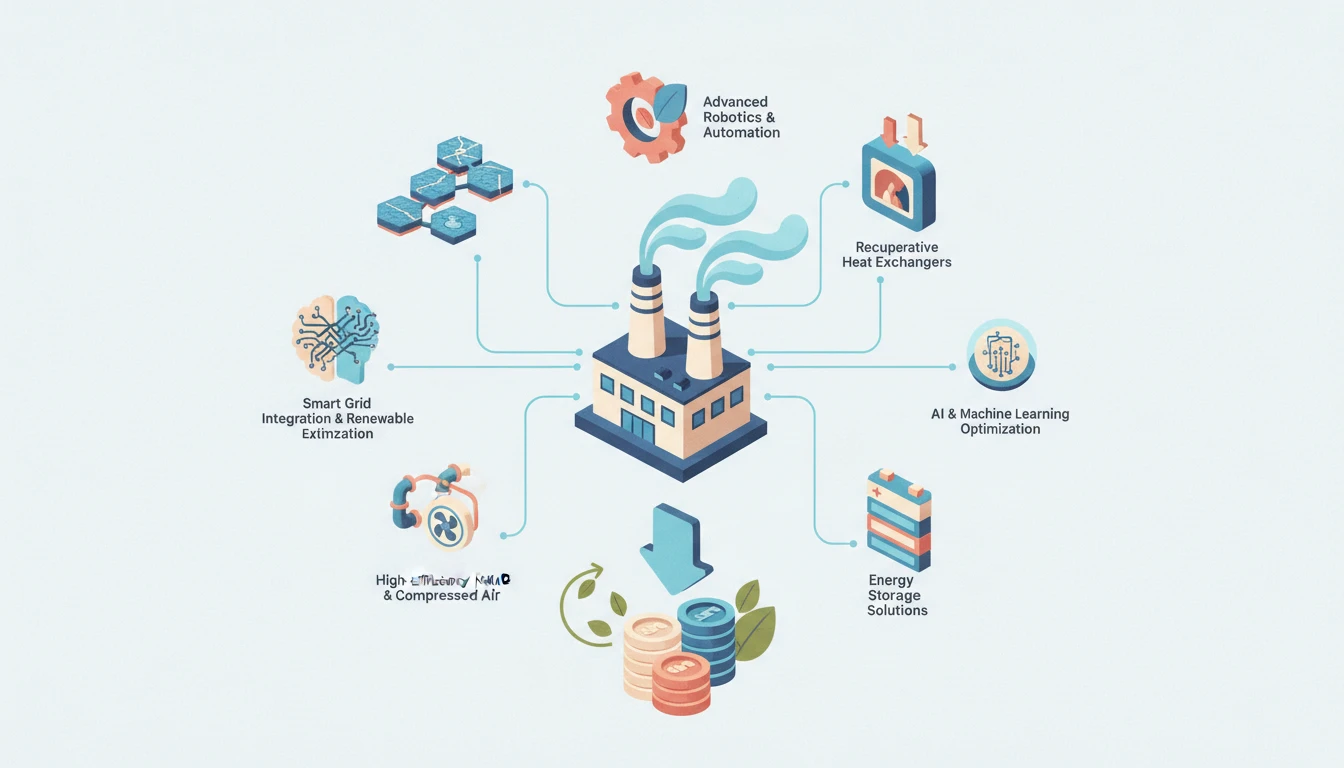
Energy bills are climbing. Environmental regulations are tightening. And the pressure to stay competitive has never been greater. If you’re running a factory or managing a production line, you’re facing a perfect storm that’s squeezing your margins. The traditional approach of treating energy as a fixed, uncontrollable cost is no longer viable. However, this challenge hides a massive opportunity. Modern energy-efficient manufacturing technologies offer a proven, actionable path to not only survive these pressures but to thrive,transforming energy from a major expense into a source of savings, sustainability, and competitive edge.
This guide will walk you through the seven most impactful technologies you should be planning for, backed by real-world examples and a practical roadmap for implementation. You’ll learn how to achieve significant energy cost reduction, ensure regulatory compliance, and build a more resilient, profitable, and sustainable manufacturing operation.
Why Energy Efficiency Matters in Modern Manufacturing
Ignoring energy efficiency today is a direct threat to your bottom line and future viability. It’s not just about "going green",it's a fundamental business strategy for improving operational efficiency and securing long-term profitability.
Economic Benefits
The most immediate and compelling reason to invest is financial. Energy is often one of the top three operational expenses in manufacturing. Implementing efficient technologies delivers direct cost savings by slashing utility bills. For example, switching to high-efficiency motors and LED lighting can reduce a facility’s electricity consumption by 20-30% or more. These savings go straight to your profit margin.
Beyond the meter, efficient equipment often requires less maintenance, has longer lifespans, and reduces downtime. A variable frequency drive (VFD) that softly starts a motor subjects it to less mechanical and electrical stress, cutting maintenance costs and replacement frequency. In an era of razor-thin margins, these savings are not just nice-to-have; they are essential for survival and growth.
Environmental Benefits
The environmental imperative is equally critical. Manufacturing accounts for nearly one-third of global energy consumption and a significant portion of greenhouse gas emissions. By adopting energy-efficient practices, you directly lower your plant's carbon footprint. This isn’t just about corporate social responsibility; it’s about risk management and future-proofing.
Conserving resources,be it electricity, gas, or water,through technologies like energy recovery systems reduces your operation’s environmental impact and aligns with the growing demand for sustainable supply chains. Major clients and B2B customers now routinely audit their suppliers' sustainability performance. Demonstrating a commitment to lower emissions can be the deciding factor in winning or keeping a major contract.
Regulatory Drivers
The regulatory landscape is rapidly evolving to mandate higher efficiency. Globally, frameworks like the ISO 50001 energy management standard provide a structured approach. Locally, governments are implementing stricter energy efficiency standards for industrial equipment and offering powerful incentives to accelerate adoption.
These can take the form of tax credits, accelerated depreciation on efficient equipment, grants, and rebates from utility companies. For instance, in many regions, installing solar panels or high-efficiency HVAC systems can qualify for substantial tax breaks that dramatically improve the return on investment (ROI). Proactively adapting to these regulations turns compliance from a cost into a financial advantage.
In summary: Pursuing energy efficiency creates a powerful trifecta: it boosts profitability, mitigates environmental risk, and ensures compliance while enhancing your brand’s reputation as a forward-thinking leader.
Top 7 Energy-Efficient Technologies for Factories
The following technologies are not distant futuristic concepts; they are proven, available, and delivering results today. Implementing a strategic combination of these can transform your energy profile.
LED Lighting Systems
This is the quintessential "low-hanging fruit" with a rapid ROI. Modern Industrial LED lighting systems consume up to 80% less energy than traditional fluorescent or metal halide fixtures and last 3-5 times longer.
- How it Works & Benefits: LEDs convert more electricity into light and less into wasted heat. When paired with smart controls,motion sensors, daylight harvesting, and programmable zoning,savings compound. A factory floor that remains lit overnight for security can use sensors to illuminate only areas with activity, cutting "phantom" lighting loads.
- Typical Savings: A mid-sized assembly plant replacing 500 metal halide high-bay fixtures with smart LEDs can save over 150,000 kWh annually. At an average industrial rate of $0.10/kWh, that’s $15,000+ in direct savings every year, with a payback period often under two years.
Industrial IoT Sensors
The foundation of smart energy management is data. Industrial Internet of Things (IoT) sensors are the eyes and ears of your factory, collecting real-time data on energy consumption, machine performance, temperature, and vibration.
- How it Works & Benefits: These sensors are attached to key assets,motors, compressors, production lines, HVAC units. They stream data to a central platform, revealing exactly when, where, and how energy is used (and wasted). You can identify machines left running idle, detect inefficient cycles, and pinpoint compressed air leaks that are invisible to the naked ear.
- Actionable Insight: For example, an IoT network might reveal that a specific hydraulic press consumes 40% of its full-load power even while in "standby" mode between shifts. Scheduling an automatic shutdown can yield instant savings without affecting production.
Renewable Energy Integration
On-site generation is moving from an alternative idea to a core strategy for energy cost reduction and resilience. Solar photovoltaic (PV) systems are the most accessible for manufacturers, with wind power being viable in certain locations.
- Feasibility & Impact: The feasibility has skyrocketed as panel costs have plummeted by over 80% in the last decade. Even factories with large, flat rooftop space or unused land can install significant capacity. A 500 kW rooftop solar array can offset a substantial portion of a facility’s daytime load, locking in energy costs for 25+ years and providing a hedge against utility price volatility.
- Environmental Impact: This directly slashes Scope 2 emissions (purchased electricity) and is a powerful statement in sustainability reporting. Many systems now come with battery storage options, allowing you to store excess solar energy for use during peak, high-cost tariff periods.
Advanced HVAC Systems
Heating, Ventilation, and Air Conditioning can devour 30-40% of a plant’s total energy. Advanced HVAC systems move beyond basic thermostats.
- Smart Controls & Efficiency: Modern systems use smart, zone-based controls, energy recovery ventilators (ERVs) that precondition incoming air using exhaust air, and high-efficiency compressors. Variable speed drives on fans and pumps allow them to match output precisely to demand, rather than running at full blast constantly.
- Potential Savings: Upgrading to a smart, high-efficiency HVAC system can reliably reduce heating and cooling energy use by 20-30%. In a climate-controlled facility for electronics or pharmaceuticals, these savings are monumental.
Energy Recovery Systems
Industrial processes often generate waste energy, typically as heat in exhaust gases, steam condensate, or from hot processed materials. Energy recovery systems capture this waste and put it back to work.
- Key Technology: Heat exchangers are the workhorses here. For instance, a heat recovery system on a large industrial oven’s exhaust stack can preheat the incoming combustion air, significantly reducing the fuel needed to reach operating temperature. Similarly, heat from compressor cooling can be redirected to warm factory floors or process water.
- The Bottom Line: These systems turn a pure waste stream into a valuable resource, often with payback periods of 1-3 years. They are a cornerstone of the circular economy within a single facility.
High-Efficiency Motors and Drives
Electric motors power pumps, fans, conveyors, and machine tools, consuming about 70% of all electricity in manufacturing. Older, standard-efficiency motors are incredibly wasteful.
- The VFD Advantage: Pairing a premium-efficiency (IE4 or IE5) motor with a Variable Frequency Drive (VFD) is transformative. A VFD adjusts the motor’s speed and torque to match the actual load requirement. A pump moving fluid through a system with a partially closed valve is working hard against resistance. A VFD would simply slow the pump motor down to deliver the exact needed flow, using dramatically less power.
- Quantifiable Savings: This combination can cut energy consumption of motor-driven systems by 25-60%. For a 100 horsepower pump running continuously, this can mean tens of thousands of dollars in annual savings.
Smart Manufacturing Platforms
This is the "brain" that ties everything together. Smart manufacturing platforms use AI-driven analytics to process data from IoT sensors, ERP systems, and equipment logs.
- Functionality: These platforms don’t just report on energy use; they optimize it. AI algorithms can predict optimal start times for heating lines to minimize peak demand charges, schedule non-critical energy-intensive tasks for off-peak hours, and provide predictive maintenance alerts. For example, an AI might detect a subtle pattern in a motor’s energy signature that indicates bearing wear, allowing for repair before a failure causes downtime and inefficient operation.
- Holistic View: This provides a single pane of glass for industrial energy management, turning raw data into actionable intelligence for continuous improvement.
How to Implement Energy-Efficient Solutions
Knowing the technologies is half the battle. A structured implementation plan ensures you capture the maximum value and avoid costly missteps.
Conducting an Energy Audit
You can’t manage what you don’t measure. An energy audit is the essential first step to establish a baseline and identify the greatest opportunities.
- Gather Utility Data: Collect 12-24 months of electricity, gas, and water bills to understand usage patterns, seasonal variations, and peak demand costs.
- Walk-Through Inspection: Physically tour the facility during production and off-hours. Look for obvious waste: steam leaks, unused equipment left running, outdated lighting, blocked ventilation, and overheated motors.
- Sub-metering & Measurement: Install temporary sub-meters or use portable loggers on major energy-consuming systems (compressed air, process lines, HVAC) to pinpoint exact consumption.
- Analyze & Prioritize: Crunch the data to calculate energy use intensity (EUI) and create a ranked list of opportunities based on potential savings, cost, and implementation complexity.
Choosing the Right Technologies
Not every technology is right for every factory. Use this decision framework:
| Criteria | Questions to Ask | Example Application |
|---|---|---|
| Energy Savings Potential | What % of my total bill does this system affect? What is the projected kWh/therm savings? | An HVAC upgrade in a climate-controlled food plant has very high potential. |
| ROI & Payback Period | What is the total installed cost? What are the annual savings? What’s the simple payback (Cost/Savings)? | LED lighting often has a payback of <2 years, making it a quick win. |
| Suitability for Process | Is this technology compatible with my specific manufacturing process (temps, cleanliness, precision)? | Energy recovery is excellent for high-temperature processes like metal casting. |
| Scalability & Integration | Can I start small and expand? Does it integrate with my existing controls or planned smart manufacturing platform? | IoT sensor networks are highly scalable and modular. |
| Maintenance & Skills | What new skills will my maintenance team need? What is the long-term service cost? | VFDs require some electrical training for troubleshooting. |
Financing and Incentives
Upfront capital is a common barrier, but numerous financing options exist.
- Government Incentives: Search the Database of State Incentives for Renewables & Efficiency (DSIRE). These include federal tax credits (e.g., for solar), state-level rebates, and local utility grants.
- Energy Service Company (ESCO) Models: An ESCO will finance, install, and maintain the upgrades. They are paid from a share of the guaranteed energy savings, requiring no upfront capital from you.
- Green Loans & Leasing: Many financial institutions offer favorable loan terms for energy efficiency projects. Equipment leasing is another option to preserve capital.
- Action Step: Always factor available incentives into your ROI calculation. A 30% tax credit can turn a 5-year payback into a 3.5-year payback, fundamentally changing the project's attractiveness.
Real-World Examples and Case Studies
Automotive Industry Case
A major automotive components plant in the Midwest faced soaring electricity costs. They started with a comprehensive audit, which revealed that lighting and compressed air were the two largest consumers.
- Technologies Implemented: They replaced all high-bay lighting with smart LED fixtures and installed a network of air flow sensors to detect and locate leaks in their massive compressed air system. They also added VFDs to several large air compressors.
- Costs & Outcomes: The project had a total cost of $450,000. Within the first year, they reduced electricity consumption by 18%, saving $115,000 annually. The payback period was just under 4 years. The improved lighting also enhanced worker safety and productivity on the assembly floor.
Food Processing Plant Example
A frozen food processing facility in California had high costs for both refrigeration (a massive electrical load) and hot water sanitization (a natural gas load).
- Technologies Implemented: They integrated a large renewable energy system,a 1 MW solar carport over their employee parking lot. Crucially, they also installed an ammonia heat recovery system on their industrial freezers. This system captured waste heat from the refrigeration process and used it to pre-heat water for their cleaning cycles.
- Measurable Results: The solar array now covers 40% of their total electrical demand. The heat recovery system cut their natural gas consumption for hot water by 70%. Combined, these projects reduced the plant’s overall carbon footprint by over 50%, a key milestone in their corporate sustainability goals.
Small-Scale Startup Success
A small, bespoke metal fabrication startup operated in a leased unit and had a tight budget but wanted to minimize its operational costs and environmental impact from day one.
- Approach: They focused on cost-effective energy solutions. They chose only IE4 premium efficiency motors for all new machine purchases. They installed a basic, cloud-based IoT energy monitor to track their single largest power draws,their CNC machines and welding stations,identifying opportunities to schedule heavy machining during off-peak hours.
- Scalable Results: With these selective, intelligent investments, they reduced their energy use per unit produced by 30% compared to industry benchmarks for similar shops. This gave them a lower cost base and a compelling sustainability story to win over environmentally-conscious clients.
Future Trends and Innovations
The innovation pipeline is full of technologies that will define the next wave of efficiency.
AI-Powered Energy Optimization
Beyond today’s analytics, next-generation AI will move from recommendation to autonomous action. Imagine a system that dynamically adjusts the speed of every motor, the setpoint of every HVAC zone, and the charge rate of on-site batteries in real-time, responding to fluctuating energy prices, weather forecasts, and production schedules. Early adopters are seeing potential for an additional 10-25% savings on top of existing efficiency measures.
Advanced Materials
Material science is driving efficiency. Advanced materials like aerogel insulation can provide superior thermal resistance in a fraction of the thickness of traditional materials, reducing heat loss in ovens and pipes. Self-healing smart coatings can reduce friction in machinery, cutting energy losses. Lightweight composites in material handling equipment reduce the energy needed for movement.
Circular Economy Integration
The ultimate goal is a closed-loop system. Future circular economy integration will see waste-to-energy technologies become more efficient and smaller-scale. Imagine anaerobic digesters converting organic process waste from a food plant into biogas to fuel boilers. Or pyrolysis units turning non-recyclable plastic scrap from packaging lines into synthetic gas for process heat. This turns waste disposal costs into an energy asset, closing the resource loop on-site.
Key Takeaways and Your Next Step
The journey to an energy-efficient factory is not a single project but a continuous cycle of measurement, improvement, and innovation. The key takeaway is clear: adopting these technologies is no longer optional. It is an essential strategy for modern factories to cut costs, improve sustainability, ensure compliance, and build an unassailable competitive advantage. The solutions are proven, the financial case is solid, and the roadmap is available.
Start today. Conduct a preliminary walk-through audit of your facility this week. Identify one "quick win," like scheduling a compressed air leak detection survey or getting a quote for an LED retrofit in one department. The savings from that first step will fund the next.
Explore more in-depth guides and case studies on energy-efficient manufacturing by subscribing to our newsletter for the latest insights and updates.
Frequently Asked Questions (FAQs)
1. What is the single most cost-effective energy-saving technology for a typical factory?
For most facilities, a LED lighting retrofit paired with basic controls (motion sensors/timers) offers the fastest and most reliable return on investment. The technology is mature, savings are immediate and predictable, and payback periods are often under two years. It’s the ideal "first project" that generates savings to fund more complex upgrades.
2. How do I calculate the ROI for an energy efficiency project?
The basic formula is: Simple Payback Period (years) = Total Project Cost / Annual Energy Cost Savings. For a more accurate picture, calculate the Internal Rate of Return (IRR). Remember to include all costs: equipment, installation, maintenance, and any training. Then, factor in all monetary benefits: direct utility savings, reduced maintenance costs, available tax incentives or rebates, and potential productivity gains.
3. We're a small operation with a limited budget. Where should we start?
Start with behavioral and maintenance changes that cost little to nothing: enforcing shutdown procedures for idle equipment, fixing compressed air leaks, cleaning HVAC filters and coils regularly, and ensuring machinery is properly lubricated. Then, invest in an energy audit (often subsidized by utilities) to get a professional priority list. Focus on one or two high-ROI items, like LED lighting or a single VFD on your most-used pump.
4. How does smart manufacturing software integrate with different types of equipment from various vendors?
Modern industrial energy management software platforms use open communication protocols (like OPC UA, MQTT, or REST APIs) to act as a universal translator. They can connect to PLCs, sensors, and equipment from different manufacturers, pulling data into a single dashboard. When evaluating a platform, ensure it lists compatibility with your major machine brands or can accept standard data feeds.
5. Are there significant benefits beyond just saving money on energy bills?
Absolutely. The benefits are multi-faceted:
* Operational: Increased equipment reliability, reduced downtime via predictive maintenance, improved process consistency.
* Environmental: Lower greenhouse gas emissions, reduced resource consumption, enhanced sustainability reporting.
* Competitive: Stronger brand reputation, compliance with supply chain sustainability requirements, improved ability to attract talent and investment who value environmental responsibility.
* Risk Management: Protection against future energy price spikes and increasingly stringent carbon taxes or regulations.
Written with LLaMaRush ❤️