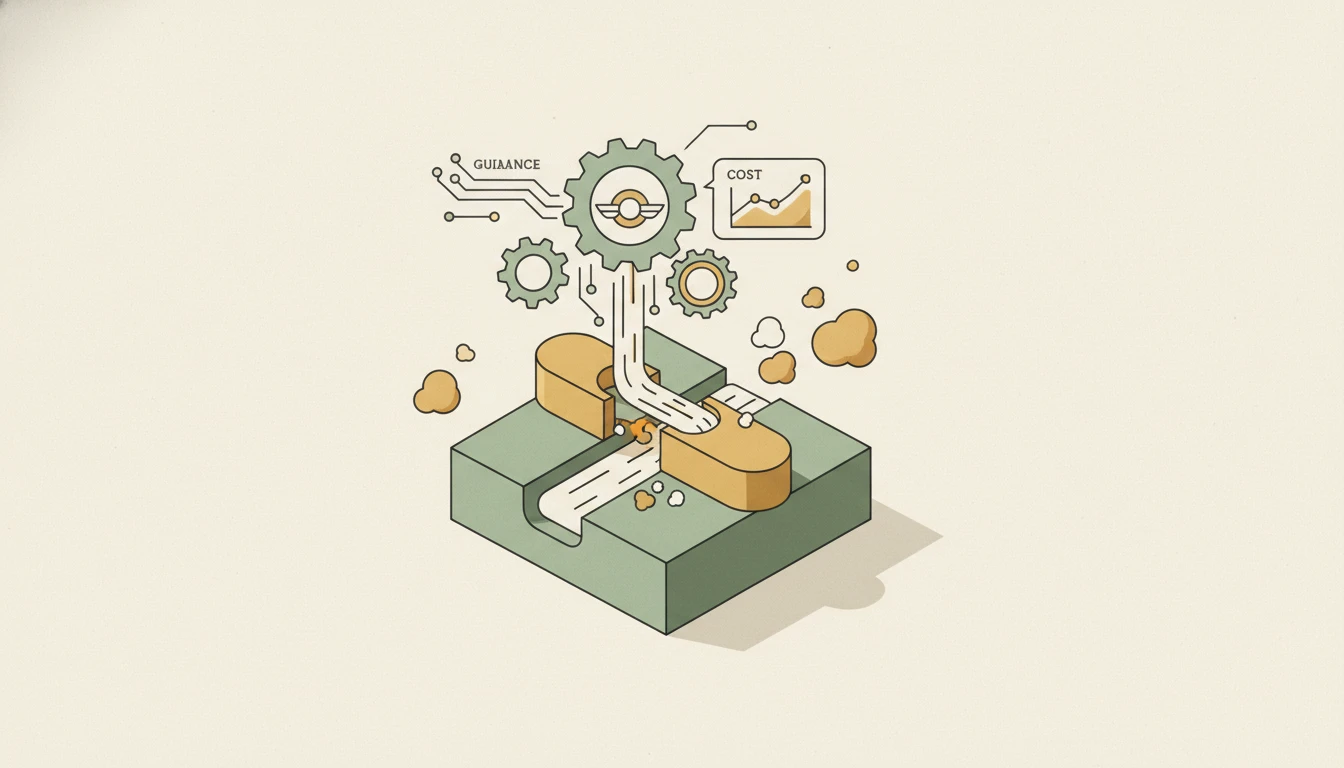
Imagine producing a complex turbine blade for a jet engine with such precision that there are zero microscopic burrs to initiate a crack, no residual stress from tool pressure, and no thermal damage from cutting heat. This isn't a future ideal; it’s the daily reality of electrochemical machining (ECM), a process that sidesteps the limitations of conventional cutting altogether. For engineers and manufacturers wrestling with the extreme demands of aerospace superalloys, medical implants, and high-volume precision components, traditional CNC milling and even electrical discharge machining (EDM) often introduce costly secondary problems: time-consuming deburring, heat-affected zones, and rapid tool wear.
This guide cuts through the noise to deliver a clear, economic, and technical breakdown of ECM. You’ll learn not just how it works, but more importantly, when to use it. We’ll provide a data-driven comparison with EDM, demystify its inherent burr-free machining advantage, and give you a framework to analyze ECM tooling cost vs production volume. By the end, you’ll be equipped to make an informed decision on whether ECM is the key to solving your most challenging manufacturing problems and reducing total part cost.
When to Use ECM Machining: Ideal Applications
Electrochemical Machining is not a one-size-fits-all solution. Its unique advantages make it the undisputed champion for specific, high-value applications where conventional methods fall short. Understanding these ideal use cases is the first step in leveraging its power.
Aerospace & Defense Drivers
In aerospace, failure is not an option. Components operate under extreme temperatures, pressures, and cyclical loading, where the smallest defect can lead to catastrophic fatigue failure. ECM excels at producing jet engine components like blisks (bladed disks) and diffuser cases where traditional milling leaves residual stress and burrs that can act as nucleation points for cracks. The process removes material through atomic-level electrochemical dissolution, which means there is no mechanical contact, no shearing forces, and therefore, no induced stress or burrs. This results in a component with superior fatigue life, which is non-negotiable for rotating parts in a jet engine. Furthermore, ECM handles the "unmachinable" materials common in this sector,like Inconel, Hastelloy, and titanium,without accelerating tool wear or causing work-hardening issues that plague milling operations.
High-Volume Production Sweet Spot
While ECM tooling has a higher initial cost, its economics transform at scale. ECM becomes cost-effective above 5,000-10,000 parts annually where tooling amortization and cycle time advantages outweigh setup costs. This high-volume production sweet spot is where the true ROI shines. Consider automotive fuel injectors: these are small, complex parts made from hardened steels, requiring pristine, burr-free internal geometries. A single, multi-cavity ECM cathode can produce dozens of parts per cycle with cycle times measured in seconds to minutes, and the tool experiences virtually no wear. When scaled to hundreds of thousands of parts, the elimination of tool wear, deburring stations, and associated quality inspections delivers staggering per-part savings compared to CNC machining.
Key applications where ECM is the preferred choice include:
* High-volume production of complex profiles in hardened steels, superalloys, and other difficult-to-machine metals.
* Critical aerospace components: Turbine blades, compressor disks, blisks, and fuel system parts where surface integrity is paramount.
* Medical implants and surgical instruments requiring absolutely sterile, stress-free surfaces with no micro-cracks or embedded contaminants.
* Any application demanding burr-free edges without secondary operations, such as hydraulic valve bodies or pneumatic components.
* Thin-walled parts prone to distortion from the clamping and cutting forces of conventional machining.
* Materials that work-harden rapidly, like certain stainless steels and nickel-based alloys, where ECM's non-contact process avoids this issue entirely.
ECM vs EDM: A Comprehensive Comparison
Both ECM and EDM (Electrical Discharge Machining) are non-traditional, "non-contact" machining processes used for hard materials and complex shapes. However, their fundamental mechanisms of material removal lead to vastly different outcomes in surface quality, tooling economics, and application suitability. Choosing the wrong one can add significant cost and risk to your project.
Surface Integrity Differences
This is the most critical differentiator for fatigue-sensitive components. ECM produces stress-free, cold-worked surfaces with no thermal damage,critical for fatigue-critical aerospace components. The electrochemical reaction dissolves the workpiece material atom by atom at a controlled rate, leaving a smooth, recast-free surface. In contrast, EDM leaves a recast layer (0.005-0.025mm) with micro-cracks requiring post-processing for high-cycle fatigue applications. EDM removes material through a series of rapid electrical sparks that melt and vaporize tiny craters of material. This localized melting and rapid quenching create a brittle, often cracked, "white layer" on the surface. For many aerospace parts, this layer must be removed via abrasive polishing or chemical etching, adding cost and process steps. ECM parts, straight off the machine, are ready for final coating or assembly.
Tooling & Setup Economics
The cost structures of the two processes are inverted. ECM cathode tooling costs range from $5,000-$50,000 but lasts for 50,000+ parts with no wear. The cathode, typically made from copper or brass, does not erode in the same way a cutting tool does; it simply facilitates the electrochemical reaction. Once designed and built, it produces virtually identical parts for its entire lifespan. EDM electrodes cost less initially but wear progressively, requiring replacement or compensation programming every 50-500 parts. Graphite or copper electrodes are eroded by the sparking process. For a long production run, you may need dozens or hundreds of electrodes, and the CNC program must be constantly adjusted to compensate for their changing geometry. This creates ongoing cost, inventory management, and quality variability.
| Feature | Electrochemical Machining (ECM) | Electrical Discharge Machining (EDM) |
|---|---|---|
| Material Removal Mechanism | Electrochemical dissolution (ionic). | Thermal erosion by electrical sparks. |
| Surface Finish | Smooth, stress-free, no heat-affected zone (HAZ). Typical Ra 0.2 - 0.8 µm. | Contains a recast/spark-hardened layer with micro-cracks. Requires post-processing. |
| Material Applicability | Any electrically conductive material. Excellent for tough alloys. | Any electrically conductive material, regardless of hardness. |
| Metal Removal Rate | Generally very high (can be 5-10x faster than sinker EDM for bulk removal). | Slower, especially for fine finishes. Wire EDM can be fast for 2D contours. |
| Tooling | High initial cathode cost, but virtually no wear over long production runs. | Lower initial electrode cost, but high wear rate requires frequent replacement. |
| Geometry Capability | Excellent for complex 3D forms, internal features, and simultaneous multi-face machining. | Excellent for complex cavities (sinker) and intricate 2D profiles (wire). |
| Best For | High-volume, burr-free production of stress-critical components. | Low-volume prototypes, ultra-hard materials, and intricate die/mold details. |
In summary: Use EDM for prototyping, hard materials where finish is less critical, or intricate molds. Choose ECM for high-volume production where superior surface integrity, no tool wear, and the elimination of secondary deburring or recast layer removal will drive down the total cost per part.
Burr-Free Machining Methods: Why ECM Leads the Pack
Burrs are more than a nuisance; they are a significant cost driver and a potential failure point. Removing them can account for 15-30% of a part's total manufacturing cost. While several burr-free machining methods exist, ECM offers a fundamental, physics-based advantage.
The Science of Burr-Free ECM
Burr formation is a mechanical phenomenon. When a cutting tool shears through metal, it plastically deforms the material at the edge, often pushing a thin fin of material (a burr) over the exit side. Burr formation requires mechanical shearing forces. ECM removes material atomically without mechanical contact, so burrs never form regardless of edge geometry,eliminating manual deburring operations that add 15-30% to part costs. The electrolyte flows precisely where the cathode dictates, dissolving only the intended material. Whether machining a sharp edge, a slot, or a complex contour, the result is inherently clean. This is not a post-process "deburring" step; it's a fundamental outcome of the process itself.
Internal Feature Deburring
This is where ECM moves from impressive to indispensable. ECM's ability to machine through electrolyte flow enables deburring of cross-drilled holes, internal galleries, and other features inaccessible to mechanical deburring tools,saving hours of manual work. Imagine a hydraulic manifold with intersecting drilled passages. Manually deburring the intersection inside the block is time-consuming and inconsistent. An ECM process can use a specially designed cathode to direct electrolyte flow precisely to those intersections, dissolving any burrs left from the drilling process uniformly and repeatably. This capability is crucial for aerospace fuel systems and medical device fluid paths, where a loose burr could cause system failure.
Comparing ECM to other burr-free methods:
* Abrasive Flow Machining (AFM): Effective but adds a separate process step. Media can wear and requires maintenance. Less effective on very hard materials.
* Thermal Energy Method (TEM): Uses combustion to burn off burrs. Can oxidize edges and is unsuitable for thin-walled or heat-sensitive parts.
* Vibratory Finishing: A batch process that can peen edges and may not reach all internal features consistently.
ECM stands apart by integrating the burr-free outcome directly into the primary shaping operation, offering unmatched consistency, access to internal features, and a superior final surface.
ECM Tooling Cost vs Production Volume: The Economics
The decision to invest in ECM often hinges on a clear financial analysis. The high initial tooling cost can be a barrier, but this perspective flips completely when viewed through the lens of total cost per part over the production lifecycle.
Tooling Cost Structure
Understanding the investment is key. ECM cathode tooling typically costs $5,000-$50,000 depending on complexity and number of cavities. A simple, single-cavity tool for a basic shape will be at the lower end. A complex, multi-cavity cathode designed to machine 16 fuel injector nozzles simultaneously will command the higher price. This multi-cavity approach is the engine of ECM's high-volume economics. While the tool is more expensive, it dramatically reduces the cycle time per part, spreading the fixed tooling cost over more parts per hour.
Break-Even Analysis Framework
To make an informed decision, you must model the costs. ECM typically becomes cost-effective above 5,000-10,000 annual parts when compared to CNC milling with deburring. For superalloys and titanium, break-even can be as low as 1,000 parts due to dramatic CNC tool wear savings. Consider a turbine blade made from Inconel 718.
- CNC Milling Route: Requires expensive solid carbide end mills that may last for only a few blades. Each blade requires hours of machining, followed by manual deburring and abrasive polishing to remove stress and burrs. Labor, tooling, and secondary process costs are high.
- ECM Route: A $30,000 cathode is machined. It then produces blades every few minutes with zero tool wear. The part comes off the machine burr-free with a final surface finish, requiring no secondary operations. The high upfront cost is amortized over thousands of parts, and the variable cost per part (electricity, electrolyte, labor) becomes very low.
A simplified break-even calculation must include:
1. ECM Setup Costs: Cathode design & fabrication, machine programming/setup.
2. ECM Running Costs: Machine hourly rate, electrolyte consumption, power.
3. Conventional Machining Costs: CNC machine hourly rate, cutting tool purchase & replacement, deburring labor & equipment, polishing/etching to remove recast layer (if compared to EDM).
Hidden ECM savings that tip the scales include consistent quality (reduced inspection time), no risk of scrapping a part due to tool breakage, and dramatically reduced lead time by eliminating secondary operations.
ECM Process Parameters & Equipment Considerations
To implement ECM successfully, a deep understanding of its key variables is essential. Unlike setting feeds and speeds on a CNC, ECM requires controlling an electrochemical "soup" where physics dictates the outcome.
Critical Parameter Relationships
At the heart of ECM is Faraday's Law of Electrolysis, which quantitatively links electrical current to the amount of material removed. Metal removal rate follows Faraday's law: higher current density increases removal but risks localized overheating and passivation. Optimal current density ranges from 10-100 A/cm² depending on material and electrolyte. Applying too high a current can boil the electrolyte in the gap, causing arcing and damaging the part. Too low a current leads to slow, inefficient machining. The voltage (typically 5-20V DC) is set to achieve the target current density, which is itself determined by the inter-electrode gap (IEG) and electrolyte conductivity. Controlling the IEG, usually between 0.1mm and 0.5mm, with a servo system is crucial for maintaining stable, precise dissolution.
Electrolyte Management
The electrolyte is the "cutting fluid" of ECM, and its management is half the battle. Sodium nitrate (NaNO₃) and sodium chloride (NaCl) are common electrolytes. NaCl provides higher conductivity but less precision; NaNO₃ offers better localization and surface finish. NaCl is aggressive and can lead to stray machining, attacking areas you don't intend to cut. NaNO₃ is more passive, only actively dissolving material where the current density is very high (i.e., in the precise inter-electrode gap), resulting in better geometric accuracy. Electrolyte temperature (25-50°C) and conductivity must be tightly controlled for repeatable results. Modern ECM machines use closed-loop systems with chillers, heaters, conductivity probes, and filtration units to remove dissolved metal sludge (hydroxides) and maintain perfect electrolyte chemistry. This stability is non-negotiable for aerospace-quality production.
Aerospace Applications: Where ECM Proves Its Value
The aerospace industry's relentless pursuit of performance, safety, and efficiency has made it the primary driver of ECM technology advancement. Here, the benefits of ECM translate directly into more powerful, reliable, and fuel-efficient aircraft.
Turbine Blade Airfoil Profiling
The airfoil of a high-pressure turbine blade is a masterpiece of aerodynamic engineering, with complex twists, tapers, and contours. Machining these from a solid nickel superalloy blank is a monumental challenge. ECM machines complex airfoil profiles with twist and taper in superalloys like Inconel 718 without inducing residual stress. A formed cathode, shaped as the negative of the final airfoil, is fed towards the workpiece. The electrolyte flows through the gap, dissolving the material to precisely replicate the cathode's form across the entire surface simultaneously. This produces surface finishes of 0.2-0.8 Ra (micrometers), often eliminating the need for hand polishing. The result is a blade with optimal aerodynamics and maximized fatigue life.
Cooling Hole Drilling
Modern turbine blades survive in temperatures far above the melting point of their metal through intricate internal cooling passages and hundreds of exterior film cooling holes. ECM produces thousands of film cooling holes in turbine shrouds and blades with precise shape control (round, shaped, diffuser) without thermal damage or recast layer that could block holes or initiate cracks. Using a shaped tubular cathode or a "mask" etching technique, ECM can drill holes at shallow angles, create diffuser-shaped exits for better cooling film adhesion, and do so without creating the micro-cracks associated with laser or EDM drilling. This ensures the cooling system functions as designed for the life of the component.
Other critical aerospace uses for ECM include:
* Blisk (Bladed Disk) Manufacturing: Integrating blades and disk from a single forging, eliminating dovetail joints,a major source of fatigue. ECM profiles the blades without stressing the disk.
* Fuel System Components: Machining precise slots, orifices, and contours in hardened fuel metering units, ensuring burr-free fluid paths.
* Structural Components: Machining thin, complex sections in titanium landing gear components where distortion from conventional milling is a risk.
* Combustion Chamber Machining: Creating effusion cooling hole patterns and intricate surface features.
Key Takeaway: ECM delivers burr-free, stress-free machining for high-value aerospace and precision components,with compelling economics at production volumes above 5,000 parts annually where tooling amortization and elimination of secondary operations create significant cost advantages.
Ready to see if ECM is right for your project? [Download our free ECM vs EDM comparison chart and cost calculator] to evaluate your next high-volume precision project. Need application-specific guidance? [Contact our ECM engineering team] for a feasibility assessment.
Frequently Asked Questions (FAQ)
1. What materials can be machined with ECM?
ECM can machine any electrically conductive material. It is exceptionally effective for materials that are difficult to cut with traditional methods, including nickel-based superalloys (Inconel, Hastelloy), titanium alloys, stainless steels, tool steels, and aluminum alloys. The process does not rely on material hardness, so it machines hardened steel as easily as annealed material.
2. Does ECM produce a heat-affected zone (HAZ)?
No. This is a key advantage. Material is removed by electrochemical dissolution at the temperature of the electrolyte (typically 25-50°C). There is no plasma, spark, or cutting arc to generate intense local heat. The workpiece remains at near-ambient temperature, ensuring no thermal alteration, phase changes, or residual tensile stress in the material.
3. How accurate is ECM compared to CNC milling?
ECM is a high-precision process, but its accuracy profile is different. It typically achieves dimensional tolerances in the range of ±0.05 mm to ±0.15 mm (±0.002" to ±0.006"), which is suitable for most aerospace and automotive components. For tighter tolerances, a secondary "electrochemical polishing" or finishing pass can be used. Its strength lies more in repeatability, complex form accuracy, and surface integrity rather than micron-level dimensional positioning.
4. What are the environmental considerations for ECM?
The primary byproduct of ECM is metal hydroxide sludge (e.g., nickel hydroxide, chromium hydroxide) from the dissolved workpiece material. This sludge must be filtered from the electrolyte and disposed of as industrial waste, often reclaimed by metal recyclers. The electrolyte itself (salt solution) can be recycled and re-used extensively in closed-loop systems. Modern ECM facilities treat and manage these waste streams as a standard part of operation, making the process environmentally manageable.
5. Can ECM be used for prototyping or low-volume work?
Generally, no. The high cost and lead time for designing and manufacturing the precise cathode tooling make ECM economically prohibitive for prototypes or very low volumes (e.g., less than 50 parts). Processes like 3D printing, CNC machining, or EDM are far more suitable for prototyping. ECM's value is unlocked in production.
6. What is the typical lead time for an ECM cathode?
Lead time varies greatly with complexity. A simple cathode might be produced in 2-4 weeks, while a highly complex, multi-cavity tool for an aerospace component can take 8-16 weeks for design, simulation, machining, and validation. This upfront time investment is a key reason why ECM is planned for long-running production programs.
Written with LLaMaRush ❤️