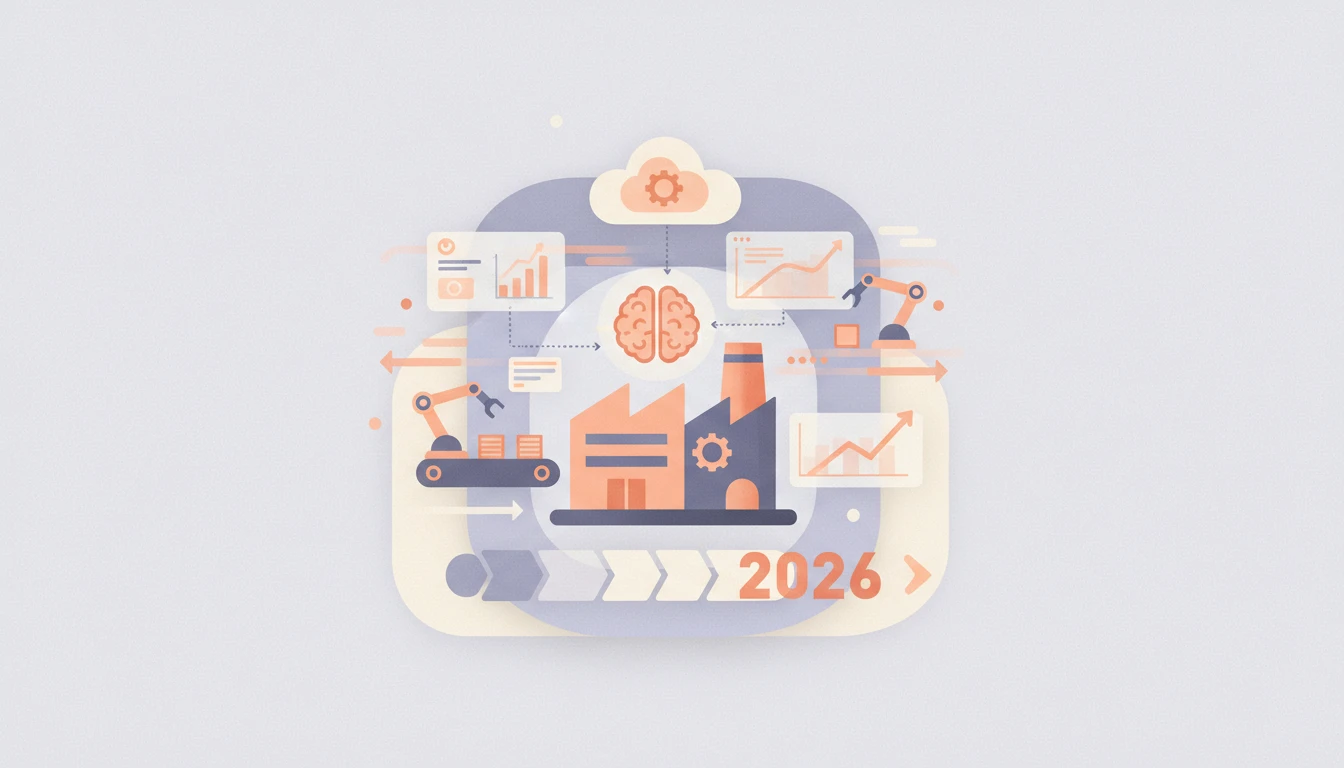
Imagine a manufacturing plant where every machine, every process, and every product has a perfect, dynamic digital clone. This clone doesn’t just look the part,it breathes real-time data, predicts failures before they happen, and simulates the impact of every operational change. This is no longer science fiction; it’s the reality for forward-thinking factories leveraging digital twin technology. For many mid-sized operations, however, this concept remains a buzzword, while persistent inefficiencies,unexpected downtime, suboptimal throughput, elusive bottlenecks,silently erode profitability.
This case study dives into how one such mid-sized manufacturer turned this digital promise into a tangible, profit-driving asset. You’ll see a detailed, step-by-step breakdown of their journey, from identifying critical bottlenecks to reaping a significant return on investment. By the end, you’ll have a clear, actionable blueprint for leveraging a digital twin for production optimization in your own facility, moving from reactive problem-solving to proactive, data-driven excellence.
What is a Digital Twin in Manufacturing?
At its core, a digital twin is a dynamic, virtual replica of a physical object, system, or process. In manufacturing, this typically means creating a comprehensive digital model of your production line, a specific machine, or even an entire plant. Unlike static CAD models or traditional simulations, a true digital twin is fed by a continuous stream of real-world data, allowing it to mirror the state, performance, and condition of its physical counterpart in real-time. It’s a living model that learns, adapts, and provides unprecedented visibility.
This technology is a quantum leap beyond conventional methods like manual data logging, periodic maintenance schedules, or even advanced simulation software that operates in a vacuum. While traditional simulation is excellent for predicting outcomes in a controlled, theoretical environment, a digital twin is about mirroring and analyzing reality as it happens. It answers not just "what if," but "what is," "why is it," and "what will be" with far greater accuracy.
Key applications in manufacturing for production optimization are vast. They range from virtual commissioning of new lines,testing layouts and workflows digitally before a single bolt is turned,to real-time quality control, where the digital twin compares product specs against sensor data from the line. The most transformative use cases, however, lie in predictive maintenance, process optimization, and supply chain synchronization, enabling a holistic view of operations that was previously impossible.
Core Components of a Digital Twin
Building an effective digital twin relies on the seamless integration of three fundamental components:
- The Physical Asset & Its Sensors: This is the starting point. The physical machine, assembly line, or process is outfitted with IoT (Internet of Things) sensors. These sensors collect critical data on vibration, temperature, pressure, cycle times, energy consumption, and more. They act as the digital twin’s nervous system, providing constant sensory input.
- The Virtual Model: This is the "brain" or the digital counterpart itself. Created using specialized software, it’s a high-fidelity, data-rich model that accurately represents the geometry, physics, and logic of the physical asset. It’s more than a 3D visual; it encapsulates the rules, behaviors, and operational parameters of the system.
- The Bi-Directional Data Connection: This is the lifeline. A robust data pipeline (often cloud-based) connects the physical sensors to the virtual model. It doesn’t just push data from the physical to the digital; in advanced setups, it can send commands back. For example, the virtual model might simulate that reducing a motor’s speed by 10% saves energy without impacting output, and then automatically implement that change on the factory floor.
This integration creates a closed-loop system where the physical world informs the digital, and the digital world provides insights to optimize the physical.
Benefits Over Conventional Methods
Switching from conventional, often reactive, methods to a digital twin approach delivers transformative advantages:
- Predictive vs. Reactive Maintenance: Instead of following a rigid calendar-based schedule or waiting for a machine to break (run-to-failure), the digital twin analyzes sensor data to predict component wear. It can alert you that a specific bearing will likely fail in 14 days, allowing you to schedule maintenance during a planned shutdown. This alone can reduce unplanned downtime by 30-50%.
- Enhanced Decision-Making with Simulation: Facing a large, custom order? A manager can use the digital twin to simulate running it through the line, identifying potential bottlenecks in material flow or capacity constraints before committing resources. This reduces risk and improves on-time delivery.
- Optimized Performance & Efficiency: By continuously analyzing operational data, the digital twin can identify subtle inefficiencies,like a machine operating at a non-optimal temperature or a robotic arm taking a slightly longer path. These micro-optimizations, when aggregated, lead to major gains in Overall Equipment Effectiveness (OEE), yield, and energy consumption.
- Reduced Costs and Improved Quality: By minimizing downtime, scrap, rework, and energy waste, the digital twin directly attacks operational costs. Furthermore, by ensuring processes run within ideal parameters, it consistently enhances product quality and reduces variance.
Case Study Overview: The Plant's Initial Challenges
Our case study focuses on "PrecisionForm Engineering," a mid-sized manufacturer specializing in custom metal fabrication for the automotive and aerospace sectors. With 150 employees and an annual revenue of approximately $25 million, they were profitable but faced mounting pressure from competitors and rising material costs. Their growth had stalled.
A deep-dive analysis revealed three core production challenges:
- Chronic, Unplanned Downtime: Critical CNC machines and hydraulic presses experienced frequent, unexpected breakdowns. Maintenance was purely reactive, leading to an average of 15% unplanned downtime monthly, which cascaded into delayed orders and overtime costs.
- Low and Inconsistent OEE: Their Overall Equipment Effectiveness hovered around 65%, well below the industry benchmark of 85% for world-class manufacturing. This was a combination of availability loss (downtime), performance loss (slow cycles), and quality loss (scrap/rework).
- Opaque Bottlenecks: The plant manager described the workflow as a "black box." They knew output was lower than planned, but couldn't definitively pinpoint where the delays originated,was it a slow welding station, a material handling issue, or a scheduling problem?
Their digital twin implementation goals were clear and measurable: Reduce unplanned downtime by 40%, increase OEE to 80% within 18 months, and gain real-time visibility into production bottlenecks. Securing stakeholder buy-in required presenting a clear ROI projection, starting with a pilot project on their most problematic production line to mitigate risk and prove the concept.
Identifying Key Bottlenecks
Before any technology was deployed, PrecisionForm engaged in a rigorous data discovery phase. They didn't just guess; they used existing, albeit siloed, data to pinpoint inefficiencies.
- Machinery Analysis: Historical maintenance logs and basic PLC (Programmable Logic Controller) data were analyzed. They found that Machine #7 (a 5-axis CNC mill) accounted for 35% of all downtime tickets. The failures, however, seemed random.
- Workflow Mapping: They physically mapped the journey of a workpiece through the line, timing each step. This manual audit revealed that parts spent an average of 45 minutes waiting between the deburring and quality inspection stations, indicating a workflow imbalance.
- Resource Allocation Review: Cross-referencing production schedules with output data showed that the highest-quality welders were often assigned to simpler jobs, while complex welds were bottlenecked.
This initial assessment confirmed that their problems were data-solvable but required a unified, real-time view,the exact promise of a digital twin. It transformed their goal from "fix our broken machines" to "build a system that prevents them from breaking and optimizes the flow between them."
Step-by-Step Digital Twin Implementation Process
PrecisionForm adopted a phased, four-step approach to ensure manageability and continuous learning.
Phase 1: Data Collection and Integration
The foundation of any digital twin is data. The team deployed a network of IoT vibration, temperature, and power consumption sensors on key machinery, particularly the problematic CNC mill and hydraulic presses. They then established secure APIs to pull in data from their existing ERP system (for order schedules, inventory) and MES (Manufacturing Execution System) for real-time job status. The biggest challenge was integrating data from older, "dumb" machines, which was solved using retrofit sensor kits and edge computing gateways to pre-process the data before sending it to the cloud.
Phase 2: Building the Virtual Model
With data streams established, they began building the virtual model. They selected a digital twin software platform known for its strong manufacturing focus, scalability, and ability to ingest diverse data types (the key criteria for selecting software). Starting with the single CNC mill, they created a 3D model enriched with physics (motor torque, axis movement) and logic (G-code execution timelines). The model was then connected to the live sensor feeds. Accuracy was validated by comparing the digital twin's reported cycle time and energy use against manually logged values for a known part.
Phase 3: Testing and Validation
Before full deployment, they ran the twin through rigorous simulation runs. They fed it historical data from periods of both normal operation and failure. The model successfully "replayed" past events, including the subtle vibration pattern that preceded a past spindle failure. They also simulated "what-if" scenarios, such as increasing feed rates by 5%, and the model accurately predicted the corresponding rise in motor temperature. This validation phase built immense confidence in the twin's predictive capabilities.
Phase 4: Deployment and Training
The digital twin was then launched for real-time monitoring. Crucially, they didn't just deploy technology; they invested in staff adoption. Dashboard terminals were installed on the shop floor. They ran training sessions not just for engineers but for machine operators and maintenance technicians, showing them how to read alerts and understand the twin's recommendations. The culture shifted from "report a breakdown" to "respond to a predictive alert."
Data Collection Strategies
A successful digital twin relies on comprehensive, high-quality data. PrecisionForm used a multi-source strategy:
- IoT Devices: Wireless sensors were the primary source for machine health data (vibration, thermography, acoustics).
- Enterprise Systems: Data on orders, material batches, and labor was pulled automatically from their ERP and MES.
- Manual Inputs: For non-instrumented variables,like the specific alloy grade of a material batch or a technician's qualitative note on a surface finish,they created simple mobile forms for supervisors to log data, which was then fed into the twin.
This created a holistic data ecosystem where machine performance could be correlated with specific materials, operators, and order urgency.
Choosing the Right Digital Twin Software
Selecting a platform is critical. Their evaluation checklist included:
| Criteria | Why It Matters | PrecisionForm's Choice |
|---|---|---|
| Compatibility & Integration | Must connect to existing sensors, PLCs, ERP, and MES without massive custom coding. | Chose a platform with pre-built connectors for their major systems. |
| Scalability | Should be able to grow from one machine to the entire plant, and potentially multiple plants. | Opted for a cloud-native solution that could scale compute resources on-demand. |
| Real-Time Analytics Engine | The core value is in processing live data streams to generate immediate insights. | Prioritized platforms with strong streaming data and AI/ML capabilities. |
| Visualization & UI | Needs to present complex data in an intuitive way for both engineers and floor staff. | Selected a tool with customizable dashboards and clear alerting systems. |
| Total Cost of Ownership | Includes not just software licensing, but implementation, training, and ongoing support. | Went with a subscription model to preserve capital and ensure access to updates. |
Key Results: Production Optimization Achieved
Within 12 months of full deployment on their primary line, the results were substantial and measurable.
Quantitative Improvements:
* Unplanned Downtime: Reduced by 42%, surpassing their initial goal.
* OEE (Overall Equipment Effectiveness): Increased from 65% to 78%, putting them within striking distance of the 80% target.
* Production Throughput: Increased by 18% without adding new machines or shifts, purely through optimization.
* Energy Consumption: The twin identified optimal run parameters, leading to a 9% reduction in energy use per unit produced.
A detailed ROI analysis showed the project paid for itself in 14 months. The savings came from reduced scrap and rework ($85k), lower emergency maintenance costs ($120k), avoided overtime due to fewer delays ($70k), and energy savings ($30k), against a total implementation cost of ~$215k.
Key Performance Indicators (KPIs) Monitored
They tracked a dashboard of KPIs to measure success:
| KPI | Before Implementation | After 12 Months | Impact |
|---|---|---|---|
| Mean Time Between Failure (MTBF) | 120 hours | 190 hours | Increased machine reliability |
| Mean Time To Repair (MTTR) | 4.5 hours | 2.8 hours | Faster repairs with prepared parts & procedures |
| Production Yield | 92% | 96.5% | Higher quality, less waste |
| On-Time Delivery Rate | 88% | 95% | Improved customer satisfaction |
| Maintenance Cost as % of RAV | 17% | 11% | More efficient spending on maintenance |
The long-term strategic advantages became clear: they could now quote more accurately on complex jobs by simulating them first, their product quality became more consistent, and they developed a culture of continuous, data-driven improvement.
Overcoming Implementation Challenges
The journey wasn't without hurdles. Recognizing and addressing these was key to their success.
Technical Hurdles: Integrating legacy equipment was the biggest technical challenge. Some older machines lacked digital communication ports. The solution was a combination of retrofit sensor kits and using edge gateways that could read basic electrical signals and convert them into structured data packets for the cloud.
Managing Organizational Change: This was the most significant non-technical barrier. Veteran machine operators were skeptical of a "computer model" telling them about their machines. To overcome this, leadership secured buy-in by involving these operators early in the design of the dashboard alerts. They framed the twin as a "power tool" for the operators, not a replacement. A "champion" from the maintenance team was trained in-depth and became the go-to expert, fostering peer-to-peer advocacy.
Budget Constraints: The upfront cost was a concern. They adopted a phased rollout, starting with the highest-value, most problematic asset (the CNC mill). The quick wins and demonstrable ROI from this first phase unlocked the budget to expand the twin to the rest of the line. They also explored vendor financing options to spread the cost.
The best practice that emerged was to start small, demonstrate value quickly, and use that success to fuel expansion and overcome resistance.
Managing Organizational Change
A digital twin is a people project enabled by technology. PrecisionForm’s strategy focused on three pillars:
- Leadership as Evangelists: Plant management consistently communicated the "why," tying the twin's success directly to job security, company growth, and making everyone's job easier by removing fire-drills.
- Hands-On, Practical Training: Training wasn't a theoretical seminar. It was conducted on the shop floor, using real data from the machines the employees worked on every day. They focused on "what this means for your daily routine."
- Celebrating Wins: When the twin predicted its first failure, allowing for a planned repair, it was celebrated. The maintenance team that executed the fix was recognized. This turned skepticism into belief.
Future Trends and Recommendations for Your Plant
The future of digital twins in manufacturing is moving towards even greater integration and intelligence. Emerging trends include the use of Generative AI to propose optimization strategies the human team might not consider, and the development of "twin of twins" – where the digital twins of individual factories interconnect to optimize an entire supply chain in real-time.
For a facility considering this technology, the path forward is methodical, not monumental.
Getting Started Checklist
Use this actionable checklist to begin your assessment:
- [ ] Conduct a Process Audit: Identify your single most critical, problematic, or valuable production line or asset. Where is pain most acute?
- [ ] Assess Data Readiness: Inventory your existing data sources (sensors, PLCs, ERP). What are you already collecting? What gaps exist?
- [ ] Define a Clear, Measurable Pilot Goal: Don't try to "optimize everything." Aim for "Reduce unplanned downtime on Machine X by 20% in 6 months."
- [ ] Secure a Cross-Functional Team: Include IT, operations, maintenance, and a frontline operator. Diverse input is crucial.
- [ ] Research and Shortlist Platforms: Focus on solutions that cater to your industry and can integrate with your key systems. Request demos using your data.
- [ ] Develop a Phased Plan & Budget: Start with a pilot, budget for sensors/integration, software, and,critically,change management and training.
- [ ] Plan for Change Management: How will you communicate this to staff? Who will be your internal champions?
- [ ] Establish KPIs and a Review Cadence: How will you measure the pilot's success? Schedule monthly reviews to track progress and adapt.
Pitfalls to Avoid:
* Boiling the Ocean: Starting with an entire plant transformation.
* Neglecting People: Focusing only on the technology and not the team that must use it.
* Underestimating Data Integration: Assuming all your machines will "talk" easily.
* Lacking Clear Metrics: Launching without a defined way to measure success or ROI.
The journey of PrecisionForm Engineering proves a powerful key takeaway: Implementing a digital twin in a mid-sized plant is a practical, achievable strategy that drives significant production efficiency gains, reduces costs, and provides a formidable competitive edge through data-driven insights. It transforms manufacturing from an art of estimation into a science of precision.
Ready to transform your manufacturing operations? The journey begins with a single, well-defined step. Explore more in-depth guides and practical case studies on manufacturenow.in, or use the insights here to start a focused conversation with your team about where a digital twin could deliver your first win.
Frequently Asked Questions (FAQs)
1. How much does it cost to implement a digital twin in a mid-sized plant?
Costs vary dramatically based on scope, but a focused pilot on a single production line or key asset can range from $50,000 to $200,000. This includes sensors, integration work, software licensing, and consulting/training. The key is to view it as an investment with a clear ROI, as the case study showed a payback period of 14 months through hard cost savings.
2. Can digital twins work with very old, legacy machinery?
Yes, absolutely. This was a key challenge in the case study. The solution involves using retrofit IoT sensor kits (for vibration, temperature, power draw) and edge computing devices. These devices can attach to older machines, collect analog data, digitize it, and send it to the cloud platform, effectively giving a "voice" to legacy equipment.
3. What's the difference between a digital twin and a traditional simulation?
Traditional simulation is a what-if tool used in the design or planning phase, run with theoretical data in an offline environment. A digital twin is a what-is and what-will-be tool. It runs continuously, fed by live data from the physical asset, allowing for real-time monitoring, analysis, and prediction. It's a living replica, not a one-time test.
4. How long does a typical digital twin implementation take?
A pilot project focusing on a single asset or line can typically be scoped, implemented, and begin showing results within 3-6 months. A full-scale rollout across a more complex facility is a longer journey, often taking 12-24 months, best approached in planned phases.
5. Do I need to hire data scientists or AI experts to run a digital twin?
Not necessarily for getting started. Many modern digital twin platforms are designed for manufacturing engineers and operators. They offer pre-built analytics, dashboard templates, and alerting systems. As your use becomes more sophisticated, having someone with data analytics skills is beneficial, but the initial value can be captured by your existing team with the right tools and training.
Written with LLaMaRush ❤️