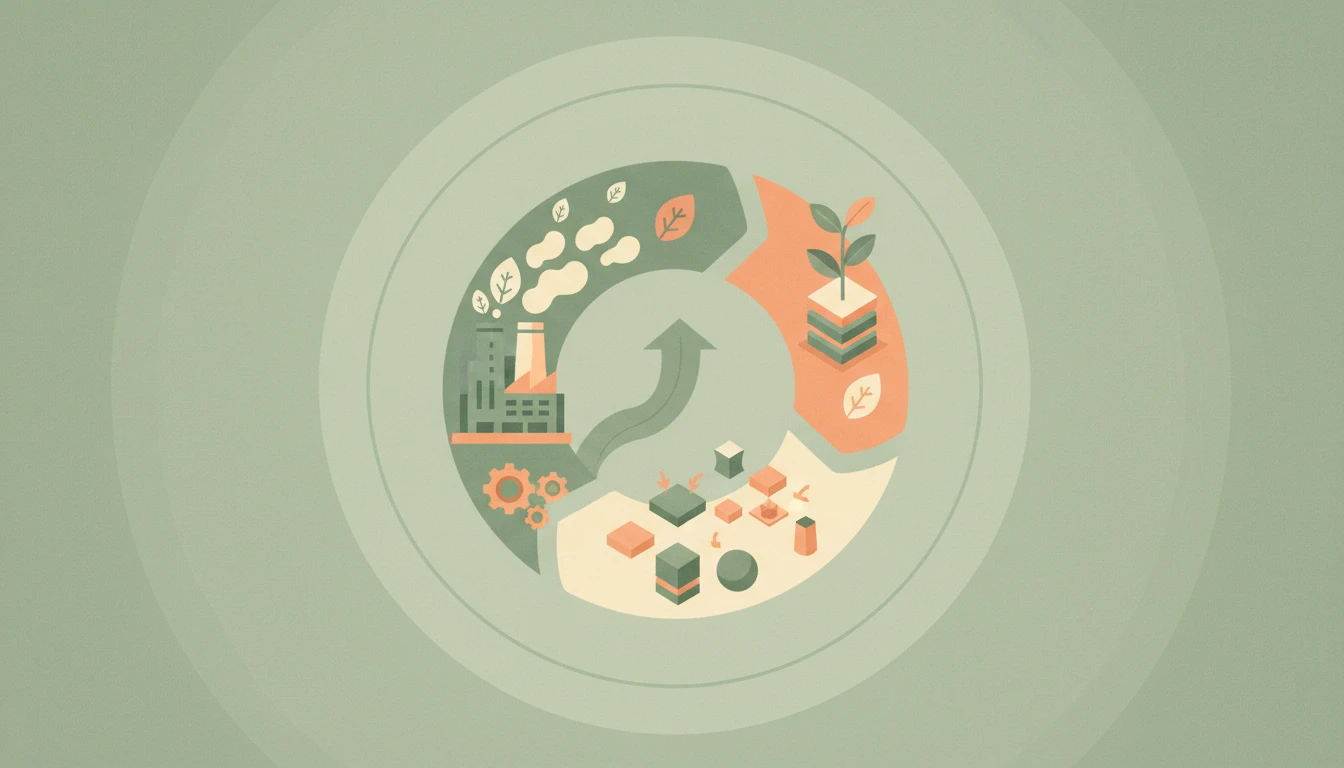
Manufacturing generates over 2 billion tons of waste annually. This staggering figure represents not just an environmental crisis, but a colossal economic inefficiency. For decades, the traditional linear manufacturing model,take, make, dispose,has dominated, leading directly to resource depletion, environmental harm, and overflowing landfills. This guide offers a transformative solution. By embracing circular economy manufacturing, you can rewire your operations to be more sustainable, resilient, and profitable. We'll move past theory and dive into actionable steps. You will learn how to implement circular principles from product design to end-of-life management, turning waste into value and future-proofing your business against resource scarcity and tightening regulations. This isn't just about being "green"; it's about building a smarter, more efficient manufacturing operation for the long term.
What is Circular Economy in Manufacturing?
At its core, the circular economy definition in manufacturing is a systemic shift. It moves away from the wasteful, end-of-life concept of the linear model toward a regenerative system. The goal is to keep products, components, and materials at their highest utility and value for as long as possible. This creates a closed-loop system where waste is designed out, and resources are perpetually cycled back into the production process. For a manufacturer, this means rethinking everything,from the materials you source and the way you design products, to how you engage with customers at a product's end-of-life. It’s a transition from being a seller of goods to a provider of value and service.
Key Concepts and Definitions
To build a circular operation, you need to master its language. Closed-loop systems are the hallmark of circularity. In practice, this could mean a system where a company takes back its used products, refurbishes or remanufactures them, and sells them again, or where manufacturing scrap is directly fed back into the production line as raw material.
Resource efficiency is the relentless pursuit of getting the maximum possible value from every gram of material and every unit of energy you use. It’s measured by metrics like material yield (finished product weight / raw material weight) and energy intensity (energy consumed per unit of output). Another critical term is Product-as-a-Service (PaaS), a business model where you retain ownership of the product and sell the outcome or performance (e.g., selling "lighting hours" instead of light bulbs). This aligns your incentive with creating durable, repairable, and upgradable products.
Evolution from Linear to Circular
The linear vs. circular manufacturing paradigm represents a fundamental evolution. The post-industrial revolution linear model was built on the assumption of infinite, cheap resources and limitless landfill space. It followed a simple, destructive path: extract raw materials, manufacture a product, sell it, and forget it once the consumer discards it. This "cradle-to-grave" approach is now hitting its limits.
Today, we face volatile raw material prices, stringent environmental regulations, and a consumer base demanding sustainable practices. The circular economy model flips the script to "cradle-to-cradle." It’s inspired by natural systems where there is no waste,everything is food for something else. This shift isn't just idealistic; it's a critical business strategy for mitigating supply chain risks, reducing costs, and unlocking new revenue streams. It transforms waste from a disposal cost into a valuable feedstock.
Benefits of Adopting Circular Economy for Manufacturers
Moving to a circular model isn't an altruistic sacrifice; it's a powerful driver of competitive advantage. The benefits of circular manufacturing are tangible and impact both your bottom line and your market positioning.
From an environmental perspective, the impact is direct and significant. You will drastically reduce waste sent to landfills, lower greenhouse gas emissions by minimizing extraction and processing of virgin materials, and conserve precious natural resources like water and minerals. For instance, remanufacturing an engine requires up to 85% less energy than producing a new one from scratch. This directly translates to a smaller carbon footprint and aligns your operations with global sustainability goals.
The economic advantages are equally compelling. Cost reduction in sustainable production comes from multiple angles: lower raw material bills through recycled inputs, reduced waste disposal fees, and decreased energy consumption. But the benefits go beyond cost savings. Circular models open new revenue streams. This includes selling refurbished or remanufactured goods, offering maintenance and repair services, or leasing products under a PaaS model. Companies like Caterpillar have built billion-dollar businesses from their remanufacturing divisions, proving that "used" can be highly profitable.
Furthermore, adopting circular principles enhances brand reputation. In a market where consumers and B2B clients are increasingly making choices based on sustainability, a demonstrable commitment to the circular economy builds trust and fosters customer loyalty. It also serves as a powerful tool for future-proofing. As governments worldwide implement extended producer responsibility (EPR) laws,making manufacturers financially responsible for their products' end-of-life,those already operating circularly will be ahead of the curve, avoiding fines and disruption.
Core Principles to Implement in Manufacturing
Transitioning to a circular model is built on actionable principles that redefine how you operate. These are not vague ideals but concrete strategies for design, material use, and collaboration.
Design Strategies for Circularity
Circularity begins on the drawing board. Circular design principles ensure a product is built to last, to be repaired, and to be reborn. Key techniques include:
* Modular Design: Create products where components can be easily detached and replaced. Think of a smartphone with a user-replaceable battery or a CNC machine with swappable spindle modules. This extends product life and simplifies refurbishment.
* Design for Disassembly (DfD): Use fasteners like screws and clips instead of permanent adhesives or welds where possible. Standardize fastener types and provide clear disassembly guides. This dramatically reduces the cost and time required to recover valuable components at end-of-life.
* Life Cycle Assessment (LCA): This is a non-negotiable tool. An LCA software analysis evaluates the environmental impact of a product from raw material extraction to disposal. It identifies "hot spots" (e.g., a particularly energy-intensive component) so you can redesign for lower impact.
The goal is to shift from designing for a single, short life to designing for multiple, long lives.
Material and Resource Optimization
What you make things from is as important as how you design them. Sustainable material management focuses on two key areas:
1. Minimizing Waste: This is achieved through lean manufacturing techniques, precision machining (like advanced CNC that reduces swarf), and additive manufacturing (3D printing) which builds parts layer-by-layer, often using only the material needed. Reduce, reuse, recycle manufacturing is the hierarchy: first, reduce material use; second, reuse scraps or components internally; third, recycle what cannot be reused.
2. Using Preferred Materials: Prioritize recycled, recyclable, or bio-based materials. Specify aluminum alloys with high recycled content, use bioplastics where applicable, and avoid material combinations that are inseparable and thus non-recyclable (like certain plastic-metal laminates).
Beyond materials, optimize all resources. This includes incorporating renewable energy (solar, wind) to power facilities and fostering collaboration across supply chains to create closed loops. You might partner with a supplier who can take back your production scrap and reprocess it into new material for you, creating a symbiotic industrial ecosystem.
Step-by-Step Guide to Implementing Circular Economy
Turning principles into practice requires a structured approach. This circular economy action plan provides a clear pathway from assessment to scaling.
Assessment Phase: Identifying Opportunities
You can't manage what you don't measure. Start with a comprehensive waste and resource audit. Don't just look at landfill bins. Track all material flows:
* Inputs: What raw materials, components, water, and energy enter your facility?
* Throughputs: What happens during manufacturing? Where is scrap generated (milling, trimming, molding)? Are there quality rejects?
* Outputs: What leaves as product, and what leaves as waste (solid, liquid, hazardous)?
Map these flows visually. This audit will reveal your largest waste streams and most significant resource costs,your biggest opportunities for circular improvements.
Execution Phase: Practical Changes
With opportunities identified, develop a focused circular strategy with clear, measurable goals (e.g., "Reduce virgin plastic use by 30% in 18 months"). Then, implement changes:
* Process Changes: Retrofit equipment for higher efficiency. Install sensor-based systems to optimize energy use. Set up dedicated sorting stations on the shop floor for different types of scrap (metals, plastics, cardboard).
* Product Changes: Apply the design strategies from the previous section. Start with one product line as a pilot.
* People & Training: This is critical. Train staff on new procedures for waste sorting and the "why" behind circularity. Empower them to suggest improvements. Cultural resistance is a common barrier; overcoming it requires clear communication and inclusion.
Evaluation and Scaling
Implementation is not the end. Establish Key Performance Indicators (KPIs) to track progress. Relevant KPIs include:
* Material Efficiency Ratio
* Percentage of Recycled Content in Products
* Waste Diversion Rate from Landfill
* Energy Consumption per Unit Produced
Use this data in regular reviews. What's working? What isn't? Adjust your strategy accordingly. Successful pilots can then be scaled across other product lines or facilities. Share successes internally to build momentum and externally to enhance your brand.
Tools and Technologies for Circular Manufacturing
Modern technology for the circular economy provides the visibility, efficiency, and capability needed to make circular models work at scale.
Digital tools are foundational. Software for supply chain transparency (like blockchain-enabled platforms) allows you to trace materials back to their source, verifying recycled content or sustainable origins. Material tracking software helps manage the complex flow of components and reclaimed materials through your factory, ensuring the right material is used in the right place.
Operational technologies drive efficiency. The Internet of Things (IoT) sensors on machines can enable predictive maintenance, preventing failures and extending equipment life,a core circular principle. Artificial Intelligence (AI) can optimize production schedules to minimize energy use and material waste. Additive manufacturing (3D printing) is a revolutionary tool for sustainability, allowing for on-demand production (reducing inventory waste), lightweighting parts (saving material), and creating complex geometries that are impossible with subtractive methods, often leading to more efficient products.
Finally, renewable energy integration,from on-site solar arrays to purchasing green energy credits,decouples your production from fossil fuels, closing another loop in your resource system.
Case Studies and Real-World Examples
Theory is proven by practice. These circular manufacturing case studies illustrate the tangible impact of implementation.
Automotive Industry - Renault: The French automaker operates "Réusine" (Re-factory) in Flins, Europe’s first circular economy factory dedicated to mobility. It doesn't manufacture new cars. Instead, it focuses on four activities: reconditioning used vehicles, recycling end-of-life vehicles, reusing components, and researching circular innovations. They have achieved a 95% recovery rate for materials from old vehicles, turning a cost center (waste processing) into a revenue stream and securing a supply of critical raw materials like rare earth metals.
Electronics Industry - Dell: Facing the challenge of e-waste, Dell has pioneered closed-loop recycling for plastics. They collect old electronics from consumers, partner with a recycler to break them down, and then purify the recovered plastics to meet their stringent quality standards. This closed-loop recycled plastic is then used in new computer parts. By 2022, they had used over 125 million pounds of this material in new products, reducing their reliance on virgin plastics, lowering carbon emissions, and creating a reliable secondary material source.
Lessons Learned: These successful implementations show that success hinges on: 1) Collaboration (building partnerships across the value chain), 2) Investment in R&D to solve technical challenges in material recovery, and 3) Viewing waste as a resource from the start. The measurable outcomes are clear: reduced material costs, new business units, strengthened brand loyalty, and significant progress toward sustainability targets.
Challenges and Future Trends in Circular Economy
The path to circularity isn't without its challenges. Recognizing them is the first step to overcoming barriers to circularity.
- High Initial Costs: Retrofitting equipment, investing in new sorting systems, and developing take-back logistics require capital. Solution: Start small with pilot projects that have a clear ROI. Frame investments as risk mitigation against future resource price spikes or regulatory fines. Seek government grants or green financing options.
- Cultural Resistance: Shifting from a "new is always better" mindset to one that values refurbishment and reuse can be difficult internally and with customers. Solution: Lead with the economic benefits. Show staff and customers the quality and value of remanufactured products. Philips, for example, successfully markets its "Pay-per-Lux" lighting service by emphasizing guaranteed light levels and zero maintenance hassle for the client.
- Complex Supply Chains: Creating closed loops often requires aligning multiple, independent suppliers and partners. Solution: Develop long-term partnerships based on shared value. Use digital contracts and platforms to streamline material returns and transactions.
Looking ahead, the future of sustainable manufacturing is being shaped by exciting trends:
* Bio-based and Advanced Materials: Development of polymers that can be chemically recycled infinitely or composites derived from mycelium (mushroom roots) and agricultural waste.
* Digital Product Passports: Regulations like the EU's proposal will require products to have a digital record of their composition, facilitating repair and recycling.
* Circular Business Model Proliferation: From clothing rental to tool libraries, access-over-ownership models will expand into industrial B2B sectors, driven by policy and global developments like carbon pricing and stricter EPR laws.
Conclusion
The journey from a linear to a circular economy manufacturing system is both an imperative and an opportunity. It is essential for building sustainable, efficient, and profitable manufacturing operations that can thrive in a resource-constrained world. We've moved from defining core concepts like closed-loop systems, through the clear environmental and economic benefits, to actionable principles in design and material use. The step-by-step guide, supported by modern tools and real-world case studies, provides a blueprint you can adapt. While challenges exist, the strategies to overcome them are clear, and the future trends point towards a manufacturing landscape where circularity is the norm, not the exception.
Key Takeaway: Implementing circular economy principles is not a side project for your sustainability team; it is a fundamental business strategy for resilience, innovation, and long-term growth.
Start your circular journey today by conducting a waste audit or exploring our in-depth resources on modern manufacturing techniques. Identify one material stream in your facility this week and ask: "Can we reduce, reuse, or recycle this?"
Frequently Asked Questions (FAQ)
1. What is the simplest first step a small manufacturer can take toward a circular economy?
The most impactful and straightforward first step is to conduct a waste audit. For one week, meticulously track and categorize everything your facility sends to the landfill or recycling. You will almost certainly identify one or two high-volume, homogeneous waste streams (like specific metal shavings, cardboard, or plastic trim). Then, find a local recycler or partner who can take that material. This turns a disposal cost into a small revenue stream (or at least a cost-neutral exercise) and provides immediate, measurable progress.
2. Isn't remanufacturing or refurbishing products bad for sales of new items?
This is a common misconception. In practice, circular models like remanufacturing often cannibalize the competition, not your own new sales. They allow you to compete in a market segment (price-sensitive or sustainability-focused customers) you might otherwise lose entirely. Furthermore, they build brand loyalty and create ongoing service revenue (parts, warranties, maintenance) that provides a more stable income than one-time sales. Companies like Caterpillar have found their remanufacturing division attracts customers who may later trade up to new equipment.
3. How do we ensure the quality and safety of recycled materials or remanufactured components?
This is a critical technical challenge, addressed through rigorous processes. For recycled materials, you must partner with reputable processors and implement strict incoming quality control (IQC) protocols. This includes certificates of analysis, batch testing for mechanical properties, and contamination checks. For remanufactured components, the process must be standardized to meet Original Equipment Manufacturer (OEM) specifications. This involves complete disassembly, cleaning, replacement of all wear parts, reassembly, and comprehensive testing,often with the same rigor as a new part. The result is a product that is "like new" in performance and warranty, which is essential for customer trust.
Written with LLaMaRush ❤️