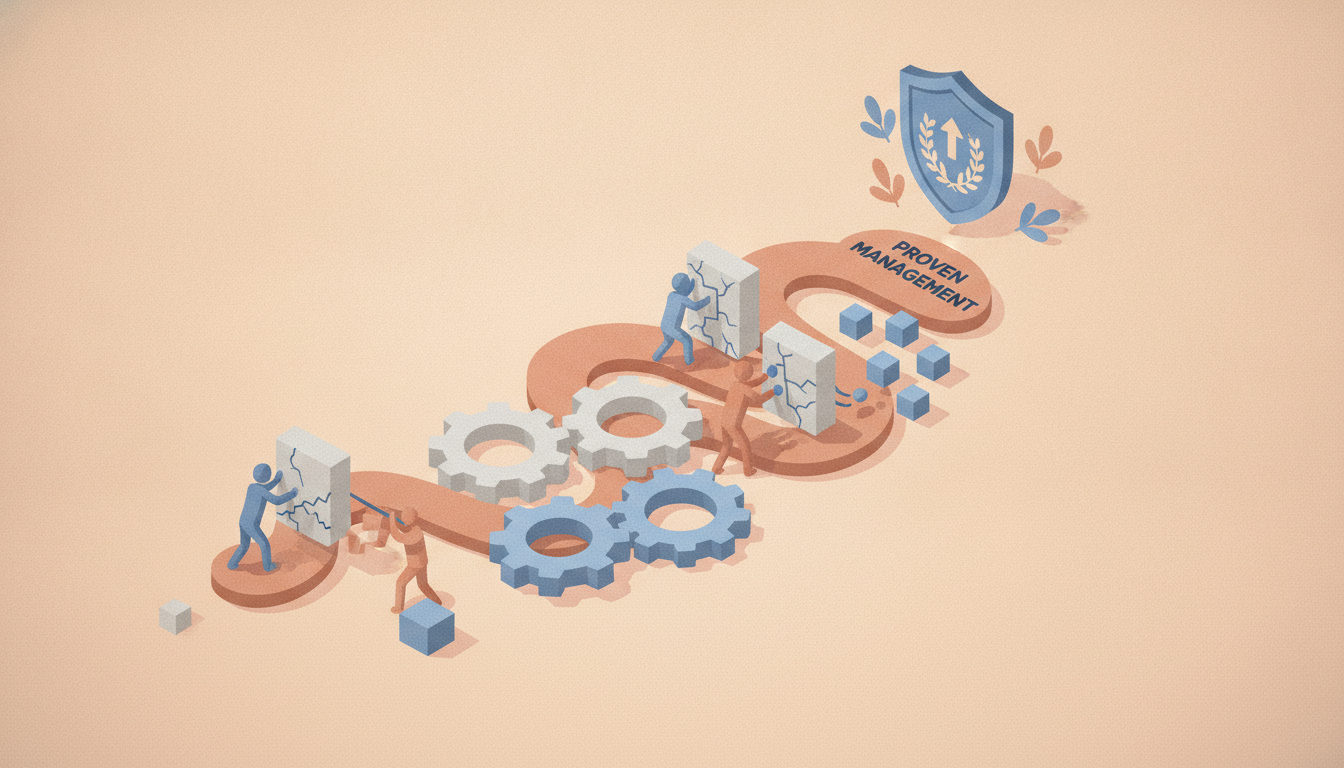
Why Resistance to Lean Manufacturing Happens
Lean manufacturing promises efficiency, cost reduction, and higher quality,but the biggest obstacle is rarely technical. It’s human. When a plant manager walks onto the floor with a Kaizen banner, the first reaction from most operators is not excitement. It’s fear. They see a potential threat to their routine, their job security, and often their dignity. Resistance to lean manufacturing is a natural psychological response, not a sign of lazy or stubborn employees. Understanding the root causes of this resistance is the first step toward building a successful change management strategy.
Fear of Job Loss and Role Change
The most visceral fear in any lean implementation is job loss. Employees know that lean’s core principle,eliminating waste,can translate into eliminating positions. When a team sees a value stream map with non-value-added steps highlighted, they immediately wonder: “Am I one of those steps?” This fear is not baseless. In many early lean adoptions, companies focused solely on headcount reduction. Even today, many organizations frame lean as a cost-cutting initiative rather than a growth enabler. That framing triggers a defensive reaction.
A 2020 study by the Lean Enterprise Institute found that over 60% of lean implementation failures were attributed to employee resistance, with fear of job loss topping the list. But effective change management reframes the story. Instead of “we’re eliminating waste,” the message should be “we’re eliminating waste so you can do more meaningful work.” When employees see lean as a way to make their jobs safer, less repetitive, and more valuable, resistance drops.
Example: A mid-sized automotive supplier introduced cellular manufacturing. Initial resistance was high until management committed that no one would lose their job,redeployment and retraining were guaranteed. Within six months, operator suggestions tripled and defect rates dropped 30%.
Lack of Trust in Management
Resistance rarely appears out of nowhere. It’s usually built on a foundation of past failed initiatives. If your factory has had three “flavor of the month” improvement programs in the past five years,Six Sigma, TPM, 5S, whatever,employees become cynical. They’ve seen new slogans come and go while real issues remained unsolved. Trust erodes when management fails to follow through, blames workers for problems, or uses improvement data to punish teams.
This erosion creates a “wait and see” attitude. Employees withhold effort because they believe the next lean push will disappear like the others. Overcoming this requires leadership that is visible, consistent, and honest. They must admit past mistakes, commit resources, and show that lean is here to stay,not because a consultant said so, but because the company is willing to change its own behavior.
Quick Win: Start with a small, high-impact kaizen event in a department that has previously been ignored. Let the team pick the problem. Let them implement the solution. Publicly celebrate the results without taking credit. This rebuilds trust one win at a time.
Change Management Frameworks for Lean Implementation
There are several time-tested change management models that can be adapted to lean manufacturing. Choosing the right framework,or a blend of them,gives you a structured path to reduce resistance and increase adoption. The three most relevant are the ADKAR model, Kotter’s 8-step process, and Prosci’s methodology.
ADKAR Model: Awareness, Desire, Knowledge, Ability, Reinforcement
The ADKAR model, developed by Prosci, is particularly suitable for lean because it focuses on individual change. Here’s how it maps to lean:
- Awareness: Employees must understand why lean is needed. Not just “we want to be more efficient,” but “our customer lead time is 14 days; our competitor does it in 5. If we don’t improve, we lose orders.” Use real data and shop-floor examples.
- Desire: Create a personal reason to change. Show workers how lean reduces physical strain, cuts overtime, or makes their work easier. Involve them in goal setting.
- Knowledge: Provide training. Not just classroom theory, but hands-on kaizen events where they learn by doing. Teach them how to spot waste, run a Kanban, or perform a root cause analysis.
- Ability: Ensure they can apply the knowledge. Provide coaching, tools, and time. Remove bureaucratic hurdles. Ability falters when a team is trained but then not allowed to stop the line when a defect appears.
- Reinforcement: Celebrate successes, audit adherence, and correct slippage. Continuous improvement requires continuous reinforcement.
Lean-Specific Example: A packaging company used ADKAR to roll out 5S. They started with awareness (a 15-minute huddle showing before/after photos from another plant). Then they built desire by letting each team design their own 5S layout. Training was hands-on. Ability was ensured by giving every operator a 30-minute “cleaning time” each day. Reinforcement came through monthly 5S audits with small rewards.
Kotter’s 8-Step Process for Lean Transformation
John Kotter’s model is ideal for large-scale lean transformations that need urgency and cultural change. Each step can be tailored for the factory floor:
- Create Urgency: Share competitive threats, customer complaints, or safety incidents. Don’t sugarcoat the status quo. Data from the plant can be a powerful motivator.
- Build a Guiding Coalition: Assemble a cross-functional team of managers, engineers, and respected frontline workers. They must model the desired behaviors.
- Form a Strategic Vision: Craft a vision that speaks to both numbers and people. For example: “We will become the most reliable supplier in our sector, with zero injuries and zero defects, by engaging every employee in daily problem-solving.”
- Enlist a Volunteer Army: Communicate the vision constantly. Use town halls, shift meetings, and visual boards. Get people excited.
- Enable Action by Removing Barriers: Identify the obstacles,outdated equipment, supply chain issues, middle managers who block ideas. Remove them quickly.
- Generate Short-Term Wins: Within the first 90 days, produce a visible, measurable win. A dramatic reduction in setup time, a 5S makeover of a messy area. Celebrate it.
- Sustain Acceleration: Use the credibility from early wins to tackle bigger projects. Expand to other lines and processes.
- Institute Change: Anchor new behaviors into culture. Update performance reviews, reward systems, and daily management routines to reflect lean thinking.
Real-World Application: A furniture manufacturer used Kotter’s model when implementing lean. They started by showing a video of a customer complaining about late shipments. The production manager stood in front of the team and said, “That’s us. We have to fix this.” That built urgency. The guiding coalition included a union steward. Early wins included a 50% reduction in changeover time on the most problematic line.
Comparison Table: ADKAR vs. Kotter vs. Prosci
| Aspect | ADKAR | Kotter’s 8-Step | Prosci (generic) |
|---|---|---|---|
| Focus | Individual change | Organizational transformation | Both (individual & org) |
| Best for | Departmental or skill-based change | Large, culture-wide lean programs | Mixed or phased rollouts |
| Key strength | Easy to train and measure | Creates strong momentum | Highly customizable |
| Common pitfall | Overlooks organizational support | Can be too top-down if not careful | Requires experienced facilitator |
| Lean application | 5S, TPM, single-kit systems | Lean transformation, value stream redesign | Any, often used with ADKAR |
Pick the framework that matches your organization’s size, culture, and the scope of change. Many companies use ADKAR for the training phase and Kotter’s steps for sustaining the transformation.
Communication Strategies to Reduce Resistance
Even with the best framework, communication is the glue that holds change together. Poor communication,infrequent, one-way, or jargon-laden,feeds rumors and deepens resistance.
Creating a Compelling Vision for Lean
The vision must answer the question every employee asks: “What’s in it for me?” If your vision only talks about OEE, lead time, and inventory turns, you’ll lose the floor. Craft a vision that connects to the daily experience:
“We’re implementing lean so that you can leave work on time, not because of broken machines. So that you can find tools without walking across the plant. So that your ideas for fixing problems are actually heard and acted on.”
Use concrete examples. Share a story from another shift or a sister plant. Show how lean made someone’s job less stressful. Data is important, but stories create emotional connection.
Actionable Tactics:
- Two-Way Dialogue: Hold weekly 15-minute “all-hands” meetings where employees can ask questions anonymously. Address every concern openly, even if the answer is “I don’t know yet.”
- Quick Wins Communication: When a kaizen event reduces changeover time from 45 to 20 minutes, broadcast it immediately. Post photos, share the employee’s name, and explain how it helps the company and the team.
- Visual Management: Use boards in each area to show current performance vs. target. Let teams update them themselves. Visual transparency reduces fear of hidden agendas.
- Addressing Job Security: If possible, make a formal statement: “No one will lose their job because of lean improvements. We will retrain and redeploy.” If that’s not possible (e.g., in a downturn), be honest: “We must improve to survive. Without lean, we may lose 50 jobs. With lean, we can protect most and grow new ones.”
Statistic: According to a 2023 report by McKinsey, organizations that invest in transparent, employee-inclusive communication during change initiatives are 3.5 times more likely to outperform their peers on engagement and retention.
Training and Empowerment: Building Lean Champions
Training is not a one-time event; it’s a continuous process that builds competence and confidence. The goal is to create lean champions,employees who not only follow the new methods but actively advocate for improvement.
Kaizen as a Vehicle for Change
Kaizen events are the single most effective tool for reducing resistance because they turn abstract concepts into tangible actions. When a team of operators spends three days working on a layout change, they own the result. They become the experts. They defend the new process because they helped create it.
How to use kaizen for change management:
- Start with a pilot area that has a willing team and a clear problem. Do not begin with the most troubled department.
- Form cross-functional teams that include both skeptics and enthusiasts. Skeptics often become your biggest advocates once they see results.
- Give the team real decision-making authority. Let them rearrange machines, change procedures, and buy tools within a budget.
- Celebrate the event with a formal presentation where the team presents their results to senior management. Recognition is powerful.
- Follow up. The worst thing you can do is hold a kaizen event and then let the changes revert after two weeks. Schedule 30-day and 90-day reviews.
Example: A metal fabrication shop was struggling with high work-in-process inventory. They held a week-long kaizen event focused on one cell. The team designed a kanban system, painted floor markings, and built a simple visual board. WIP dropped 40% within one month. The team leader later said, “Before, I thought lean was just another way for management to get more work out of us. Now I see it’s how we can work smarter.” That employee became a lean champion for the whole plant.
Cross-training also reduces fear. When workers learn multiple jobs, they become more valuable and less afraid that their role will become obsolete. Lean champions emerge naturally when people feel their ideas matter. Invest in a “train the trainer” program where operators teach lean concepts to their peers. Peer-led training retains knowledge better and builds trust faster than any external consultant.
Leadership’s Role in Overcoming Resistance
Leadership commitment is often cited as the number one success factor in lean transformations. But “commitment” is vague. Employees watch what leaders do, not what they say.
Visible, Consistent Leadership:
- Plant managers and executives should make time to walk the floor daily,not for inspections, but for curiosity. Ask questions. Listen. Show respect for the work.
- Attend every kaizen event for at least 15 minutes. Ask the team what they need. Remove obstacles on the spot if possible.
- Never blame the workforce for resistance. Instead, ask: “What did we do to create this resistance? What can we do differently?”
Middle Management Alignment:
Middle managers can be the biggest roadblock. They fear that lean will reduce their authority or increase their workload. They may feel threatened by frontline employees becoming problem-solvers. To win them over:
- Involve them in designing the change process. Let them co-lead kaizen events.
- Explain how lean makes their job easier (fewer firefights, more time for strategic work).
- Hold them accountable for lean adoption in their area. Include lean metrics in their performance reviews.
- Provide coaching and support. A middle manager who doesn’t understand lean cannot lead it.
Leading by Example:
Workers watch their supervisor. If the supervisor does not follow 5S in their own office, why should the line follow it? If the supervisor hoards information, why should the team be transparent? Leadership must model the behavior they want to see. That includes admitting mistakes, learning from problems, and celebrating team successes.
Quick Win for Leaders: Start your day with a 10-minute “gemba walk.” Go to the area that has the most resistance. Ask one operator: “What’s the biggest waste you deal with every day?” Then commit to removing that waste within a week. When you follow through, your credibility skyrockets.
Measuring Success and Sustaining Change
Change management is not complete until the new behaviors are embedded in daily routines. Measurement keeps change on track and prevents backsliding.
Key Performance Indicators for Change Adoption:
| Metric | What It Measures | How to Track |
|---|---|---|
| Employee suggestion rate | How many improvement ideas are submitted per employee | Count ideas per month per department |
| Kaizen event participation | % of employees involved in improvement events | Sign-in sheets, event logs |
| 5S audit scores | Adherence to workplace organization | Monthly audits with scoring |
| Defect rate reduction | Quality improvement | Daily production data |
| Employee engagement survey | Sentiment and trust in management | Quarterly pulse surveys |
| Lean training completion | Knowledge transfer | Training records, certifications |
Continuous Reinforcement:
- Celebrate wins, big and small. A public thank-you in a morning huddle takes 30 seconds but builds morale.
- Conduct periodic “lean refreshers” – short, hands-on sessions that revisit fundamentals.
- Audit processes weekly for the first three months after a change, then monthly. If slippage occurs, don’t punish,ask the team how to get back on track.
- Embed lean behaviors into job descriptions and performance reviews. Make it part of the promotion criteria.
Avoiding Backsliding:
The biggest risk is that after the initial push, attention wanders. Orders pile up, a new machine arrives, and old habits creep back. To prevent this, assign a lean change steward whose sole responsibility is to monitor adoption for the first year. This person tracks metrics, coaches teams, and escalates barriers to leadership. Without this role, most lean implementations fade within six months.
Statistic: The Harvard Business Review reported that only 30% of change initiatives achieve their intended goals. For lean manufacturing, the success rate can be higher,closer to 50%,but only when a deliberate change management process is followed.
Frequently Asked Questions
1. How long does it take to overcome resistance to lean manufacturing?
There is no fixed timeline, but most organizations see a significant shift in employee attitudes within 6 to 12 months if they follow a structured change management approach. Early quick wins can accelerate trust-building. Full cultural adoption often takes 2–3 years.
2. What is the biggest mistake companies make when managing resistance to lean?
The biggest mistake is treating resistance as a communication problem rather than a trust problem. Sending more memos or holding more meetings does not address underlying fears. Instead, leaders must demonstrate through actions,not words,that lean is about empowering employees, not eliminating them.
3. Can we implement lean without a formal change management model?
It’s possible, but risky. Without a model, you rely on intuition and luck. A framework like ADKAR or Kotter forces you to think through each stage: awareness, desire, ability, and reinforcement. Companies that skip this planning often report that employees initially comply but revert to old habits once the spotlight moves.
4. How do we handle a small group of vocal resisters who undermine lean efforts?
First, understand their concerns. Often, vocal resisters are expressing what many others feel but won’t say. Listen without judgment. If their concerns are valid, adjust your approach. If they are simply unwilling to participate, set clear expectations and consequences, but always offer an exit path (e.g., transfer to a role that doesn’t require lean participation). In most cases, including them in a kaizen event and giving them ownership of a solution will turn them into allies.
Conclusion
Overcoming resistance in lean manufacturing requires a deliberate change management strategy that addresses human factors, not just processes. Fear, mistrust, and past failures are real barriers,but they can be dismantled with clear communication, employee empowerment, visible leadership, and continuous reinforcement. The frameworks and tactics in this playbook give you a proven path forward.
Key Takeaway: Lean transformation is 20% tools and 80% change management. Invest in the people side, and the technical results will follow.
Ready to implement these strategies? Download our free Change Management for Lean Checklist to get started. It includes a step-by-step action plan, key communication templates, and a resistance diagnostic tool,all designed for manufacturing leaders like you.
Written with LLaMaRush ❤️