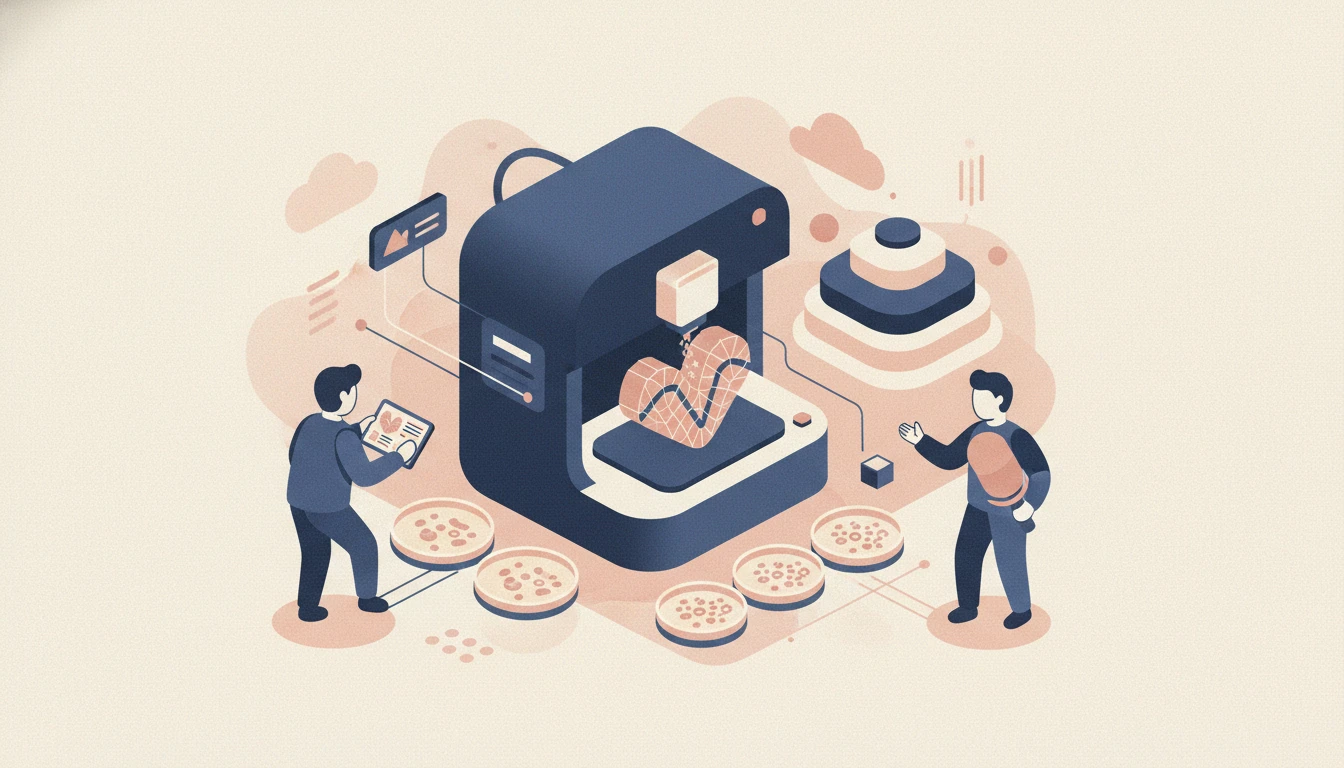
Imagine a world where a surgeon can order a perfectly customized bone graft, tailored to a patient’s exact anatomy, and have it fabricated overnight. A world where a child’s prosthetic limb isn’t a stiff, generic device, but a living, growing tissue-engineered implant. This isn’t science fiction,it’s the imminent future being built by bioprinting. Yet, for all its promise, the journey from lab bench to operating room is fraught with technical, regulatory, and commercial hurdles that slow innovation and keep costs high. If you’re a manufacturer, engineer, or innovator in the medical device space, you’re likely caught between the dazzling potential of bioprinting applications and the harsh realities of implementing them. This guide, drawing on expert insights and forecasting, cuts through the hype to provide a clear-eyed view. You’ll gain a practical understanding of where bioprinting for custom medical devices stands today, the key challenges to overcome, and the actionable steps you can take to integrate this transformative technology into your workflows.
The Rise of Bioprinting in Medical Device Manufacturing
Bioprinting is moving from a fascinating research topic to a tangible production tool. Its core value proposition in medical device manufacturing is unmatched personalization and structural complexity, enabling solutions that were previously impossible or prohibitively expensive with traditional methods like CNC machining or injection molding.
What is Bioprinting?
At its essence, bioprinting is an additive manufacturing process that uses bioinks,materials laden with living cells, growth factors, and biomaterials,to fabricate structured, tissue-like constructs. Think of it as an advanced form of 3D printing, but instead of plastic or metal, the "ink" is biologically active. The process typically follows three core steps:
- Pre-processing & Digital Design: Using patient-specific data from CT or MRI scans, a 3D digital model of the required implant or scaffold is created. This model is then sliced into layers for the printer.
- Printing Process: A bioprinter deposits bioink layer-by-layer, following the digital blueprint. Different printing technologies exist, such as extrusion-based (like a precise biological syringe), inkjet-based (droplet deposition), and laser-assisted (using lasers to transfer bioink).
- Post-processing & Maturation: The freshly printed structure, often called a "green part," is not immediately functional. It undergoes a maturation phase in a bioreactor,an incubator-like device that provides the right biochemical and mechanical cues (like nutrients, oxygen, and gentle stress) to help the cells grow, organize, and develop into functional tissue.
The goal isn't just to create an inert shape; it's to engineer a living device that can integrate seamlessly with the patient's body, promoting healing and regeneration rather than just acting as a passive replacement.
Current Use Cases
While complex organs are still on the horizon, bioprinting is already making a significant impact in several key medical device areas:
- Dental and Craniofacial Implants: Custom bone grafts for jaw reconstruction or dental implants are a prime application. Bioprinters can create porous, patient-specific scaffolds from materials like calcium phosphate or biocompatible polymers. These scaffolds encourage the patient's own bone cells to migrate in and regenerate new bone, a process known as osseointegration, leading to better long-term stability than traditional titanium alone.
- Orthopedic Devices: Beyond bone, bioprinting is used for osteochondral grafts (repairing bone and cartilage interfaces, crucial for joints) and custom meniscal implants. Companies are developing bioprinted spinal fusion cages that promote bone growth through their lattice structures.
- Drug Delivery Systems: Bioprinting enables the creation of sophisticated microneedle patches or biodegradable implants with complex internal architectures. These can be designed to release multiple drugs at precise rates and timelines, improving treatment efficacy and patient compliance.
- Tissue Scaffolds and Wound Care: Bioprinted skin grafts for burn victims and chronic wounds are in advanced development. These grafts can be populated with a patient's own skin cells, reducing rejection risk and accelerating healing.
Benefits Over Traditional Manufacturing: A Quick Comparison
| Feature | Traditional Manufacturing (e.g., CNC, Molding) | Bioprinting for Medical Devices |
|---|---|---|
| Customization | High cost, slow for one-offs; limited to external geometry. | Inherently personalized. Built from patient scan data for perfect anatomical fit. |
| Material Complexity | Typically single, inert materials (titanium, PEEK, ceramic). | Multi-material and bioactive. Can combine structural materials with living cells and growth factors. |
| Lead Time | Weeks for design, tooling, and production of custom parts. | Rapid prototyping & production. Digital-to-physical in days, once the process is established. |
| Internal Architecture | Limited. Machining cannot easily create complex internal channels. | Precise control. Can create porous lattices, vascular channels, and graded structures to guide tissue growth. |
| Functional Integration | Acts as a passive implant. | Promotes active regeneration. Designed to be integrated and remodeled by the body. |
The market reflects this shift. According to a 2023 report by Grand View Research, the global 3D bioprinting market was valued at approximately USD 1.9 billion and is projected to expand at a compound annual growth rate (CAGR) of over 20% from 2024 to 2030, with medical applications being the primary driver. This growth is a direct component of Industry 4.0, where digitalization, automation, and data exchange converge to create "smart" manufacturing,of which patient-specific, on-demand bioprinting is a quintessential example.
Expert Interview Insights: Current State and Future Outlook
To move beyond theory, we consulted with industry leaders, including Dr. Anika Sharma (a biomedical engineering professor focused on translational research) and Mark Chen (CEO of a startup developing bioprinted corneal implants). Their insights paint a picture of cautious optimism, highlighting both transformative potential and significant gates to passage.
Expert Perspectives on Adoption
The consensus among experts is that adoption is happening, but in targeted, clinically justified niches rather than as a wholesale replacement. "The driver isn't the technology itself," says Chen, "it's solving a clear clinical problem that has no better solution. For a standard hip implant, traditional manufacturing works fine. But for a child with a rare cranial defect, bioprinting a resorbable, growth-accommodating scaffold is the only logical path."
The key drivers they identified are:
* Demand for Personalization: The move toward precision medicine is creating a pull for devices that match individual patient biology.
* Advancements in Imaging & Software: High-resolution medical imaging and sophisticated design software (often AI-powered) make patient-specific design feasible.
* Regulatory Pathways Evolving: Agencies like the FDA and EMA are developing clearer frameworks for reviewing combination products (device + biologic), though progress is slow.
The primary barriers remain formidable:
* Regulatory Uncertainty: "The single biggest challenge is navigating the regulatory landscape," states Dr. Sharma. "Proving safety and efficacy for a living, evolving device is exponentially more complex than for a static metal part."
* Reimbursement Hurdles: Even with approval, getting insurers to pay for a novel, costly bioprinted device is a major obstacle. Clear evidence of superior long-term outcomes and cost savings is required.
* Scalability & Cost: Translating a lab-scale success to consistent, cost-effective GMP (Good Manufacturing Practice) production is a massive engineering challenge.
Forecasts
Looking ahead, our experts predict several concrete breakthroughs that will accelerate adoption:
- Material Innovations: Expect a new generation of smart bioinks with embedded sensors or that respond to external stimuli (like light or magnetic fields) to guide tissue maturation post-print. "We'll see more hybrid inks that combine synthetic polymers for strength with natural materials like collagen for bioactivity," predicts Dr. Sharma.
- Increased Automation & AI Integration: The bioprinting workflow will become more closed-loop. AI will be used not just in design, but in real-time print monitoring and correction, using vision systems to detect imperfections, and in bioreactor control, automatically adjusting conditions based on sensor data from the maturing tissue.
- First Major Vascularized Tissue Approvals: While solid tissues (bone, cartilage) are already in trials, we may see significant progress or conditional approval for more complex tissues that require integrated vascular networks, such as thicker skin grafts or specific endocrine tissues. This will be a watershed moment.
- Point-of-Care Bioprinting: Hospitals with major trauma or cancer centers will begin installing bioprinting suites for on-site production of certain bone grafts and skin substitutes, drastically reducing lead times for urgent reconstructive surgeries.
As Mark Chen summarized, "By 2026, bioprinting won't be a novelty. It will be a standard tool in the toolbox for specific, high-value medical device applications. The conversation will shift from 'if' to 'when and where' it's the most appropriate solution."
Challenges and Innovations in Bioprinting for Custom Devices
Understanding the hurdles is critical for any professional considering this space. The challenges are interdisciplinary, blending biology, engineering, and business.
Technical Barriers
The dream of printing a fully functional organ remains distant due to several persistent technical hurdles:
- Vascularization: This is the paramount challenge. Tissues thicker than about 0.2 mm require blood vessels to deliver oxygen and nutrients and remove waste. Printing these intricate, multi-scale networks (from large vessels down to capillaries) and getting them to function is an immense unsolved problem.
- Cell Viability and Function: Keeping cells alive during the stressful printing process is one thing; ensuring they maintain their correct phenotype (e.g., a stem cell becoming a bone cell, not a fat cell) and function long-term within the printed structure is another. Long-term stability in the body is not guaranteed.
- Bioink Limitations: Current bioinks often represent a compromise. They must be printable (with the right viscosity, cross-linking properties), structurally supportive, and biologically permissive. Achieving all three perfectly is rare. Many lack the mechanical strength for load-bearing applications or degrade too quickly or too slowly.
- Structural Integrity and Multi-material Printing: Creating a device that mimics the graded properties of natural tissue (e.g., where bone transitions seamlessly to cartilage) requires printing with multiple bioinks simultaneously with high precision,a significant hardware and software challenge.
Overcoming Obstacles
The research community and industry are not idle. Exciting innovations are tackling these barriers head-on:
- Sacrificial Printing: A leading approach to vascularization involves printing a network of a sugar or gelatin-based material that is later dissolved, leaving behind hollow, perfusable channels that can be lined with endothelial cells (the cells that line blood vessels).
- Advanced Bioreactors: Next-generation bioreactors are becoming more sophisticated, applying not just nutrients but also dynamic mechanical loads (mimicking breathing or walking) and electrical stimulation to guide tissue development and improve strength.
- Hybrid & Composite Materials: Researchers are developing composite bioinks, for example, combining nanocellulose for strength with hyaluronic acid for biocompatibility, or embedding ceramic nanoparticles within polymer inks to enhance bone-forming capability.
- Convergence with Other Technologies: Bioprinting is converging with microfluidics to create chips that can test drug responses on bioprinted tissue samples ("organ-on-a-chip"), and with electrospinning to create reinforced nanofiber scaffolds that cells can infiltrate.
On the regulatory front, ASTM International and ISO are actively developing new standards specifically for bioprinting and biofabrication, which will help create a common language and testing framework for companies and regulators alike. This standardization is crucial for reducing uncertainty.
Implementing Bioprinting: A Guide for Manufacturers
For a medical device manufacturer, integrating bioprinting is a strategic decision, not just a procurement exercise. Here’s a pragmatic, step-by-step framework.
Step-by-Step Integration
- Clinical & Market Justification (Months 1-3): Don't start with the technology. Start with the patient need. Identify a specific, underserved clinical application where customization and bioactivity provide a definitive advantage. Conduct a thorough market analysis and engage with key opinion leader surgeons early.
- Build the Cross-Functional Team (Ongoing): You cannot do this with an R&D team alone. Success requires a triumvirate: Biologists/Cell Therapists (for cell sourcing and biology), Biomedical/Mechanical Engineers (for printer operation and design), and Quality/Regulatory Affairs Specialists (to navigate the complex pathway from day one).
- Technology Assessment & Pilot Investment (Months 4-9): Research available bioprinters (from companies like CELLINK, Allevi, or Regemat 3D) and bioink suppliers. Consider starting with a service bureau to print initial prototypes before making a capital investment. Budget not just for the printer (€50k - €500k+), but for ancillary equipment: bioreactors, cell culture labs, and stringent environmental controls.
- Develop the Process & Design Controls (Months 10-18): This is the core engineering phase. Establish a robust, documented workflow from patient scan to final device. Implement rigorous design controls (per ISO 13485) and begin designing your verification and validation testing strategy. This is where you prove consistency and quality.
- Pilot Production & Regulatory Engagement (Months 19-30): Begin small-scale GMP-compliant production for clinical trials. Engage with regulatory bodies (FDA, notified bodies in EU) in pre-submission meetings early and often. Their feedback is invaluable and can save years of misdirected effort.
- Scale-Up and Commercialization (Year 3+): Plan for scale-up from the beginning. How will you source cells reliably? How will you automate quality checks? The business model may shift from selling devices to selling a service (scan-to-implant).
Case Study Example: Ossiform's P3D Bone Grafts
A compelling real-world example is Danish company Ossiform. They use 3D printing (specifically, binder jetting of beta-tricalcium phosphate, a bioceramic) to create patient-specific bone grafts called P3D. While not using "live" bioinks in the cellular sense, their process exemplifies the bioprinting value chain for custom medical devices.
- Process: A surgeon sends a patient's CT scan. Ossiform's engineers design a perfectly fitting, porous implant that mimics the structure of natural bone.
- Manufacturing: The implant is 3D printed from a material that is osteoconductive (guides bone growth) and fully resorbable, eventually being replaced by the patient's own bone.
- Outcome: The procedure is minimally invasive, healing is faster, and the functional and aesthetic results are superior to using generic, manually shaped bone graft materials or metal meshes. Ossiform has successfully navigated the regulatory process (CE marked) and is used in maxillofacial, orthopedic, and spinal surgeries.
This case highlights the core principle: Solve a clear clinical problem with a design-enabled solution. For Ossiform, the "bio" activity is in the material's interaction with the body, not in printed living cells,a pragmatic and successful step on the bioprinting spectrum.
Frequently Asked Questions (FAQ)
Q: How much does it cost to set up a bioprinting capability for medical devices?
A: Costs vary dramatically. A research-level setup with a basic extrusion printer and cell culture hood can start around €100,000. A full GMP-compliant pilot line with multiple printers, advanced bioreactors, QC labs, and cleanrooms can easily exceed €2-5 million. Many companies begin by partnering with contract development and manufacturing organizations (CDMOs) that specialize in bioprinting to defer capital expenditure.
Q: What are the biggest regulatory risks for a bioprinted medical device?
A: The primary risks are classification (will it be a Class III high-risk device?), demonstrating long-term safety and function of the living component, and manufacturing consistency. Proving that every batch of cells behaves the same way, and that every printed construct is equivalent, is a monumental but essential task for regulatory approval.
Q: Is bioprinting only for permanent implants?
A: Absolutely not. Some of the most near-term applications are in resorbable scaffolds (like the Ossiform example) that provide a temporary structure for the body to rebuild upon. Bioprinted models for surgical planning and drug testing are also non-implant applications that are valuable to the medical device and pharma industries, offering a faster, potentially cheaper path to initial revenue.
Key Takeaway: Bioprinting is poised to revolutionize custom medical device manufacturing by enabling personalized, efficient solutions is expected to bring significant advancements in technology and adoption.
The path forward is one of targeted, intelligent application. Bioprinting will not replace all traditional manufacturing; it will create an entirely new category of active, regenerative medical devices. For forward-thinking manufacturers, the time to build expertise, explore partnerships, and identify that first high-impact clinical application is now. The fusion of biology and engineering is no longer a frontier,it's the foundation of the next generation of patient care.
Stay ahead in the evolving manufacturing landscape,subscribe to manufacturenow for more expert insights and practical guides on emerging technologies.
Written with LLaMaRush ❤️