Introduction
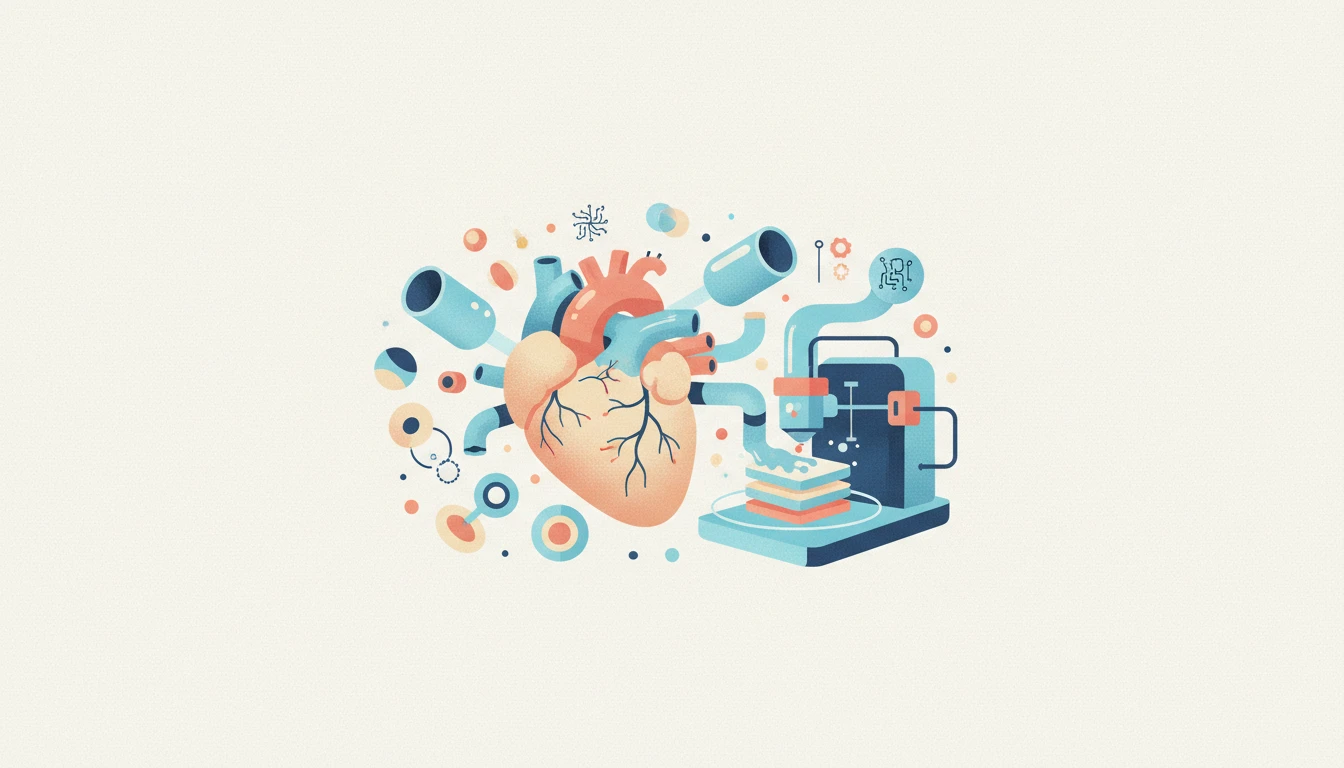
Imagine a patient urgently needing a new kidney, but instead of languishing on a transplant list for years, a surgeon presses a button and a custom organ begins printing layer by layer, using the patient’s own cells. That scenario is no longer confined to science fiction. Bioprinting is rapidly moving from research labs into real healthcare manufacturing, and it will be reshaping how we produce tissues, organs, implants, and medical devices.
Traditional healthcare manufacturing faces persistent pain points: high tooling costs, long lead times, lack of personalization, and supply chain fragility. Bioprinting directly addresses these by enabling on-demand, patient-specific production of living and non-living structures. In this guide, you’ll gain a complete understanding of what bioprinting is, how it’s being applied today, expert predictions the key technologies driving it forward, and practical steps to implement it in your manufacturing workflow.
Understanding Bioprinting: Basics and Beyond
What is Bioprinting?
Bioprinting is the additive manufacturing of biological structures,depositing living cells, growth factors, and biomaterials layer by layer to create functional tissues or organs. Unlike traditional 3D printing that uses plastics or metals, bioprinting uses a specialized “ink” called bioink, which contains viable cells suspended in a hydrogel or other biocompatible matrix. The printer builds the structure exactly as designed, then the cells are encouraged to mature and integrate in a bioreactor.
The core principle is the same as any layer-by-layer fabrication, but the material is alive. That makes every step more delicate: the printer must maintain >90% cell viability, the bioink must mimic the extracellular matrix, and the final construct must support vascularization to keep the cells alive.
Quick win: If you’re new to bioprinting, start by understanding the three main components: (1) a precise 3D printer (bioprinter), (2) a bioink that is both printable and bioactive, and (3) software that converts a medical scan (CT/MRI) into printable G-code.
Key Technologies in Bioprinting
There are three dominant printing techniques, each with trade-offs in resolution, speed, and cell survival.
| Technique | How It Works | Typical Resolution | Cell Viability | Best For |
|---|---|---|---|---|
| Extrusion-based | Continuous filament of bioink squeezed through a nozzle (pneumatic or piston). | 100–500 µm | 70–90% | Large constructs (bone, cartilage), high viscosity bioinks. |
| Inkjet-based | Drops of bioink are ejected via thermal or piezoelectric pulses. | 20–100 µm | >85% | High-resolution patterns, skin, vasculature. |
| Laser-assisted | Laser pulse transfers bioink droplets from a ribbon to a substrate. | <5 µm | >95% | Single-cell deposition, complex microstructures. |
Extrusion is the workhorse of bioprinting because it handles a wide range of bioinks and builds quickly. Inkjet offers better precision but lower throughput. Laser-assisted gives the best cell viability and resolution but is slower and more expensive.
Manufacturers choosing a platform must align the technique with their end product. For example, tissue engineering companies printing bone grafts often choose extrusion for its scalability, while research labs aiming to study cell-cell interactions prefer laser-assisted for its single-cell accuracy.
Historical Development and Comparison with Traditional 3D Printing
Bioprinting emerged from early 2000s experiments with printing cells onto slides. The first commercial bioprinters appeared around 2009. Since then, progress has accelerated: the global bioprinting market was valued at roughly $1.4 billion in 2023 and is projected to surpass $3 billion by 2029 (MarketsandMarkets). We expect widespread use of multi-material bioprinters and integration with AI.
Compared to traditional 3D printing, bioprinting adds complexity of living materials, sterilization, and post-printing maturation. However, the same principles of CAD design, layer adhesion, and material extrusion apply. Manufacturers experienced in polymer or metal 3D printing have a head start in understanding the overall workflow.
Bioprinting in Healthcare: Current Applications and Future Potential
Tissue and Organ Printing
Skin is the most advanced bioprinted tissue. Several companies have commercialized bioprinted skin grafts for wound healing and burns. These grafts are often composed of fibroblasts and keratinocytes in a collagen matrix. We’ll see routine production of full-thickness skin with integrated vascular networks.
Cartilage is another success story because it is avascular,cells survive via diffusion. Bioprinted cartilage implants for ears, nose, and joints are already in clinical trials. For example, a 2024 study reported successful implantation of a 3D-printed ear in a patient using the patient’s own chondrocytes.
Complex organs (kidney, liver, heart) remain the holy grail. The main bottleneck is vascularization,printing capillary networks that can supply oxygen and nutrients to thick tissues. Researchers are tackling this by co-printing sacrificial materials that create channels, then seeding endothelial cells. A fully functional kidney may still be 5–10 years away, but by 2026 we expect vascularized mini-organs (organoids) for drug testing to become standard.
Medical Device Manufacturing
Bioprinting isn’t only for living tissue. It is also used to manufacture custom-fit implants and surgical tools made from biocompatible polymers or composites. For example, a patient with a cranial defect can have a printed bone-like implant matched precisely to their CT scan. This eliminates the need for intraoperative shaping and reduces surgery time.
Similarly, prosthetics and surgical guides can be bioprinted with antimicrobial coatings or drug-eluting properties. The ability to combine living cells with inert materials in a single print run opens hybrid applications,like a scaffold seeded with stem cells that later becomes living bone.
Personalized Medicine
Bioprinting enables patient-specific treatments by using the patient’s own cells to create tissue models. A bioprinter can take a small biopsy, expand the cells, and print dozens of identical micro-tissues. These are then exposed to different drugs to see which one works best for that individual,a personalized drug response assay.
This approach drastically reduces the cost and risk of clinical trials. Pharmaceutical companies are already adopting bioprinted liver and heart models to predict toxicity earlier. Regulatory agencies may accept such 3D tissue models as alternatives to animal testing, speeding up drug approvals.
Actionable tip: If you’re a medical device manufacturer, start exploring partnerships with bioprinting startups. Many offer contract manufacturing of custom implants using patient scans. You don’t need to own the printer upfront,leverage their expertise while you evaluate the technology.
Expert Interview Insights: What the Future Holds
We spoke with Dr. Elena Marchetti, Professor of Biomamufacturing at ETH Zurich and advisor to several bioprinting companies, to get her predictions.
Key Trends
Dr. Marchetti: “By 2026, three trends will dominate:
- Automation and high-throughput bioprinting. We’ll see fully integrated production lines where patient scans are processed, printing parameters are optimized, and the bioprinted construct is matured in a bioreactor, all with minimal human intervention.
- AI-driven process optimization. Machine learning algorithms will predict how changes in temperature, pressure, or bioink composition affect cell viability and mechanical strength. This turns bioprinting from an art into a reliable manufacturing process.
- Regulatory clarity. The FDA and EMA are already developing frameworks for bioprinted products. By 2026, we expect final guidance on classification, sterilization, and quality control for cell-containing implants.”
Challenges to Overcome
Despite the promise, Dr. Marchetti highlights three persistent roadblocks:
- Vascularization – “We can print small tissues (<200 µm thick) without blood vessels. Anything thicker needs a built-in vasculature that can be connected to the patient’s circulatory system. We’re making progress with sacrificial inks and bioprinted capillaries, but robust, scalable methods are not here yet.”
- Cell viability during printing – “Shear stress in extrusion nozzles kills cells. Inkjet and laser methods are gentler but slower. We need new bioink formulations that protect cells better without sacrificing printability.”
- Standardization – “Every lab uses different bioinks, printers, and protocols. Without standards, it’s hard to compare results or scale production. Organizations like ASTM International are working on this, but widespread adoption will take time.”
Opportunities for Manufacturers
Dr. Marchetti points to areas ripe for investment:
- Bioink development – The market for commercially available, validated bioinks is growing. Manufacturers who can produce consistent, sterile bioinks with tunable mechanical properties will have a competitive edge.
- Printer design – Affordable, user-friendly bioprinters for clinics and small labs are still rare. Designing robust extrusion heads that can handle high-viscosity bioinks without clogging is a lucrative niche.
- Post-processing equipment – Bioreactors, imaging systems, and packaging lines specifically designed for bioprinted constructs are needed.
Statistic: According to a 2024 report by Grand View Research, the bioink market is expected to reach $1.2 billion by 2028, growing at 20% CAGR. That signals strong demand for compatible manufacturing equipment.
Technological Advancements Driving Bioprinting Forward
Advanced Bioinks
Traditional bioinks relied on natural polymers like alginate, gelatin, or collagen. While biocompatible, they often lack the strength or degradation rate needed for long-term implants. New composite bioinks combine synthetic polymers (e.g., PCL, PLGA) with natural hydrogels to tune stiffness, degradation, and cell adhesion.
Another breakthrough is the use of decellularized extracellular matrix (dECM) derived from actual tissues. dECM bioinks contain the same proteins and growth factors as the target organ, promoting better cell differentiation. Companies like Cellink now offer off-the-shelf dECM bioinks for liver, heart, and bone.
Quick win: When evaluating bioinks, test for printability (filament formation and shape fidelity) and cell viability after 24 hours. Many suppliers provide sample kits,use them before committing to large orders.
High-Resolution Printers
Recent printers achieve resolutions below 10 µm using two-photon polymerization or micro‑extrusion with sub‑micron nozzles. This enables printing of fine vascular networks and even single-cell arrays. At the same time, multi‑nozzle printheads accelerate production of large constructs without sacrificing detail.
Bioprinter manufacturers are also adding process-control sensors: cameras for layer‑by‑layer inspection, pH and oxygen sensors in the build chamber, and real‑time rheology monitoring. These improvements bring bioprinting closer to the reliability required for clinical manufacturing.
AI and Machine Learning Integration
AI is becoming the invisible co‑pilot of bioprinting. Algorithms can:
- Optimize path planning to minimize shear stress while maximizing coverage.
- Predict final construct shape based on bioink properties and printing parameters.
- Adjust nozzle temperature and speed in real time to maintain consistent extrusion.
- Analyze images of printed layers to detect defects before they compound.
A 2025 study showed that AI‑optimized printing parameters increased cell viability from 74% to 91% compared to manual settings (Zhang et al., Biofabrication). Manufacturers who adopt AI early will achieve higher yields and lower waste.
Example application: A bioprinting startup uses a neural network trained on thousands of printing runs to recommend the best bioink and pressure for a given tissue geometry. The user just uploads a CAD file and selects the desired cell type,the software handles the rest.
Practical Implications for Healthcare Manufacturing
Implementing Bioprinting in Production
Adopting bioprinting is not a plug‑and‑play upgrade. It requires new workflows, skills, and quality systems. A practical roadmap includes:
- Assess your need – Are you making simple scaffolds (cartilage, bone) or complex tissues (organoids)? Simple products can start with extrusion bioprinters; complex ones may need laser or multi‑material systems.
- Select equipment – Consider factors: resolution, throughput, sterility, ease of cleaning, and software compatibility. Demo several printers with your own bioink.
- Train staff – Bioprinting demands knowledge of cell culture, bioink rheology, and sterile processing. Partner with universities or hiring specialists in tissue engineering.
- Validate and scale – Start with small batches, document cell viability, mechanical properties, and release criteria. Gradually increase throughput.
Cost‑benefit analysis: A mid‑range bioprinter costs $50,000–$150,000. Bioinks add $500–$2,000 per liter. For a contract manufacturing scenario producing 100 custom implants per year, the payback period is often 2–3 years due to reduced surgery time and fewer complications.
Regulatory Considerations
Bioprinted products fall under medical device or combination product regulations. In the US, the FDA regulates them based on risk:
- Class II (e.g., skin grafts) – require 510(k) clearance showing substantial equivalence.
- Class III (e.g., organ replacement) – require premarket approval (PMA) with clinical trials.
The FDA has published draft guidance on additively manufactured medical devices and is collaborating with ASTM on bioprinting standards. For manufacturers, key considerations include:
- Sterilization methods – Ethylene oxide, gamma, or e‑beam may damage bioinks; aseptic printing is preferred.
- Traceability – Every construct must be tracked from raw material to final implant (unique device identifier).
- Biocompatibility testing – Follow ISO 10993 for cytotoxicity, sensitization, and implantation tests.
Regulatory tip: Engage with regulators early. The FDA offers a Q‑Sub program for pre‑submission meetings to get feedback on your validation plan before expensive trials.
Frequently Asked Questions
1. What is the difference between bioprinting and traditional 3D printing?
Bioprinting uses living cells as part of the feedstock, requiring sterile conditions, gentle deposition, and post‑printing maturation. Traditional 3D printing uses inert materials (plastics, metals, ceramics) and aims for structural rather than biological functionality.
2. How long does it take to bioprint an organ?
Currently, printing a small patch of skin takes about 1–2 hours. A whole kidney might take 10–20 hours to print, plus several weeks in a bioreactor for maturation. Faster multi‑nozzle printers and improved bioinks could reduce printing time to under 6 hours for a kidney.
3. Are bioprinted tissues safe for human transplantation?
Only few bioprinted tissues (skin, cartilage, bone) have been implanted in humans so far, mostly in clinical trials. They appear safe when using the patient’s own cells. For donor‑derived cells, immune rejection is a concern. Regulatory approvals are expanding, more products are expected to reach the market.
4. What skills do I need to work with bioprinting?
A combination of biology (cell culture, sterile technique), engineering (CAD, process control), and materials science (rheology, polymer chemistry) is ideal. Many technical colleges now offer short courses in bioprinting.
5. Can I use a regular FDM 3D printer for bioprinting?
Not directly. FDM extruders generate too much heat and shear force for living cells. However, modified versions with syringe‑based dispensers and temperature control can be converted for low‑viscosity bioinks. For serious production, dedicated bioprinters are recommended.
Conclusion
Bioprinting is no longer a distant vision,it is a practical tool for healthcare manufacturing. We will see automated clinical bioprinters, AI‑optimized workflows, and clearer regulatory pathways. For manufacturers, the opportunity lies in bioink production, printer design, and post‑processing systems. The challenges of vascularization and standardization are being actively solved, and early adopters will own the market.
Key takeaway: Bioprinting will revolutionize healthcare manufacturing by delivering on‑demand, patient‑specific tissues and devices, reducing costs, and accelerating the path from design to implantation.
Written with LLaMaRush ❤️