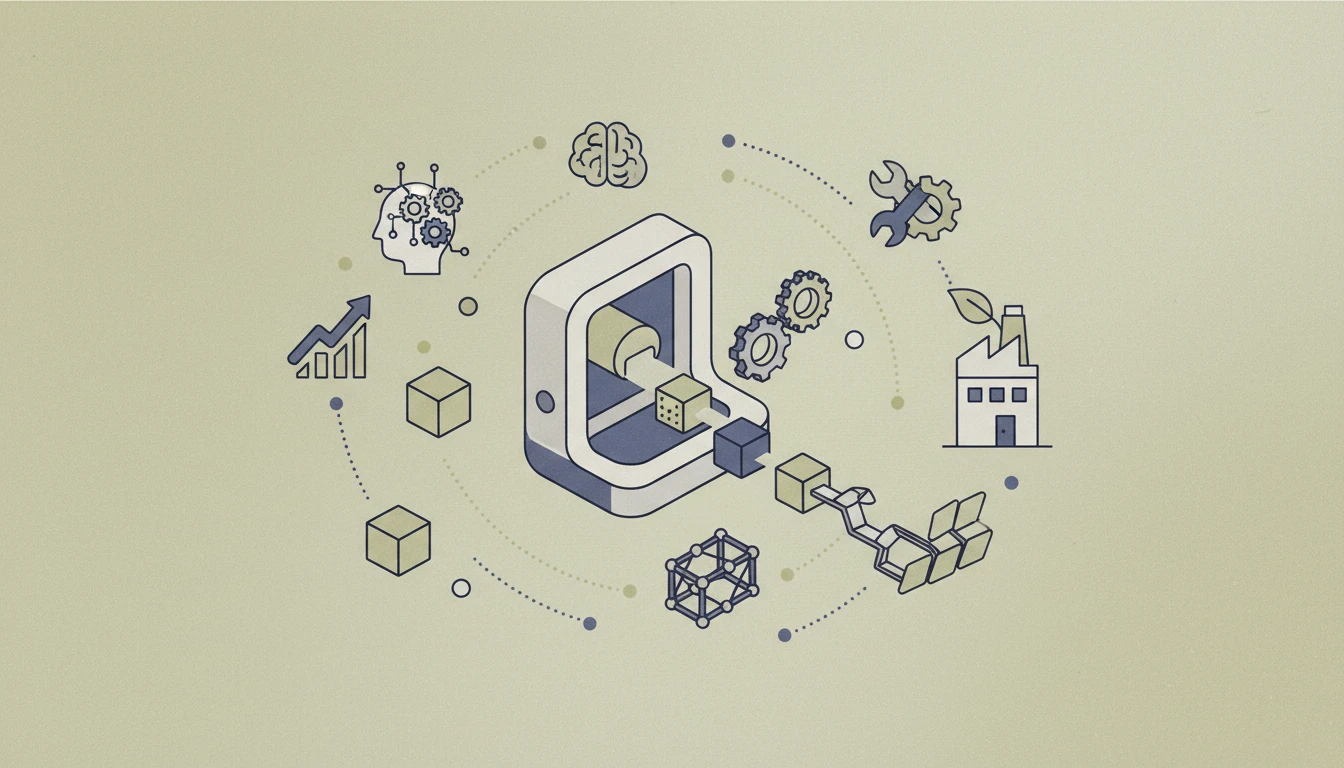
Imagine a world where a medical implant, printed flat in a factory, can curl into a perfect stent when it senses the warmth of the human body. Picture a satellite component that unfolds itself in the vacuum of space, or a pipe that can constrict or expand on its own to regulate flow. This isn’t science fiction,it’s the reality being built today with 4D printing. While traditional manufacturing and even 3D printing create static, unchanging objects, this next evolution introduces a paradigm shift: products that are designed to transform over time after they leave the production floor.
The problem for modern manufacturers is clear. Static designs often mean compromise,products built for a single, fixed purpose that struggle to adapt to changing environments or requirements. This leads to inefficiencies, complex assembly lines, high inventory costs, and waste. What if you could manufacture a single part that performs multiple functions, or a product that assembles itself on-demand?
By the end of this guide, you’ll have a firm grasp on what 4D printing manufacturing truly is, how the underlying process works with smart materials, where it’s delivering real value today, and the practical steps your operation can take to explore its potential. This is your roadmap to understanding one of the most dynamic frontiers in modern production.
What is 4D Printing? The Basics for Manufacturers
At its core, 4D printing is an advanced manufacturing process where 3D-printed objects are designed and engineered to change their shape, properties, or functionality in a pre-programmed way when exposed to a specific external stimulus. The "fourth dimension" is, unequivocally, time.
Unlike a traditional part that is complete upon fabrication, a 4D printed component has a "life" after printing. It is inert until the right trigger,such as heat, water, light, or a magnetic field,initiates a transformation. This capability moves manufacturing from creating static artifacts to producing dynamic, adaptive systems.
The Fourth Dimension: Time in Manufacturing
In this context, time is a programmable design parameter. Engineers aren't just designing a final geometry; they are designing a transformation sequence. This is achieved by precisely arranging smart materials within the 3D printed structure. Think of it like a slow-motion reaction where the catalyst is an environmental factor.
The most common example is a flat, printed lattice made of a hydrophilic (water-absorbing) polymer. When immersed in water, the material absorbs it and expands. By carefully controlling the print pattern and material density, some parts of the lattice swell more than others, causing the entire flat sheet to fold autonomously into a predetermined three-dimensional shape, like a cube or a flower. This process of self-assembly after production eliminates the need for manual or robotic assembly of small, complex parts, reducing labor, error, and logistical overhead.
How 4D Printing Differs from 3D Printing
While 3D printing (additive manufacturing) is the foundational process used, the intent and outcome are fundamentally different.
- 3D Printing Produces Static Parts: A 3D-printed bracket, gear, or prototype is finished when it comes off the build plate. Its geometry and properties are fixed. It’s a tool for creating complex, custom, or lightweight static 3D printed parts.
- 4D Printing Creates Dynamic Systems: A 4D-printed object has a built-in "instruction set." It’s designed to be unfinished upon initial printing. Its final form and function are realized only after it interacts with its environment. It creates dynamic 4D printed components that respond to stimuli.
A simple analogy: 3D printing gives you a paper flower. 4D printing gives you a seed and the program for it to grow into that flower under the right conditions.
Why does this matter for manufacturing? It introduces unprecedented levels of efficiency and innovation. It allows for:
* On-Demand Functionality: Products can be shipped in a compact, stable state and activated at the point of use, saving immense space in shipping and storage.
* Adaptive Performance: Parts can adapt to wear, pressure, or temperature changes, extending product life and safety.
* Radical Simplification: Complex mechanisms with multiple moving parts can be replaced by single, monolithic structures that move and transform on their own.
The enabler of all this is the sophisticated use of smart materials, which we'll explore next.
How 4D Printing Works: Process and Technologies
Moving from concept to a transforming object requires a specialized workflow that integrates advanced design software, precise printing technology, and, most critically, engineered materials.
Key Components: Smart Materials in Action
Smart materials are the heart of 4D printing. These are substances engineered to react in a predictable and useful way to external stimuli. Their properties that enable time-dependent changes are "programmed" in at the molecular or structural level.
Here are the most common types:
- Shape Memory Polymers (SMPs): These are the workhorses of 4D printing. An SMP can be deformed from its original ("permanent") shape into a temporary shape. When exposed to a specific trigger,most commonly heat above a certain threshold,the material "remembers" and snaps back to its original form. This is ideal for deployable structures.
- Shape Memory Alloys (SMAs): Like Nitinol (Nickel-Titanium), these metals exhibit similar shape memory properties but are stronger and used in applications requiring high-force actuation, such as in aerospace or robotics.
- Hydrogels: These polymers can absorb large amounts of water, swelling significantly. By printing patterns with different cross-linking densities, you can create precise bending and folding motions upon hydration, used extensively in biomedical research.
- Electroactive Polymers (EAPs): These materials change shape or size when stimulated by an electric field, acting like artificial muscles.
The key in 4D printing technologies is often multi-material printing, where a rigid material and a smart, responsive material are printed in a precise composite pattern. This internal mismatch is what creates the controlled transformation when activated.
The Printing Process: From Design to Dynamic Product
The journey of a 4D-printed part is longer than that of a traditional part, extending beyond the printer itself.
-
Computational Design & Simulation (CAD+): This is the most critical phase. Engineers use advanced simulation software to model not just the final shape, but the transformation path. They must calculate exactly how the stimuli-responsive materials will behave, determining the print pattern, material ratios, and orientation needed to achieve the desired movement. Tools like Finite Element Analysis (FEA) are crucial.
-
Multi-Material Additive Manufacturing: Using specialized 3D printers capable of depositing multiple materials (like PolyJet or some advanced FDM printers), the object is printed layer by layer. The printer precisely places droplets or filaments of smart material alongside standard structural materials according to the digital blueprint.
-
Post-Print Activation & Testing: After printing, the object is in its pre-programmed, often dormant, state. It is then exposed to the predetermined stimuli that trigger transformations. This could involve placing it in a temperature-controlled chamber, submerging it in liquid, or exposing it to light. The transformation is observed and measured against the simulation to validate performance.
This table summarizes the core stimuli and corresponding material responses:
| Stimulus (Trigger) | Typical Smart Material Used | Example Transformation |
|---|---|---|
| Heat/Temperature | Shape Memory Polymers/Alloys | A flat stent curls into a tube at body temperature. |
| Water/Moisture | Hydrogels, certain woods/composites | A flat panel folds into a box or a structure self-tightens in humid conditions. |
| Light (UV/Specific wavelengths) | Photoresponsive Polymers | A structure bends or twists when exposed to light, enabling remote, wireless activation. |
| Magnetic Field | Materials embedded with magnetic particles | A soft robot caterpillar undulates and moves when placed in a rotating magnetic field. |
| Electric Current | Electroactive Polymers, Ionic Gels | An actuator contracts or expands, mimicking muscle movement. |
Applications of 4D Printing in Modern Manufacturing
While still emerging from labs, 4D printing applications in industry are moving into tangible, high-value sectors where its unique capabilities solve critical problems.
Aerospace and Automotive: Lightweight and Adaptive Parts
In these industries, weight is directly tied to cost (fuel efficiency) and performance. 4D printing enables components that adjust to environmental changes, leading to smarter, lighter systems.
- Aerospace Applications: Imagine a satellite antenna or solar panel that is printed as a compact, dense block. Once in orbit, the heat from the sun triggers its shape-memory material, causing it to slowly unfurl into a large, functional structure,no risky mechanical deployment mechanisms needed. Airbus has explored 4D-printed air inlet ramps that change shape based on speed and temperature to optimize engine airflow.
- Automotive: Smart tires with treads that can adapt their pattern in real-time to wet or icy conditions for better grip. Interior components like vents or louvers that open and close based on cabin temperature to improve climate control efficiency without extra motors or parts.
Healthcare and Biomedical: Smart Implants and Drug Delivery
This is perhaps the most promising field, where 4D printing's ability to interact with biological environments shines.
- Smart Implants: Stents, scaffolds for tissue engineering, or bone grafts can be printed to be minimally invasive during insertion (e.g., in a compressed state) and then expand to their functional shape upon contact with body heat or fluids. This improves patient outcomes and simplifies surgical procedures.
- Advanced Drug Delivery: Capsules can be printed to remain inert until they reach a specific part of the digestive system with a certain pH level, at which point they transform to release their payload. This allows for targeted, timed drug release, increasing efficacy and reducing side effects.
Case studies are beginning to validate these concepts. Researchers at MIT, for example, have created a 4D-printed hydrogel structure that mimics plant tendrils, which could be used as delicate internal sensors. In industry, companies like Carbon and Stratasys are working with partners to develop real-world applications of 4D printing in footwear (adaptive cushioning) and consumer goods.
The benefits like on-demand assembly and reduced waste are massive. Supply chains can be simplified by shipping flat-pack furniture that self-assembles with a splash of water, or by producing spare parts that are compact for storage and only take their final form when needed, revolutionizing logistics and inventory management.
Benefits and Challenges of 4D Printing for Manufacturers
Adopting a transformative technology requires a clear-eyed view of both its potential and its current hurdles.
Key Benefits: Why Manufacturers Should Consider 4D Printing
For forward-thinking factories, the benefits of 4D printing offer a significant competitive edge:
- Radical Design Freedom & Innovation: It enables products previously impossible to manufacture,single parts that perform complex mechanical movements without assemblies.
- Mass Customization & Personalization: Like 3D printing, it is digital and tool-less. Combined with smart materials, it allows for products tailored not just to fit, but to behave differently for individual users (e.g., personalized orthopedic insoles that adapt to pressure points).
- Supply Chain & Logistics Simplification: The ability to ship products in a compact, dormant state and activate them at the point of use can drastically reduce shipping volume, storage space, and associated costs.
- Enhanced Sustainability: It promotes material efficiency (additive process) and can lead to longer-lasting, adaptive products. It also reduces the need for multi-part assemblies, which often involve different materials that are hard to recycle.
- Reduced Assembly Time and Cost: Self-assembly after production eliminates entire stages of manual or robotic assembly, lowering labor costs and potential error points.
Overcoming Adoption Hurdles: Practical Strategies
The challenges in adoption are real but not insurmountable. A strategic approach is key.
- High Material Costs & Limited Selection: Smart materials are currently specialized and expensive. Strategy: Start with research partnerships or pilot projects funded through R&D budgets. Focus on high-value applications where the performance benefit justifies the cost. The material library is expanding rapidly.
- Technical Complexity & Skills Gap: Designing for the fourth dimension requires expertise in material science, advanced simulation, and multi-material printing. Strategy: Invest in training for your design engineers. Leverage software with built-in simulation tools. Consider collaborating with universities or specialized service bureaus for initial projects.
- Speed and Scale: 4D printing is not yet a high-speed, mass-production technology. Strategy: Target it for low-volume, high-complexity parts, custom medical devices, or prototyping next-generation products. Use it where its unique capabilities provide a function that cannot be achieved any other way.
- Uncertain ROI and Integration: Cost-effectiveness can be hard to quantify for a nascent technology. Strategy: Develop a clear pilot project with defined KPIs. Measure not just part cost, but total system cost savings,reduced assembly labor, simplified inventory, improved product performance. The manufacturing ROI often comes from systemic efficiencies, not just the printed part itself.
The Future of 4D Printing: Trends and Predictions
As we look toward 2026, 4D printing trends point to a technology moving from specialized labs into more industrial environments, driven by several key innovations.
Innovations on the Horizon: What's Next for 4D Printing
The next wave of advancement will make 4D printing more powerful, accessible, and integrated:
- Multi-Material & Multi-Stimuli Printing: Current systems often use one smart material. The future lies in printing objects with several different responsive materials in one build, allowing for complex, multi-stage transformations triggered by a sequence of different stimuli.
- AI-Driven Design Integration: Artificial Intelligence will revolutionize the design phase. AI algorithms can iterate through millions of potential material layouts and structures to optimize for a specific transformation goal,finding designs humans might never conceive,dramatically speeding up development.
- Improved Speed and New Printing Modalities: Advances in printing technologies like Continuous Liquid Interface Production (CLIP) and new sintering methods will increase print speeds for polymers and metals, making 4D printing more viable for larger batches.
- Biologically Integrated Systems: The line between synthetic and biological will blur with 4D-printed scaffolds that not only change shape but also interact with and guide living cells for advanced tissue engineering and biosensing.
Growth projections from market analysts suggest the 4D printing market, while niche, is poised for significant expansion as these technologies mature and find stable industrial applications, particularly in healthcare and aerospace.
How to Get Started with 4D Printing Today
You don't need to overhaul your factory tomorrow. Here are actionable steps to begin your exploration:
- Educate Your Team: Start with awareness. Share articles (like this one), research papers, and case studies with your engineering and R&D departments.
- Identify a Pilot Problem: Look for a persistent challenge in your products: a complex assembly process, a part that fails under variable conditions, or a product that could be radically improved if it were adaptive. This is your pilot use case.
- Partner and Experiment: You likely don't have the equipment or materials in-house. Partner with a university research lab, a national manufacturing innovation institute, or a forward-thinking 3D printing service bureau that offers multi-material and smart material capabilities.
- Start Small and Simulate: Use advanced CAD simulation software to model the behavior first. This virtual testing is low-cost and low-risk. Validate the concept digitally before committing to physical prototyping.
- Join the Conversation: Follow industry publications, attend conferences on additive manufacturing and smart materials, and connect with pioneers in the field. The community is collaborative and growing.
The key takeaway is this: 4D printing is set to transform manufacturing by enabling dynamic, efficient, and innovative production methods that adapt over time. It won't replace all traditional methods, but it will create entirely new categories of products and solve old problems in brilliant new ways.
The future of manufacturing isn't just about making things. It's about making things that can change, adapt, and become more useful on their own. The journey into the fourth dimension starts with understanding, and the next step is exploration.
Written with LLaMaRush ❤️